
11 Best Ways to Experience Budapest Nightlife
Budapest after dark blends historic decay with modern creative energy in a way no other European capital quite manages. The Jewish Quarter pulses with ruin bars built into crumbling tenements, the Danube glitters under party boats and prosecco cruises, and the Széchenyi Baths transform weekly into a thermal-water rave. For 2026, drinks remain cheap by Western European standards, with local pints around 3 to 5 EUR and club covers rarely above 15 EUR.
The scene moves fast: Szimpla queues hit 45 minutes on Saturday, Sparty sells out two to three weeks ahead, and rooftops enforce stricter dress codes than pre-pandemic. Below we break ruin bars, mega-clubs, pub crawls, spa parties, river cruises, rooftops, castle tours, and Chain Bridge walks into separate sections, then close with districts, transport, scams, and a seasonal calendar. Every section lists concrete prices in EUR, hours, and local tips you would not get from a promoter on Kazinczy utca.
Key Takeaways
- Best Overall: Szimpla Kert at 19:30 Tuesday for the ruin bar without the Saturday queue.
- Best for Couples: Prosecco Dinner Cruise on the Gróf Széchenyi paddle steamer with live Rajkó Orchestra.
- Best for Groups: Instant-Fogas complex, 7 dance floors and 18 bars under one roof.
- Best Free: Midnight Chain Bridge walk from Pest to Buda.
- Local Hack: Drink at Madách tér, not Gozsdu Udvar, to dodge tourist pricing.
- Hard Skip: Váci utca "gentlemen's clubs" have billed three-digit EUR for bottled water.
Why Budapest's Nightlife is a Must
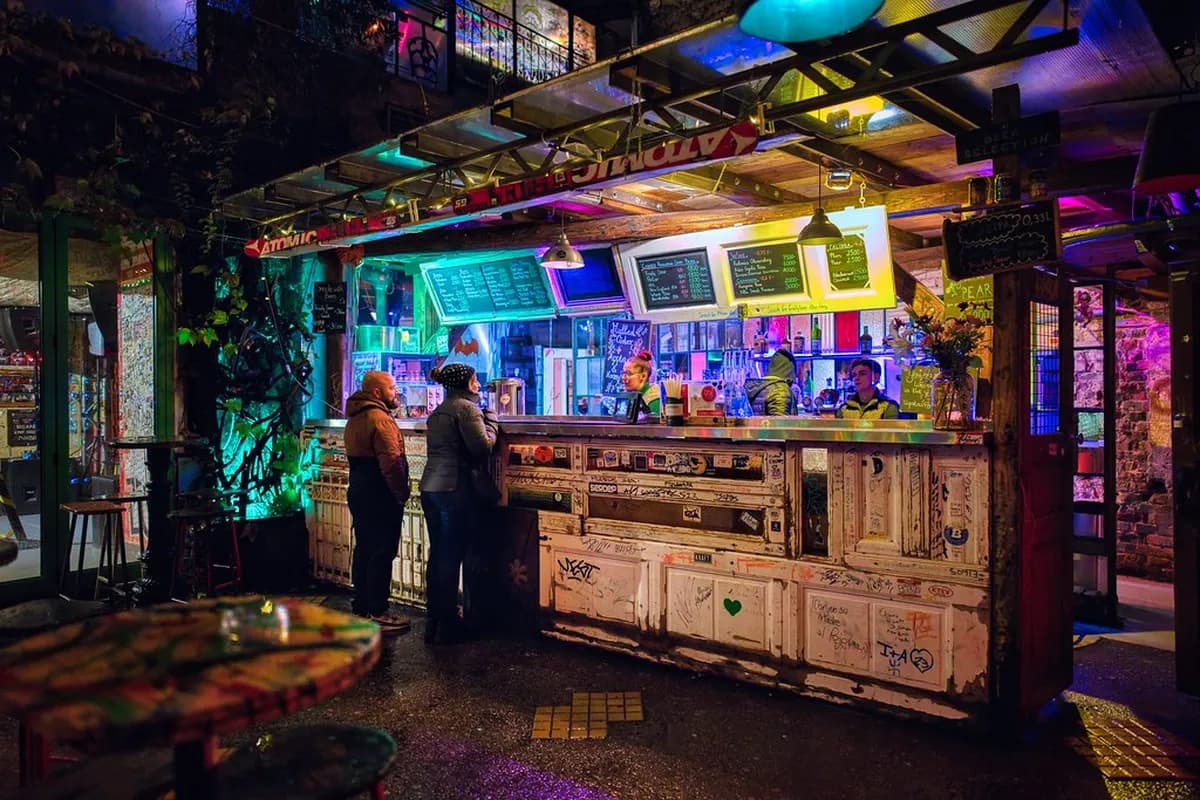
Budapest stands out because of the romkocsma, the ruin-bar concept that took abandoned District VII tenements after the Soviet era and turned them into surrealist drinking halls. Mismatched flea-market furniture, a Trabant booth, and a different graffiti scene in every courtyard make each venue feel like a small museum. The model has been copied across Central Europe without ever matching the original grit.
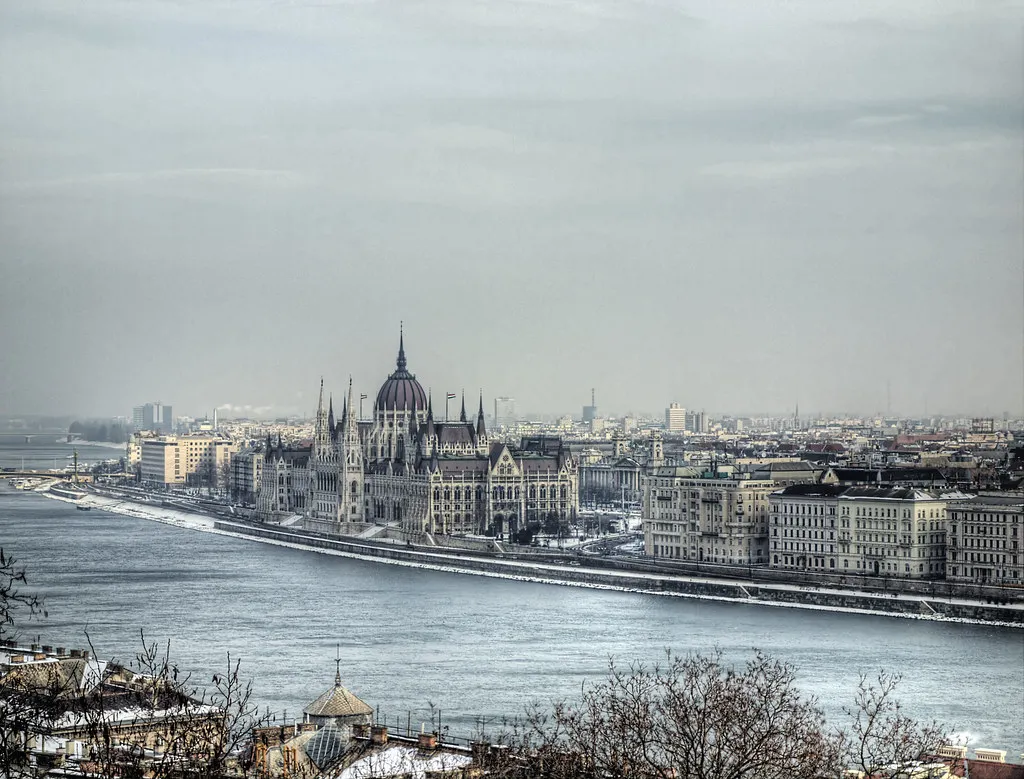
Affordability is the second hook. A pint runs 3 to 5 EUR, a cocktail 5 to 8 EUR, and most clubs charge nothing before 22:00, roughly a third of London or Paris pricing. The setting closes the case: the Danube splits Pest from Buda, almost every landmark is floodlit until dawn, and you can bar-hop in District VII, walk ten minutes to a river cruise, then finish on a rooftop staring at the illuminated Parliament.
The Legendary Ruin Bars of District VII
Szimpla Kert, Kazinczy utca 14, is the original and still the most photographed ruin bar in the world. Opened in 2001 inside a derelict stove factory, it sprawls across two floors, multiple courtyards, and a smoking rooftop. Drinks run 3 to 6 EUR, entry is free most nights, and on Saturdays the queue stretches past the Karavan food-truck court from 21:00. Sunday mornings flip the space into a farmers' market from 09:00 to 14:00, the single most underrated way to see the interior without crowds.
Timing matters here more than anywhere else. Tuesday 19:30 to 22:00 is the calmest slot of the week, when you can actually sit in the Trabant and hear the person next to you. Thursday jazz night brings a curated crowd. Avoid 23:00 to 01:00 Friday and Saturday unless you enjoy queueing, and never arrive 21:30 to 22:30 Saturday, when group tours hit simultaneously.
Beyond Szimpla, the Jewish Quarter rewards wandering. Füge Udvar pulls a Hungarian local crowd with pints near 2 EUR. Klub Vittula is the cheapest dive, beers around 1.50 EUR, basement aesthetic deliberately moldy. Kuplung runs bigger DJ nights in a converted garage. For a speakeasy counterpoint, Hotsy Totsy hides near Kazinczy and serves a menu printed on a deck of cards.
Top Nightclubs for Dancing Until Dawn
Instant-Fogas, on Akácfa utca, is the megaclub born when two legendary ruin bars merged in 2017. You get seven dance floors, 18 bars, and genres ranging from commercial pop to heavy techno in the Lärm room, which runs one of the best Funktion-One systems in Central Europe. Entry is free before 22:00, then 5 to 10 EUR after. Beers from 3 EUR, cocktails 5 to 8 EUR, open until 06:00 on weekends.
Akvárium Klub, carved under Erzsébet tér, is the city's main indoor concert venue doubling as a late-night club. A shallow pool forms the roof so the glass ceiling ripples with light when filled. Concert tickets run 10 to 30 EUR, the venue stays open until 05:00, and the outdoor steps above are a free pre-party zone. Otkert plays top-40 and reggaeton across two floors with a 10 EUR cover. A38, a decommissioned stone carrier moored near Petofi bridge, rotates between indie gigs, house nights, and jazz.
High-Energy Budapest Pub Crawls
Pub crawls are the single best entry point for solo travelers and first-timers because they solve three problems: navigating the Jewish Quarter, finding a social group, and skipping Instant-Fogas queues at peak hours. You can book Budapest Pub Crawl Tickets for 20 to 30 EUR, and the better operators include three to four bars, a welcome shot at each stop, and guaranteed club entry at the final venue.
The standard route starts at Ruin Brew with icebreaker games, moves through Kazincy Kocsma for karaoke, stops at a ruin bar, and ends at Instant-Fogas around 01:00. Groups run 20 to 40 people, capped at 50 by good operators. If you'd rather focus on architecture only, a dedicated Ruin Bar Crawl skips the karaoke stops and explains the squatter-movement origins of each building. Expect a slower pace and a crowd roughly a decade older than the standard tour.
Late-Night Spa Parties at Széchenyi Baths
Sparty turns the 1913 Neo-Baroque Széchenyi complex into an outdoor rave every Saturday 22:30 to 03:00. DJs spin house and EDM from a floating stage, lasers sweep the yellow facade, and thousands of people bob in 27 to 38 degree water while cocktails circulate on trays. Tickets start at 55 to 65 EUR online, 75 EUR at the door. Book via Széchenyi Spa Tickets two to three weeks ahead for summer dates.
Real talk: it is iconic but crowded, expensive, and engineered for tourists. Lockers, towels, and flip-flop rentals each cost extra, often totaling 15 to 20 EUR on top of the ticket. Bring your own flip-flops, a microfibre towel, and a waterproof phone pouch from home to cut that in half. Drinks inside run 6 EUR for beer and 15 to 17 EUR for cocktails, nearly triple street pricing.
Two rules: arrive 22:00 to 22:30 before the locker queue hits 40 minutes, and anchor yourself near the central pool where the DJ is visible. Side pools are warmer but you lose the atmosphere. If Saturday is sold out, smaller Magic Bath parties at Rudas or Lukács offer a near-identical experience at a fraction of the price.
Party Boats and Prosecco Cruises on the Danube
The Danube splits Budapest's night-cruise market into two very different products, and choosing wrong ruins the evening. Party boats run loud DJs, open bars, and twenty-something crowds. Dinner and prosecco cruises are candlelit, paced for couples, and often feature a live Rajkó Orchestra playing Hungarian folk and Strauss.
- Party boat (Danube Beat, A38 club nights): loud DJ, open bar, 18-to-30 crowd, 25 to 35 EUR, 90 to 120 minutes, sneakers and jeans welcome.
- Prosecco cruise (Sip & Sail: Prosecco Cruise): unlimited prosecco and aperol, mixed ages, 25 to 30 EUR, 75 minutes, smart casual expected.
- Wine & Dine on the Gróf Széchenyi paddle steamer: five Hungarian wines including Tokaji, three-course dinner, live orchestra, couples-heavy, 70 to 95 EUR, two hours, smart attire.
- Dinner cruise with folk show: traditional Hungarian dinner, live music, 60 to 80 EUR, two hours, ideal for families and first-timers.
Most cruises depart from docks 6 to 11 on Jane Haining rakpart near Elizabeth Bridge, 19:00 to 22:00. Arrive 15 to 20 minutes early to claim an open-deck seat; Parliament and Chain Bridge views are dramatically better outside. In winter, heated glass-roof boats run year-round with blankets on deck.
Rooftop Bars with Unforgettable City Views
360 Bar, atop a former department store on Andrássy út, is the most accessible rooftop in the city. Entry is free before 18:00 and 5 EUR after, cocktails 8 to 12 EUR, and heated transparent igloos extend the season into winter. Dress code is relaxed; sneakers and jeans work. Arrive an hour before sunset on weekends to secure a spot along the glass railing overlooking St. Stephen's Basilica.
White Raven Skybar crowns the Hilton on Castle Hill and delivers the single best postcard view in the city, looking directly across to Parliament with the Fisherman's Bastion spires in the foreground. Cocktails start at 15 EUR, past 25 EUR for the signature list. Dress code is strict smart casual: no sneakers, no sportswear, no flip-flops. Weekend reservations fill a week out.
Quick dress-code cheat sheet for the rest of the circuit:
- Leo Rooftop (Hotel Clark, Castle side): smart casual, clean sneakers tolerated, 10 to 14 EUR, best for Chain Bridge photos.
- Liz & Chain Rooftop (Marriott): relaxed smart, sneakers fine, wine from 10 EUR, quieter.
- High Note SkyBar (Aria Hotel): strict smart casual, jacket appreciated, 14 to 18 EUR, best sound quality.
- St. Andrea Wine Bar rooftop: smart casual, wine-led, 7 EUR glasses, closes 22:00.
Buda Castle Vampires and Myths Night Tour
If you want an evening activity that isn't driven by alcohol, the Buda Castle Vampires and Myths Night Tour covers the Castle District's darker history across a 90-minute walking route. Guides lead the cobbled streets between Matthias Church and Fisherman's Bastion while narrating legends of Erzsébet Báthory, Ottoman plague pits, and local vampire folklore. Tickets run 20 to 28 EUR per person, departures 20:30 from the Zero Kilometre Stone.
The tour works well as a sober opener before late dinner in the Castle District or an atmospheric break between rooftop drinks. Cobblestones are uneven and often wet, so leave the heels. In winter (November to February) the Castle District is genuinely quiet after 21:00, giving you rare empty shots of Matthias Church. If you prefer music, the Hungarian State Opera House stages evening performances nightly except Monday, tickets from 15 EUR for upper balcony.
Romantic Night Walks Across the Chain Bridge
Crossing the Chain Bridge on foot at midnight is free, 24-hour accessible, and arguably the most romantic free activity in any European capital. The bridge reopened in 2023 after a full restoration and now carries only pedestrians and cyclists on weekends, which makes the walk quieter than in decades. Start from Vörösmarty tér on the Pest side, stop in the middle for the Gresham Palace reflection shot, finish in the Buda square where the funicular climbs to the Castle.
The 20-minute classic loop crosses the bridge, takes the funicular or stairs to the Castle District, and returns via the floodlit Fisherman's Bastion. The 45-minute extended loop continues south along the Buda embankment to the Liberty Statue on Gellért Hill, the only vantage with both Parliament and Castle in a single photo. Pair the walk with a late lángos stop at Retro Lángos Büfé near Arany János utca, open until 02:00 on weekends, where cheese-and-sour-cream lángos costs 4 to 5 EUR.
Best Districts for Budapest Nightlife
District VII (Jewish Quarter) is the epicenter. The triangle bounded by Kazinczy, Dob, and Király packs the highest concentration of ruin bars, kebab shops, and clubs in Central Europe. Stay here for zero-walk access; be warned that Airbnb noise is genuinely heavy on weekend nights and residents have pushed for tougher licensing since 2023.
District V (Inner City) is the polished, slightly older counterpart. Rooftops like 360 Bar and High Note SkyBar, the cruise docks at Jane Haining rakpart, and smarter cocktail bars like Boutiq'Bar cluster here. District VI (Theresa Town) is the in-between zone with Andrássy cocktail bars and the Opera House. District I (Castle District) is the quiet scenic option built for couples. Madách tér, straddling V and VII, is the local escape valve: small craft-beer bars, no promoter hustle, drinks 20 to 30 percent cheaper than Gozsdu Udvar two blocks away.
Budapest Nightlife by Season: A 2026 Calendar
One thing almost no English guide addresses is how dramatically the scene shifts by month. Summer (June to early September) is the outdoor peak: Pontoon and Raqpart run at capacity on the river, Fröccsterasz sells spritzes on the grass, and Sparty adds a Friday event in July-August. Expect District VII hotel rates to jump 30 to 50 percent during Sziget Festival week in early to mid-August.
Autumn (September-October) is the best all-round window: queues shorten after Sziget, the Budapest Wine Festival at Buda Castle runs early September, and rooftops stay open without igloos through mid-October at shoulder-season prices. Winter (November-February) is underrated: Christmas markets at Vörösmarty tér and St. Stephen's sell mulled wine at 3 to 4 EUR, ruin bars stay indoor-only but unusually quiet on weekdays, and heated igloos run at 360 Bar and Leo Rooftop. New Year's Eve on the Chain Bridge is a major free event; book accommodation 10 to 12 weeks ahead. Spring (March-May) is transitional, with rooftops reopening and Sparty resuming full Saturdays in April.
Is Budapest Nightlife Expensive?
Budapest remains one of Europe's cheapest capitals for a high-quality night out. Ruin bars have no cover Monday through Thursday, clubs charge 5 to 10 EUR after 22:00, cocktails in the Jewish Quarter run 5 to 8 EUR. A full budget night including transport, three drinks, and a late lángos fits under 35 EUR. Explore our best pubs in Budapest guide for more low-cost options.
Mid-range budgets of 70 to 100 EUR per person easily cover a prosecco cruise, Instant-Fogas entry, and three cocktails. Luxury nights reach Western European pricing: Sparty tops 100 EUR per person with photos and bar tab, White Raven rounds run 20 to 30 EUR per stop. Check bills for the 10 to 15 percent service charge added automatically. Pay by card and tell the server your total rather than leaving cash. Use Revolut or Wise for Forint, never airport kiosks or Váci utca booths, which spread 8 to 15 percent.
What to Skip: Overrated Experiences and Scams
The single most important warning for 2026: avoid the "gentlemen's clubs" on and around Váci utca. Promoters in suits approach solo men and groups with offers of free drinks or company inside. Victims have been billed 500 to 2,000 EUR for a single bottle of water or champagne, with credit cards held until payment. The Hungarian consumer protection office flags these venues repeatedly, and the U.S. and UK embassies issue annual warnings. If a promoter on the street offers you anything, keep walking.
Gozsdu Udvar, the restored passage between Király and Dob, is pleasant at lunchtime but a tourist trap by night. Drinks run 30 to 50 percent above comparable venues on Madách tér one block away, the bars all play the same playlist, and Friday-night density makes it hard to find a spot. Walk through during the day for the architecture, head elsewhere after dark. Party Bus tours are the third skip: 60 to 70 percent of the time stuck in traffic with short 20-minute venue stops. A walking Ruin Bar Crawl covers more ground for less.
Practical Tips for Enjoying Budapest Like a Local
Public transport runs 24 hours on key nightlife routes. Tram lines 4 and 6 loop the Grand Boulevard all night, connecting Nyugati and Moszkva tér with stops near every District VI and VII party zone. Night buses 907, 908, 914, 923, and 950 cover the rest of the map. A single ticket is 450 HUF (roughly 1.15 EUR); validate at yellow machines on board or undercover inspectors fine 8,000 HUF on the spot. For door-to-door, use Bolt, the dominant rideshare app in Hungary. Jewish Quarter to Castle-side hotel runs 5 to 8 EUR. Never take unbooked taxis flagged from the street; licensed taxis are yellow with printed meter tariffs.
Dress codes vary sharply. Ruin bars accept anything; jeans and sneakers are the default uniform. Upscale clubs like Otkert enforce smart casual: no flip-flops, no tank tops, no sportswear. Rooftops fall on a spectrum from 360 Bar (relaxed) to White Raven (strict jacket-and-closed-shoes). Bring one light jacket year-round; Danube wind drops perceived temperature 5 degrees Celsius on exposed decks. Safety is high in central districts, but pickpocketing spikes at the Szimpla entrance, on tram 4/6, and in Instant-Fogas stairwells. Zip bags, keep phones in front pockets. Emergency number is 112 with English-speaking operators.
Related Budapest Travel Guides
Where you stay shapes how the nightlife feels. District VII hotels give zero-walk access to Szimpla and Instant-Fogas but real weekend noise. District V hotels along Váci utca or near Deák Ferenc tér offer the best balance of rooftop access, cruise proximity, and quieter rooms. For deeper dives, see our best clubs in Budapest guide, covering door policies and peak hours for each venue, and our roundup of the best rooftop bars in Budapest with dress codes and best view angles for photos.
If you're building a multi-day itinerary, pair this with a morning thermal baths visit (Gellért or Rudas are quieter than Széchenyi), afternoon café culture along Andrássy út, and an early dinner before the first bar stop at 20:30. Our Budapest pub crawl guide compares the main tour operators on price, group size, and venue rotation. For broader regional planning, explore Hungary's broader nightlife, including Lake Balaton's summer scene and the Eger wine region, both within three hours of Budapest by train.
Explore More Budapest Guides
Keep planning your Budapest trip with these guides.
- 21 Best Bars in Budapest
- 12 Best Budapest Clubs to Visit in 2026
- 12 Best Cocktail Bars in Budapest for 2026
- 15 Best Pubs in Budapest
- 12 Best Rooftop Bars in Budapest
- 7 Best Ruin Bars in Budapest for First-Time Visitors
- Budapest Nightlife Dress Code
- 10 Best Budapest Pub Crawls for 2026
- Gay Nightlife in Budapest
- 15 Best Things to Do in Budapest at Night
Explore nightlife in other cities
Frequently Asked Questions
What is the best district for nightlife in Budapest?
District VII, also known as the Jewish Quarter, is the heart of Budapest nightlife. It contains the highest concentration of ruin bars, clubs, and late-night eateries within walking distance.
Do you need to book ruin bars in advance?
Most ruin bars like Szimpla Kert do not accept reservations and operate on a first-come, first-served basis. Arriving before 8:00 PM is recommended to avoid long queues on weekends.
What should I wear to a Budapest nightclub?
Most venues are casual, but chic clubs and rooftops require smart-casual attire. Avoid sportswear, flip-flops, or tank tops to ensure you meet the entry requirements for upscale spots.
Budapest's nightlife rewards visitors who plan around the city's rhythms rather than drift through them. Pick one anchor experience per night, Sparty on Saturday, ruin bars on Tuesday, a cruise on Sunday, and build a short supporting route around it. Book Sparty and Wine & Dine cruises two to three weeks ahead, skip the Váci utca promoters, carry a light jacket for Danube wind, and use trams 4 and 6 to get home. Done right, a night here costs a fraction of London or Paris while delivering the most visually dramatic European capital after dark.