
10 Essential Amsterdam Red Light District Rules
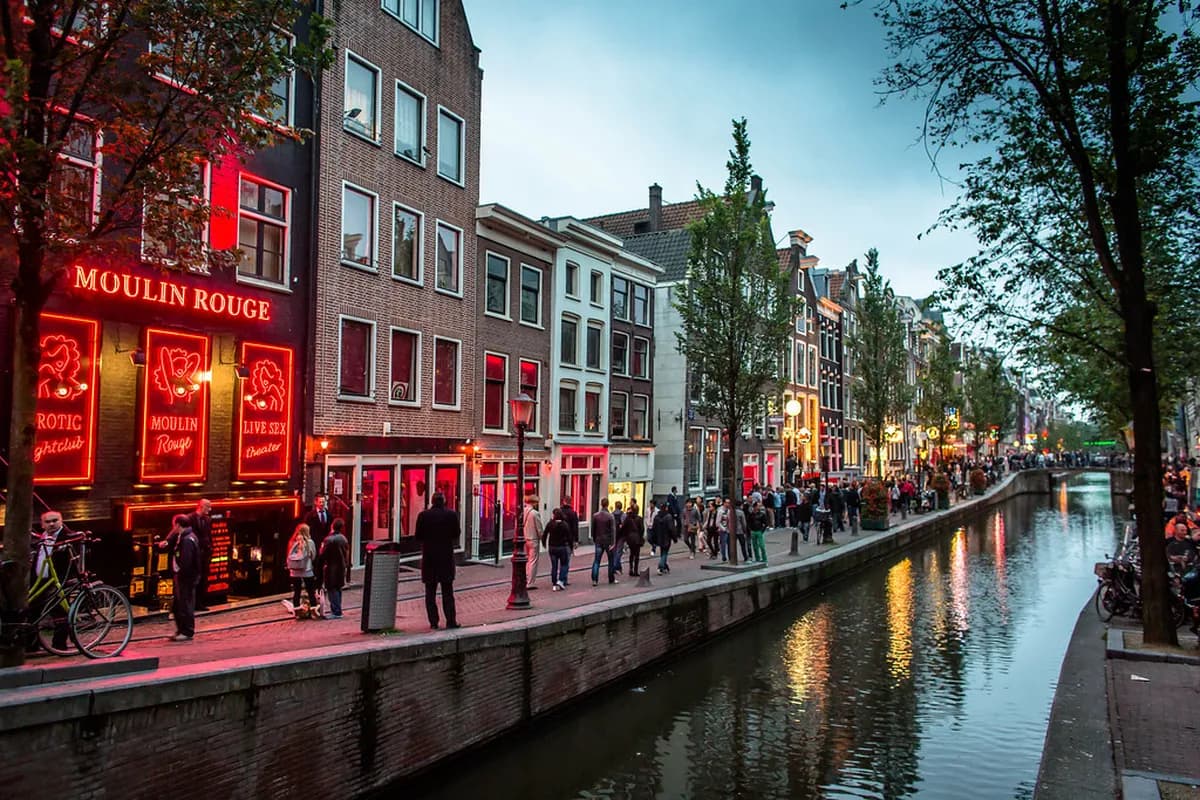
De Wallen is a working neighborhood before it is a tourist stop. Around 9,000 people live inside the 1012 postal zone, sharing canal bridges and narrow alleys with licensed window workers, bar staff, and roughly 5.4 million annual visitors. The amsterdam red light district rules are designed to keep that balance intact.
Some rules are codified in the Amsterdam Municipal Ordinance and enforced with fines that start around 95 euros. Others are etiquette points pushed by the Prostitution Information Center (PIC) and the PROUD sex worker union. Both categories matter, and breaking either can end your night early.
This 2026 guide covers the legal framework, the photography ban, current age limits, cannabis and alcohol restrictions, tour size caps, the Red Light Secrets museum, and the policy shifts still being debated by the city council. Read it before you step onto the Oudezijds Achterburgwal.
Legal Prostitution and the Amsterdam Approach
Voluntary prostitution has been a legal profession in the Netherlands since 2000, and the city regulates it through a formal licensing system described in the Amsterdam Municipal Ordinance (APV). Legal forms include window prostitution, private clubs, private houses without a bar, and licensed escort agencies. New window permits are no longer issued, which is why you will not see the district expand into new streets.

The "Amsterdam approach" is the joint-inspection model used by the municipality, police, public health, and social services to separate licensed work from trafficking and coercion. Project 1012, launched in 2007 and named after the postal code, closed roughly 126 windows and concentrated remaining zones along De Wallen, Ruysdaelkade, and Singel. The goal is transparency, not suppression, and workers are represented by the PROUD union alongside the Official City Policy.
Illegal street prostitution and unlicensed home-based setups remain forbidden and actively policed. As a visitor, you should only engage with workers in the illuminated licensed windows or registered venues. If you see something that looks coerced, the Meld Misdaad Anoniem hotline (0800-7000) takes anonymous reports and is the channel the city asks tourists to use.
Minimum Age Requirements for Visitors and Clients
There is no minimum age to walk through De Wallen itself, because it is a residential neighborhood with a day care center opposite the Oude Kerk and supermarkets on the same canals as licensed windows. That said, bars, sex clubs, and most window venues enforce an 18+ rule at the door, and bouncers often ID anyone who looks under 25. Bring a physical passport or national ID card; phone photos of an ID are generally refused.
The sex worker age rule is where Amsterdam diverges from the rest of the country. Nationally, the minimum age for sex workers is 18, but since July 2013 the City of Amsterdam has required every licensed worker in its three zones to be at least 21. The city introduced this specifically to reduce coercion and trafficking of younger workers, and the 21+ rule is checked by the license holder and during joint inspections.
Client age is simpler: you must be 16, the Dutch age of consent, though most venues treat 18 as their practical minimum. Paying for services with anyone under 18 is a criminal offense regardless of where in the Netherlands you are. If a worker looks visibly underage or distressed, do not enter; step away and call the hotline.
The Strict No-Photography Rule
Photographing or filming window workers is the single most enforced etiquette rule in De Wallen, and it is backed by the municipal ordinance on portrait rights. Bouncers and plain-clothes stewards patrol the narrowest stretches and will intervene within seconds of a raised phone. You may be asked to delete footage on the spot, and persistent offenders have had phones thrown into the canal by residents who have had enough.
The nuance most visitors miss is that the ban is not limited to close-up shots. Filming a canal, a bridge, or a friend in front of the windows counts the moment a worker is identifiable in the frame. That includes vertical phone video on the Oudezijds Achterburgwal between roughly the Oude Kerk and Molensteeg, plus the side alleys like Trompettersteeg. Put the phone away before you enter those streets, not after.
If you want images for a blog, vlog, or commercial use, apply through the municipality for a filming permit and work with a PIC-approved fixer who arranges consent with specific workers. Editorial photography without permission is not a legal grey area; it is a direct violation of the APV and the informal code the PROUD union enforces through bouncers.
Respectful Etiquette: Treating De Wallen Like a Neighborhood
The Prostitution Information Center on Enge Kerksteeg, founded by former sex worker Mariska Majoor, has published a simple test for visitors: would you behave this way on your own street at home? If the answer is no, do not do it on the Oudezijds Achterburgwal either. The PIC frames good guest behavior as quiet presence, brief eye contact at most, and no staged photos.
The PROUD union and Red Light Secrets staff publish a "ten commandments" list that is worth reading before you arrive. Core points: do not tap or spit on the glass, do not peek through curtain cracks, do not linger in front of a doorway while you wait for friends, and never block the immediate window view. If you want to speak to a worker, approach only if she has opened the door, keep the conversation brief, and never haggle in public.
Residents live directly above the windows, and their bedrooms face the canal. Loud groups between 22:00 and 02:00 are the most common complaint logged with the municipal nuisance line. Keep the volume of your voice at indoor level, even when leaving a bar. If you want a louder crowd, Leidseplein and Rembrandtplein are the correct neighborhoods for that.
- Keep conversation volume low between 22:00 and 02:00 on residential canals.
- Do not stand in front of a window for longer than it takes to walk past it.
- Never tap the glass, spit, or peek through curtain gaps when a window is occupied.
- Dispose of beer bottles, food wrappers, and flyers in the municipal bins, not on bridges.
- If you are in a group, walk single file across the narrow bridges over the Oudezijds Achterburgwal.
Public Consumption: Alcohol and Cannabis Laws
Drinking alcohol on any public street inside postal code 1012 is prohibited and carries a fine of approximately 95 euros. Enforcement is visible, especially Thursday through Saturday after 20:00. Consume beer or spirits inside licensed bars, on designated terraces, or in your hotel. For a legal drink crawl, see our Amsterdam nightlife guide, which maps the compliant bars within walking distance of De Wallen.
Cannabis rules changed meaningfully in May 2023. Smoking weed on the streets of the 1012 zone is now a civic offense with fines starting at 100 euros, and the ban is signposted in Dutch and English on most alleys. You can still buy cannabis legally in an authorized coffee shop and consume it inside that venue or in a private apartment, but not on a bench, a bridge, or a canal wall. Coffee shop owners now display "no outdoor smoking" stickers on their front doors.
Hard drugs are illegal everywhere in the Netherlands, including novelty sales pitched to tourists on Warmoesstraat and Oudekerksplein. Street dealers offering "cocaine," "MDMA," or "ketamine" almost always sell inert powders, and the transaction itself exposes you to both police action and theft. Walk on, and report aggressive dealers to the municipal enforcement officers (Handhaving) in their blue uniforms.
Guided Tours and Group Size Regulations
The city introduced hard caps on tour groups in 2020 and tightened them further through 2024. Guided tours that pass directly in front of licensed windows are banned; routes must stay on parallel streets or use the wider canal sides. Group size is capped at 15 participants in most of the 1012 zone, and guides need a municipal permit that they should be able to show on request.
After 19:00 Thursday through Sunday, guided groups cannot stop anywhere inside the core window streets. If a guide halts your group under a lit window to narrate, that operator is violating the permit terms and risks losing their license. Walk out, ask for a refund, and report the operator to the city's tourism complaints line. Legitimate operators now build their stops around the Oude Kerk, the bronze Belle statue, and Red Light Secrets rather than the windows themselves.
For a safer and fuller context, choose a history-led walk rather than a "shock tour." Tours run by the Prostitution Information Center, Red Light Secrets, and a handful of independent guides focus on licensing, worker rights, and the architecture of 17th-century brothels. These cost roughly 20 to 35 euros per person, last 90 minutes to 2 hours, and typically end at a coffee shop or bar where the group disperses quietly.
Window Brothels vs. Private Clubs: What the Rules Look Like Indoors
Most visitor guides treat De Wallen as one experience, but the rules inside a licensed window differ from those inside a private sex club like Bonton, Yab Yum-style venues, or smaller escort-agency backed rooms. Window sessions are direct: you knock, the worker opens the door, you confirm services and price before entering, and the room clock starts the moment you pay. Sessions usually run 15 to 30 minutes, cash in euros, and condoms are non-negotiable per worker house rules and municipal health guidelines.
Private clubs operate on a different rhythm. Entry fees of 50 to 150 euros buy time in a lounge where you meet workers over a drink before agreeing to a room. Services, duration, and pricing are discussed with the worker, not the house, and most clubs publish their internal rules at the door. Clubs are licensed for longer opening hours than windows, which close around 03:00 on weekends, and many have stricter dress codes for guests (no sportswear, no large groups entering together).
Decide which venue fits your intent before you enter the 1012 zone. Window visits suit a short, transactional plan with clear pricing in the street. Private clubs suit a longer evening with a social layer, but you commit more money at the door and should book or at least phone ahead on weekends. Mixing the two in one night is a common tourist mistake: workers talk, bouncers talk, and showing up drunk at a club after a window session is the fastest way to be turned away.
Red Light Secrets: The Museum of Prostitution
Red Light Secrets sits at Oudezijds Achterburgwal 60H, inside an actual former brothel, and is the only museum in Amsterdam built specifically to explain the profession from the worker's perspective. Exhibits cover the 2000 legalization, the licensing system, daily earnings, the PROUD union, and the emotional reality of the job. The museum is run in coordination with former workers and sits a block from the PIC office.
Adult entry is around 15 euros in 2026; combined tickets with a short audio tour run closer to 18 euros. Opening hours are typically 11:00 to midnight, with longer hours on Friday and Saturday to match visitor flow. A standout exhibit lets you sit behind a real red-lit window and look out at the canal, which flips the tourist gaze in a way that changes how most people behave on the street afterward.
Budget roughly 45 to 60 minutes inside, and visit before you walk the rest of the district rather than after. The context genuinely changes how you read the windows, and for travelers bringing partners or older teens, the museum is a much better orientation than a shock tour. See the official museum site for timed-entry tickets on busy nights.
Safety and Security: Bouncers, Police, and Scams
De Wallen is one of the most heavily policed square kilometers in the Netherlands. Uniformed police, plain-clothes officers, and municipal enforcement staff (Handhaving, in blue) circulate continuously from 20:00 onward. Every licensed venue also employs a bouncer who monitors the street in front of their door. If you feel unsafe, walk toward the nearest bouncer or the police post on Warmoesstraat rather than ducking into an alley.
The most common tourist incidents are not violent. Pickpocketing peaks on Friday and Saturday nights, especially on the bridges where foot traffic slows. Keep wallets and phones in front pockets or zipped bags, and avoid walking while checking your phone on the narrow canal paths. Fake drug dealers and fake "ticket" sellers target visitors who look lost; a firm "no" and continued walking is the expected response.
For lodging that sits inside or just outside the 1012 zone, our Where to Stay in Amsterdam guide flags hotels near De Wallen versus quieter alternatives in Jordaan or Oost. Sleeping directly on the Oudezijds Achterburgwal delivers atmosphere but also street noise until 03:00; a block inland on Warmoesstraat or Nieuwmarkt usually hits a better balance for light sleepers.
Navigation: Narrow Street Logistics and Best Times to Visit
The two spine canals are Oudezijds Achterburgwal (the main window canal) and Oudezijds Voorburgwal (quieter, more bars, fewer windows). Between them runs Trompettersteeg, an alley roughly one meter wide at its narrowest. Trompettersteeg is a one-direction flow by custom: walk through, do not stop, do not photograph, and never enter as a group of more than two abreast. Blocking this alley is the single fastest way to trigger a congestion fine from Handhaving.
On the main canals, walk on the right, keep moving across bridges, and if you need to check a map or a reservation, step into a shopfront doorway or a wider side street. Standing still on a bridge while a tour group approaches creates the bottleneck the 2020 tour rules were written to prevent. The Oude Kerk square is the correct meeting point for groups; it is wide enough to absorb 20 to 30 people without pushing anyone into a doorway.
Best times for a quiet visit are Tuesday through Thursday, 14:00 to 17:00 for daylight context, and 21:00 to 22:30 for the lit-window atmosphere before the weekend crowds arrive. Friday and Saturday after 23:00 are the loudest and most policed hours. If you want to combine De Wallen with Chinatown or Nieuwmarkt, early evening on a weekday gives you a walkable loop without the stag-party energy.
Recent Policy Changes and Future Updates
The biggest ongoing debate is the proposed Erotic Center, a purpose-built complex on the edge of the city that would absorb a large share of the current De Wallen windows. The 2023 council vote approved the concept in principle, but site selection has been contested; proposed locations near Zuid and in the port have both faced local opposition. As of April 2026, no opening date has been set, and the district continues to operate under the existing licensing rules.

The PROUD union and many individual workers oppose the relocation on safety and income grounds, arguing that the existing central location provides visibility, foot traffic, and immediate access to police and social services. The city counters with overtourism and resident quality-of-life arguments. Whichever side wins, windows closing in De Wallen will be a slow, multi-year process, and existing licenses are protected until the new center is operational.
Shorter-term changes already in force for 2026: the public cannabis smoking ban, tighter tour group caps, mandatory 01:00 closing for some alcohol-serving businesses in the 1012 zone, and expanded Handhaving patrols on Friday and Saturday. Check the municipality's English policy page before any trip, because rules on closing times and tour routes have been revised at least once per year since 2022.
Frequently Asked Questions
Can you take pictures in the Red Light District?
No, you are strictly forbidden from taking photos of the windows or the workers in De Wallen. This rule protects the privacy of the professionals and is enforced by security and police. Violating this rule can result in your camera being confiscated or facing a fine. For more travel tips, check European nightlife guides.
Is it safe to walk through the Red Light District at night?
Yes, the area is generally very safe due to a heavy police presence and private security bouncers. However, you should stay alert for pickpockets in crowded areas and avoid talking to street dealers. Stick to well-lit main canals and keep your belongings secure to ensure a trouble-free visit.
What is the legal age for the Red Light District in Amsterdam?
Visitors must be at least 18 years old to enter the bars and window areas of the district. Sex workers must be 21 or older to obtain a legal license to work in the city. Always carry a valid physical ID, as security staff frequently perform age checks at venue entrances.
Are there fines for drinking alcohol on the street in De Wallen?
Yes, drinking alcohol in public spaces within the Red Light District is prohibited and carries a fine of approximately 95 euros. You must consume alcoholic beverages inside licensed bars or on their official outdoor terraces. Police actively patrol the canals to enforce these public consumption laws throughout the night.
Is smoking cannabis allowed on the streets of the Red Light District?
Smoking cannabis in public areas of the Red Light District was officially banned by the city in 2023. You must visit a licensed coffee shop if you wish to consume cannabis products legally. This regulation was introduced to reduce nuisance for local residents and improve the overall atmosphere of the neighborhood.
Navigating the Red Light District requires a balance of curiosity and deep respect for local regulations. By following the amsterdam red light district rules, you contribute to a safer environment for workers and residents alike. Remember that your behavior reflects on all tourists visiting this historic and complex part of the city.
From the strict no-photography policy to the 21+ worker rule, these laws exist to maintain order in a high-traffic area. Taking the time to learn the etiquette ensures you avoid unnecessary fines and conflict during your stay. Treat the district as a living neighborhood rather than a simple tourist attraction for the best experience.
As Amsterdam continues to debate the Erotic Center and tighter public-order rules, staying updated on the latest policy changes will help you plan future trips effectively. Whether the district stays in its current form or partially relocates, the core values of respect, licensing transparency, and safety remain. Enjoy your visit to De Wallen by being a responsible and informed traveler.


