
13 Essential Tips and Districts for Milan Nightlife
Milan transforms from a busy financial hub into a vibrant playground once the golden sun sets behind the Duomo. This city offers a unique blend of high-fashion glamour and gritty industrial energy that caters to every traveler. You will find everything from chic rooftop bars to underground techno clubs hidden in old warehouses.
The local scene revolves around social rituals that blend food, drink, and fashion into one seamless experience. Navigating the various districts requires a bit of local knowledge to find the right vibe for your evening. Whether you want a quiet glass of wine or a sunrise dance set, the city delivers.
Planning your evening in 2026 involves understanding the specific timing of the famous Milanese aperitivo and late-night clubbing. Many visitors arrive too early for the big clubs or miss the best sunset views from hidden terraces. This guide ensures you experience the very best of milan nightlife without missing a single beat.
Key Takeaways
- Start your night with the aperitivo ritual between 18:30 and 21:00 for the best value.
- Dress elegantly if you plan to visit the exclusive clubs in Corso Como or the bars in Brera.
- Use apps like Dice or Xceed to secure tickets for big summer events in the Mecenate district.
- Explore the Navigli canals for a casual, social atmosphere that is perfect for first-timers.
- Carry your physical passport or ID card at all times — scans and photocopies are refused at club doors.
Your Milan Night, Curated: An Overview of the Scene
The evening energy in Milan is famously divided between sophisticated social circles and high-intensity dance floors. Most nights begin with a slow transition from work to leisure in the central districts, where locals gather in small groups before heading to more energetic venues. The flow from aperitivo at 19:00 to dinner at 21:00 to clubs after 00:30 is a fixed local script — one that trips up most first-time visitors.
Each neighborhood possesses a distinct personality that dictates the dress code and the type of music you will hear. Brera offers a refined atmosphere while Navigli feels casual and bohemian. Corso Como sits firmly in the VIP bracket, Isola leans artsy, and the southeast industrial districts pull in techno purists. Understanding these nuances helps you pack the right outfit for your specific destination.
International visitors often find that the city stays awake much later than other European capitals. Bars remain crowded until well after midnight, and the largest clubs do not peak until nearly three in the morning. Prepare for a long night of exploration if you want to see the full spectrum of local fun, and never trust an empty dance floor before 01:30 — it will fill.
The Milanese Aperitivo: Starting Your Night Like a Local
No trip to the city is complete without participating in the legendary aperitivo ritual between 18:30 and 21:00. This tradition allows you to enjoy a drink accompanied by a spread of delicious Italian snacks. You can find some of the best bars in Milan offering extensive buffets for the price of one cocktail.
Expect to pay between 10 and 18 Euros for a drink that includes access to various food options. Common choices include the classic Aperol Spritz, a bitter Negroni, or a crisp glass of local Franciacorta sparkling wine. The food ranges from simple olives and chips to elaborate pasta dishes and artisanal cheeses. The ritual itself traces back to late-18th-century Turin and the invention of vermouth by Antonio Benedetto Carpano; Milan industrialized the format in the early 2000s, which is why buffet-style aperitivo feels distinctly Milanese.
This social hour serves as the primary meeting time for friends before they head to dinner or a late-night club. Many venues now offer plated aperitivos where high-quality finger foods are brought directly to your table. In Brera and Magenta the style leans cocktail-forward with gourmet small plates; in Navigli and Porta Venezia, expect traditional buffets at 10 to 14 Euros. Reserve a table for groups of four or more on Fridays and Saturdays, or arrive before 20:00 if you prefer a quieter vibe.
Navigli and Porta Genova: Aperitivo-to-Dance by the Canals
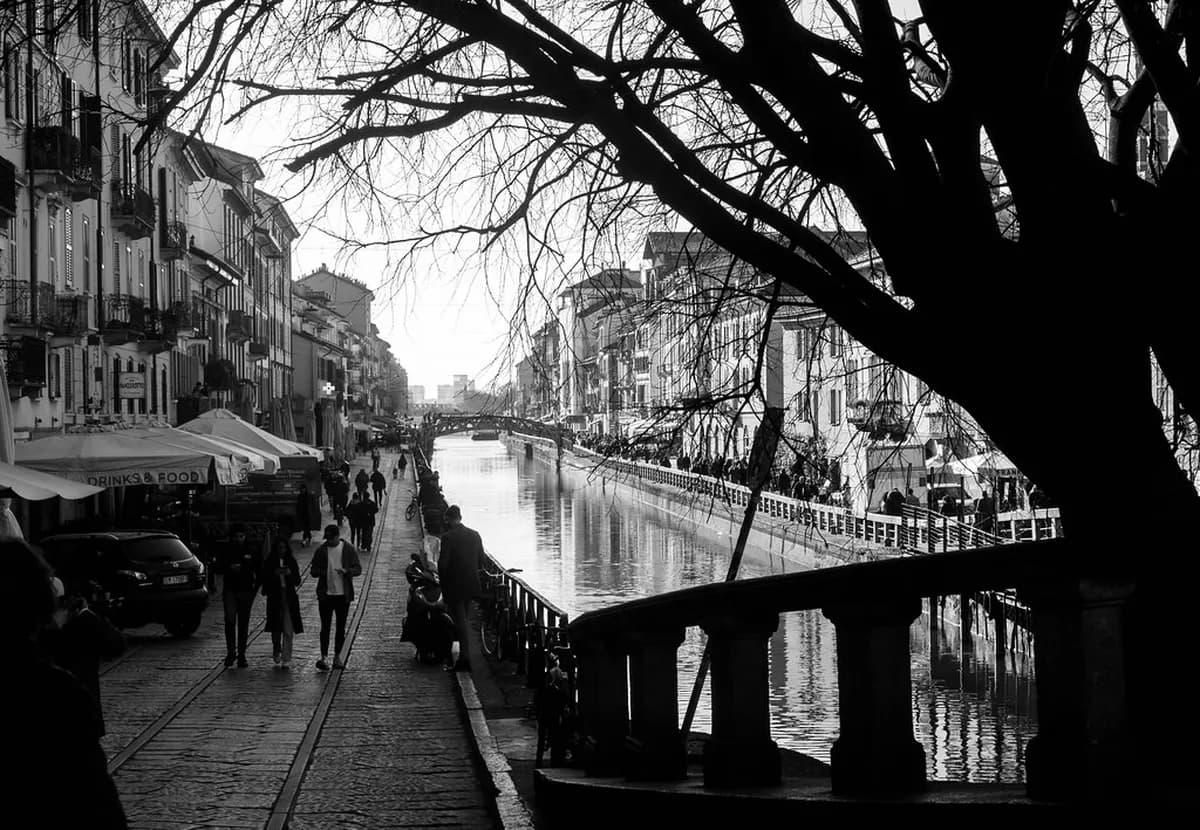
The Navigli district is the undisputed heart of casual social life thanks to its picturesque canals and pedestrian streets. Thousands of people flock to the banks of the Naviglio Grande every evening for affordable drinks and lively conversation. The atmosphere here is young, energetic, and perfectly suited for those who enjoy people-watching.
Start from Porta Ticinese and walk along Naviglio Grande and Naviglio Pavese to find a bar with a canal-side terrace. Established spots include BackDoor 43 for serious cocktails, Le Biciclette for an art-meets-drinks scene, and Le Scimmie for live music. Many bars in this area feature outdoor seating that stays packed even during the cooler autumn months.
As the clock strikes midnight, several smaller venues along the water transition into intimate dance floors playing indie or house music. Bobino runs an aperitivo-into-80s-revival format, Volt programs boutique house and techno, and Rocket hosts themed indie and electro nights. The proximity to the Porta Genova station makes it very easy to access via public transport, and it is the ideal place to start your night if you prefer a relaxed and inclusive environment.
Brera: Sophisticated Sips in Milan's Artistic Heart
Brera stands out as the most romantic and elegant neighborhood for a sophisticated evening out. Its narrow cobblestone streets are lined with high-end boutiques and some of the most beautiful best rooftop bars in Milan. The crowd here typically consists of fashion professionals, artists, and wealthy locals looking for quality cocktails.
The bars in Brera focus heavily on mixology and rare spirits served in beautifully designed interiors. Jamaica on Via Brera 32 has poured drinks for over a century and remains a bohemian standby, while newer cocktail dens behind unmarked doors lean into signature menus inspired by Milanese fashion and design. You will find that the music is kept at a volume that allows for easy conversation throughout the night.
Walking through Brera at night feels like stepping into a movie set with its perfectly lit historic buildings. While the prices are higher than in Navigli, the quality of service and the atmosphere justify the extra cost. Many venues here require a smart-casual dress code to maintain the neighborhood's upscale reputation, and booking ahead on Thursday through Saturday is essential rather than optional.
Corso Como and Garibaldi: High-Energy, Mainstream, and VIP Glamour
For those seeking the quintessential milan nightlife experience, Corso Como is the place to see and be seen. This pedestrian street is home to some of the most famous best clubs in Milan where models and celebrities party. Hollywood Rythmoteque has been a celeb magnet for decades, Tocqueville 13 spins chart-friendly house, and 11Clubroom runs dressy hip hop and RnB nights. The energy here is high-octane with flashing lights and international hits blasting from every entrance.
Entry to these exclusive venues often requires booking a table in advance or arriving very early to stand in line. Expect strict door policies where your outfit plays a major role in whether you are allowed inside. Bottle service starts around 120 Euros and can easily cross 250 Euros at luxury rooms. You can check The map: Corso Como to locate the main cluster of high-end dance spots.
The surrounding Garibaldi area has seen massive redevelopment, adding sleek new lounges with stunning skyline views. These modern spaces offer a contrast to the classic glitz of the older Corso Como establishments. It remains the best part of the city for travelers who want a high-energy night with premium service, though the dress code is strict: men should avoid sneakers, shorts, and athletic wear entirely on weekend nights.
Arco della Pace and Monumentale: Glam Lounges and Special Venues
The area surrounding the Arco della Pace is a favorite for locals who enjoy large outdoor terraces and a trendy vibe. Dozens of bars line the streets facing Sempione Park, offering a beautiful backdrop for an evening cocktail. You can easily find the main strip by looking at The map: Corso Sempione for navigation.
This district is particularly popular during the summer months when the park breeze keeps the outdoor lounges comfortable. JustMe runs a terrace-plus-club format with hip hop and house, Gattopardo sits inside a former church for upscale commercial and classics, and Pineta Milano brings a luxury-club spin-off onto Via Messina. The "see and be seen" culture is very strong here, so expect a fashionable crowd throughout the week.
Nearby, the Monumentale area features unique venues housed in repurposed historic structures and former industrial spaces. Fabbrica del Vapore and Vapore 1928 host cultural open-airs, DJ sets, and pop-up events from Fashion Week to Art Week. The mix of historic architecture and modern lighting creates a truly memorable evening atmosphere that bridges the gap between the artistic quiet of Brera and the intense clubbing of Corso Como.
Mecenate, Forlanini, and Idroscalo: Big Rooms and Open-Air Clubs
When the weather warms up, the party moves toward the outskirts of the city to massive open-air venues. Fabrique in Mecenate hosts major live acts and electronic showcases; Amnesia in Forlanini is a long-running techno institution that books international headliners weekly. These venues often feature world-renowned DJs who play until the early morning hours.
Reaching these areas is the part most tourists underestimate. Fabrique and Amnesia sit beyond the M3 metro reach, so factor in 15 to 25 Euros for a taxi each way or check whether the club runs a shuttle bus from central squares like Lima or Cadorna. The Idroscalo lake area also becomes a hub for summer festivals: Circolo Magnolia programs indie concerts and club nights, while Papaya Beach Club, linked to Alcatraz, runs open-air melodic house through the warm months.
Planning a visit to these big-room clubs requires checking event calendars on platforms like Dice or Xceed several weeks ahead. Tickets often sell out weeks in advance for major international acts during the peak summer season. Always verify the closing times, as these venues often stay open much later than central bars, and confirm the last night bus departure if you do not want to pay a return taxi fare.
Rogoredo and Corso Lodi: Industrial Vibes and Late-Night Energy
South Milan has become the go-to destination for fans of underground music and industrial warehouse aesthetics. Distretto Industriale 4 on Via Toffetti 25 runs as a multipurpose venue for concerts and techno club nights, while Plastic on Via Gargano 15 remains a legendary alternative club mixing electronic, 80s, and pop crossover. Main Club on Via Carlo Boncompagni 44 features two dance floors spanning commercial and techno.
These venues often occupy former factories, giving them a gritty and authentic feel that contrasts with the city's fashion districts. The crowd is diverse, welcoming, and deeply passionate about electronic music subgenres. It is the best place to go if you want to dance without the pretense of the VIP scene, and dress codes lean alternative rather than polished.
Late-night energy in this part of town is unmatched, with many parties continuing well past 05:00. Access is relatively easy via the yellow M3 metro line to Rogoredo or Corvetto, though you should check the late-night bus schedules for your return. This district represents the cutting edge of the local alternative culture.
Viale Monza, Loreto, and Via Padova: Creative and Inclusive Spots
The northeastern corridor of Milan offers a budget-friendly and multicultural alternative to the expensive city center. Ragoo on Viale Monza runs as a discobar with a garden spinning funk, disco, indie and pop; Mosso on Via Angelo Mosso 3 works as a cultural hub programming DJ sets, live events, and weekend markets; DKR on Via Merano 18 leans hard into techno and house showcases.
You can find everything from craft beer pubs to venues hosting live jazz or experimental electronic sets. The atmosphere is unpretentious and focuses on community and creative expression rather than status. A cocktail here typically runs 8 to 10 Euros, roughly 30 percent cheaper than equivalent drinks in Brera or Corso Como.
Loreto serves as the central jumping-off point for these neighborhoods and is very well-connected by the M1 and M2 metro lines. Porta Venezia, just south of Loreto, has emerged as the most LGBTQ+-friendly district in the city with natural wine bars and late-night venues staying genuinely mixed past 02:00. Exploring these streets reveals a side of the city that is inclusive, vibrant, and constantly evolving.
The City's Best-Kept Secret: Castle's Rooftop Panoramic Walk
Before diving into the loud music and crowded bars, consider starting your evening with a breathtaking view. The Sforzesco Castle offers a secret panoramic walk along its high battlements that many visitors overlook. This experience provides a stunning perspective of the city skyline as the lights begin to twinkle across the Duomo spires, Sempione Park, and the new Porta Nuova towers.
Walking along the ancient stone walls offers a moment of peace before the high-energy night begins. On clear winter evenings you can even catch the distant outline of the Alps behind the modern skyline. It is a highly romantic setting that is perfect for taking memorable photos of your trip.
The walk typically requires a separate booking, so check the official castle website for evening availability and times. After your descent, you are perfectly positioned to walk into the Brera or Garibaldi districts within ten minutes. This secret start adds a touch of historical magic to any night out in the city.
Milan Nightlife Comparison: Finding Your Perfect Vibe
Use the table below to match your travel style to the right district. Prices reflect a typical weekend cocktail, and the dress-code column assumes a Friday or Saturday night.
| District | Vibe | Price | Dress Code | Best For |
|---|---|---|---|---|
| Navigli | Casual, social, canal-side | €€ (10-14 EUR) | Casual | First-timers, groups, aperitivo crawls |
| Brera | Romantic, chic, artistic | €€€ (14-18 EUR) | Smart casual | Dates, quiet conversation, mixology |
| Corso Como / Garibaldi | High-energy, VIP, glamour | €€€€ (18-25 EUR) | Very elegant | Clubbing, celebrity-spotting, table service |
| Arco della Pace | Glam terraces, see-and-be-seen | €€€ (14-20 EUR) | Smart casual | Summer terraces, pre-club lounging |
| Mecenate / Forlanini / Idroscalo | Big-room and open-air | €€€ (15-40 EUR ticket) | Flexible | Techno, international DJs, summer festivals |
| Rogoredo / Corso Lodi | Industrial, underground | €€ (10-15 EUR) | Alternative | Serious dancers, warehouse techno |
| Viale Monza / Via Padova | Creative, inclusive, budget | € (8-12 EUR) | Casual | Live music, craft beer, local crowd |
| Porta Venezia | Eclectic, LGBTQ+-friendly | €€ (10-14 EUR) | Casual to quirky | Natural wine, inclusive late nights |
Milan Events Calendar 2026: When the City Goes Harder
Certain weeks turn ordinary clubs into citywide spectacles and push hotel prices to their seasonal peaks. Plan around these anchor dates if you want Milan at its most intense, or deliberately avoid them if you prefer lower prices and easier reservations.
- Milano Fashion Week Women's (late February / early March 2026): Brand after-parties across Brera, Monumentale, and Garibaldi; expect invite-only guest lists and surge pricing on cocktails.
- miart and Milan Art Week (early April 2026): Gallery hops, museum late openings, and DJ sets in creative spaces like Fabbrica del Vapore.
- Salone del Mobile and Milano Design Week (mid-April 2026): The whole city becomes one giant design district with hundreds of brand activations and after-parties.
- Milano Pride (late June 2026): Pride Village concerts, club takeovers, and the Saturday parade centered on Porta Venezia.
- Milano Fashion Week Men's (late June 2026): Menswear week brings open-format club nights and industry after-parties.
- Milano Fashion Week Women's SS27 (late September 2026): The most intense late-night energy of the year, peaking around Corso Como and Arco della Pace.
- La Scala Opening Night (7 December 2026, Sant'Ambrogio): Citywide gala screenings in public squares, followed by champagne bars staying open late.
Tickets for headline DJ nights during Fashion Week and Design Week go live two to three months ahead on Dice and Xceed, and most of them sell out before the week starts. For Pride, Design Week, and major concerts at Fabrique or Alcatraz, buy early: walk-up tickets either do not exist or cost nearly double.
Milan with Friends: Football, Glamour, and Fashion Itineraries
Traveling with a group changes which neighborhoods make sense. Groups of four or more get turned away from tiny cocktail dens in Brera but move easily through Navigli, Corso Como table service, and the big rooms at Fabrique or Amnesia. Pre-book every single stop after 22:00 — walk-in groups wait 40 minutes on Fridays.
For a football weekend built around a San Siro match, start with an early aperitivo on Colonne di San Lorenzo, taxi to the stadium, then circle back to Corso Como for late-night drinks where post-match crowds gather. For a glamour-first itinerary, do Armani Bamboo Bar on Via Montenapoleone at 19:00, dinner in Brera, and end at Hollywood Rythmoteque or 11Clubroom. For fashion-week tourism, chase brand afterparties between Monumentale and Porta Nuova, and always keep 11Clubroom and JustMe as your backup if your guest-list spot falls through.
If the trip is a romantic two-person itinerary, swap the big rooms for a rooftop terrace at golden hour, a slow Brera dinner, and a late jazz set at Blue Note near Porta Garibaldi. The pace is completely different: two people can walk into the city's best cocktail bars, but they often cannot get into the biggest clubs unless they reserve a table.
The Door Rules Nobody Warns Tourists About
Milan has a handful of strict practicalities that trip up almost every first-time visitor, and none of the big nightlife guides spell them out. Read this section before you leave the hotel — it is the difference between a smooth entry and a 40-minute sidewalk argument.
Italian clubs legally require your physical passport or national ID card, not a photo on your phone. Bouncers at Amnesia, Fabrique, Hollywood Rythmoteque, and most Corso Como venues will refuse even a high-resolution scan. Bring the real document in a zipped pocket or small cross-body bag and do not leave it at the hotel. If you are a non-EU visitor, your home country ID is not accepted — it must be the passport itself.
Many clubs are fully cashless, including Alcatraz, Fabrique, and most mid-range Navigli venues. Carry a contactless card or Apple Pay; ATMs inside clubs charge 3 to 5 Euros per withdrawal. For underground and alternative venues like Circolo Magnolia, DKR, or Mosso, you may also need a socio ARCI membership card — a legacy of Italian cultural-association law that costs roughly 5 to 12 Euros per year and can be purchased at the door with ID. ARCI members skip into these venues faster than walk-ins.
Finally, most headline nights at Corso Como and Monumentale require WhatsApp guest-list registration by 22:00. Check the venue's Instagram bio for the PR contact number, send your name and party size in Italian or English, and screenshot the confirmation. Turning up without a list entry on a Saturday usually means either paying a 25 to 40 Euro door fee or being refused at the velvet rope.
Practical Logistics: Timing, Budgets, and Dress Codes
Understanding the timing of a typical night is crucial for avoiding empty venues or long queues. Bars fill for aperitivo around 19:00 and stay busy until about 23:00. Most nightclubs do not open their doors until 23:30, and the main floor remains quiet until 01:30. Dinner typically runs 20:30 to 22:30 and is treated as the bridge between the two, not a separate evening.
Budgeting for your night depends heavily on the district you choose to visit. Expect to pay 12 to 15 Euros for a cocktail in Navigli, while clubs in Corso Como can charge 20 to 30 Euros per drink. Most clubs also have an entry fee ranging from 15 to 40 Euros, which usually includes one drink. Bottle and table service at mainstream clubs starts at 120 Euros per bottle and can exceed 250 Euros at luxury rooms.
Dress codes are taken seriously in many central Milanese venues, especially the high-end clubs. Men should generally avoid shorts, flip-flops, or athletic wear to ensure they pass the door selection. Women often opt for stylish dresses or fashionable evening wear that reflects the city's status as a global fashion capital. Getting around late, the M1, M2, M3, and M5 metro lines run until about 00:30 on weekdays and closer to 01:30 on Fridays and Saturdays; night buses cover the gaps, and FreeNow, Uber, and BeMyDriver are the standard ride-hailing apps.
Late-Night Food and Next-Day Recovery
Milan is one of the few European capitals where you can eat genuinely well at 02:00. Around Porta Garibaldi and Centrale, Luini near the Duomo runs its famous panzerotti window well into the early hours on weekends, and Princi bakeries reopen their ovens before 05:00 for warm brioche and espresso. In Navigli, pizzerie al taglio on Corso di Porta Ticinese serve until 02:30 on Fridays and Saturdays, and the kebab spots on Corso Buenos Aires near Porta Venezia stay open all night.
For a proper hangover breakfast the next morning, aim for a Milanese pasticceria between 09:00 and 11:00. Pasticceria Marchesi in Brera, Pavé near Porta Venezia, and Cova on Via Montenapoleone all do the classic recovery combination: a strong espresso, a maritozzo or brioche con crema, and a spremuta d'arancia freshly squeezed. Locals swear by a late-morning walk along the Navigli or through Parco Sempione to reset, followed by a risotto alla milanese lunch near Centrale.
If the night ran past 05:00, skip breakfast and go straight to the Sunday aperitivo at 18:00 — Milan's unofficial recovery cycle assumes you will sleep until noon. Schedule low-stakes plans for Sunday and save museums or day trips for the day after you arrive, not the day after a club marathon.
Ticket Strategy: Dice, Xceed, and Guest-List Hacks
Buying tickets for Milan's bigger nights is easier than elsewhere in Italy if you know which platform each venue uses. Dice covers Fabrique, Alcatraz, Magnolia, and most live-music venues; download it before you arrive and set alerts for touring artists. Xceed is the go-to for electronic and club nights — Amnesia, Gate, Tunnel, and Papaya Beach Club all use it, often with early-bird tiers that save 30 to 40 percent if you buy at least a week ahead.
For Corso Como mainstream clubs, tickets are less important than guest lists. Follow venues like Hollywood Rythmoteque, The Club, and 11Clubroom on Instagram and message their PR contacts directly the afternoon of your visit. Many Milan PRs run free or reduced-entry lists for women and mixed groups before 00:30 — men in groups of three or more typically pay full door fee regardless.
For festival-scale events during Fashion Week, Design Week, and Pride, check the official Milano Fashion Week and Salone del Mobile calendars published on milanocortina2026.com and salonemilano.it for the parallel party listings. Many afterparties are announced only 48 hours before through Instagram Stories, so following a handful of PR accounts like Le Club and Tom's The Project gives you the earliest possible ticket windows.
Explore More Milan Guides
Keep planning your Milan trip with these guides.
- 10 Best Bars in Milan
- 17 Best Milan Clubs and Nightlife Districts
- 13 Best Cocktail Bars in Milan for Aperitivo, Classics and Late Nights
- 14 Best Rooftop Bars in Milan and Local Visiting Tips
- 12 Best Wine Bars in Milan for Enoteche, Natural Wine and Aperitivo
- Milan Gay Nightlife Guide
- Navigli Nightlife Milan Guide
- 9 Best Things to Do in Milan at Night in 2026
Explore nightlife in other cities
Frequently Asked Questions
What time do clubs open and close in Milan?
Most clubs in Milan open their doors around 11:30 PM, but they rarely get busy before 1:30 AM. They typically stay open until 5:00 AM or 6:00 AM on weekends. For the best experience, plan to arrive at a club between 12:30 AM and 1:00 AM to avoid the longest queues.
Do I need to dress up for Milan nightlife?
Yes, many venues in districts like Brera and Corso Como enforce a strict dress code. Men should wear closed-toe shoes and avoid sportswear, while women usually dress in smart or fashionable attire. More casual areas like Navigli or the industrial clubs in the south are much more relaxed about clothing.
How does aperitivo work, and what should I order?
Aperitivo is a pre-dinner ritual where you buy a drink and receive access to a food buffet or a plate of snacks. You should try a classic Spritz or a Negroni, which are the most traditional choices. It usually runs from 6:30 PM to 9:00 PM and is a great way to socialize. You can find more details on European nightlife trends for similar traditions.
How do I move around safely at night?
Milan is generally safe, but you should use official taxi apps like FreeNow or Uber for late-night travel. The metro runs until about midnight, after which a network of night buses takes over the main routes. Always stay aware of your surroundings in crowded areas like the Central Station or busy nightlife districts.
Which Milan nightlife options fit first-time visitors?
Navigli is the best option for first-time visitors because of its easy-going atmosphere and iconic canal views. It offers a perfect introduction to the aperitivo culture without the pressure of strict dress codes. Corso Como is also a must-see if you want to experience the city's famous high-fashion clubbing scene.
Milan offers a diverse and thrilling nightlife scene that caters to every taste and budget. From the social canals of Navigli to the high-fashion dance floors of Corso Como, the city never fails to impress. By following the local rituals of aperitivo and late-night clubbing, you can experience the true spirit of the city.
Remember to plan your logistics ahead of time, especially regarding dress codes, ARCI memberships for alternative venues, and transportation to outer districts. Whether you seek a romantic rooftop or a gritty industrial warehouse, the city has a perfect spot waiting for you. Embrace the energy of 2026 and enjoy every moment of your evening adventure.
The city's unique blend of tradition and modernity makes its nightlife some of the best in Europe. Take the time to explore different neighborhoods to find the vibe that suits your personality. Your night in Milan will undoubtedly be one of the highlights of your Italian journey.


