

Where to Find the Best Bars in Amsterdam This Year
Amsterdam's drinking scene splits cleanly into three tribes in 2026: Art Deco cocktail dens charging 16 to 20 Euros for a signature serve, 17th-century brown cafes pouring vaasjes of pilsner for 3.50 to 4.50 Euros, and Dutch-only taprooms where a Zatte tripel costs about 6 Euros. Exploring the Amsterdam nightlife is easiest when you pick one tribe per evening instead of trying to mix them.
This guide covers the 20 bars locals and visiting bartenders actually name-check, with neighborhood, price band, and what to order at each. It skips the generic category overview in favor of specific rooms, specific drinks, and the small operational details (card acceptance, opening days, reservation rules) that tend to trip up first-timers. Every venue listed has survived the post-2023 licensing shake-up and remains active for the 2026 season.
The city is compact enough to walk or tram between two or three bars in a night, so treat neighborhood as your map rather than star ratings. The Jordaan delivers brown cafes; Oud-West delivers natural wine and newer cocktails; the Canal Belt (Grachtengordel) hides the mixology flagships; Amsterdam Noord, reached by the free GVB ferry from Centraal, is where industrial-space natural wine bars and breweries cluster.
Best Cocktail Bars in Amsterdam
Pulitzer's Bar inside the Pulitzer Hotel on Prinsengracht is the consensus pick across visiting bartenders and industry lists. The Art Deco room sits in a 1615 townhouse, and the menu leans on smart classics plus a few theatrical originals such as the Chocolate Factory Martini (Tanqueray gin, dry vermouth, white chocolate, lavender). Order bitterballen alongside your drink; the kitchen's croquettes are the best pub-style pairing in the city. Cocktails run 17 to 20 Euros.
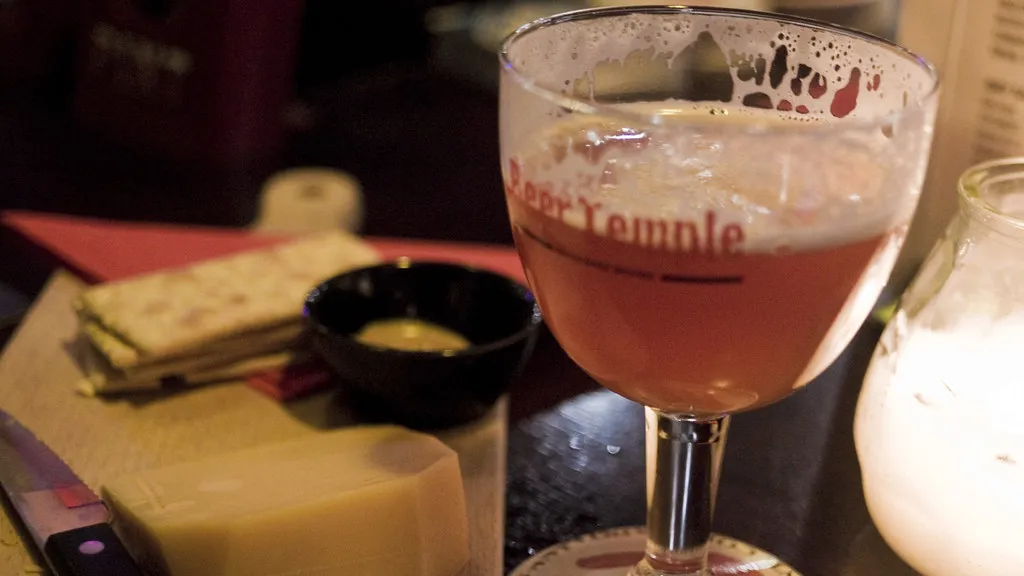
Tales & Spirits on Wijde Lombardsteeg, a back alley near the Dam, is the other name you will hear everywhere. The signature Smoke & Mirrors arrives under a smoke-filled glass dome and sips slowly; the What If (pineapple-ginger daiquiri) is the faster sell. The room has two floors of nooks and no reservations are taken, so arrive by 18:30 on a Friday or Saturday to avoid the 45-minute wait.
Door 74 at Reguliersdwarsstraat 74 is the city's original speakeasy and still enforces the text-to-book rule in 2026: message +31 6 3404 5122 with your name, party size, and preferred time, and wait for confirmation before you show up at the unmarked door. Inside, the leather booths and 2010s New-York-speakeasy mood make it a serious cocktail room, not a novelty. The Magpie Melody (rum, Campari, strawberry tepache, coconut, foam) is the house crowdpleaser.
Hiding in Plain Sight on Rapenburgerstraat flips the speakeasy formula — it is one of the most visible "hidden" bars in Amsterdam, with giant windows on two walls and a themed menu split by spirit category. The bar team's classical technique is the highlight; sit at the bar and let the lead bartender pick. Vesper Bar on Vinkenstraat in the Haarlemmerbuurt, the neighbourhood cocktail favourite of local industry folk, is currently open Thursday through Saturday only, and its rotating menu is consistently sharp.
More Mixology Flagships Worth the Trip
Bar The Tailor inside the NH Collection Grand Hotel Krasnapolsky runs a menu themed on suit cuts — Italian, English, American — and is the strongest pre-dinner stop in Centrum. The savory Manhattan riff with Woodford Reserve, portobello-and-shiitake-infused Antica Formula vermouth, Fernet Branca, and olive brine is the bartender's test drive; if you like it, stay for a second. Cocktails are 16 to 18 Euros and the room is quiet enough for conversation.
Flying Dutchmen Cocktails, the Canal Belt bar from Tess Posthumus on Singel, is the education-first pick. The menu is organized by intensity — drinks that make you "walk," "run," or "fly" — and the flavour matrix on the back plots sweetness against bitterness so you can match a cocktail to your palate rather than guessing. The Brandy Crusta is the classic showcase; the Santa Marta is the creative one. Reservations are strongly recommended on weekends.
Bar Oldenhof on Elandsgracht in the Jordaan caps the room at 25 people so the bartenders can actually pay attention. The style is old-fashioned in the literal sense: Scottish whiskies by the dozen, leather armchairs, classic stirred drinks, no loud music. Fitz's Bar inside Pillows Grand Boutique Hotel near Oosterpark is the newer, showier sibling — dark wood, velvet banquettes, a menu from award-winning bartender Nick Vrielink, and three-drink flights for around 45 Euros. The Harmony in Bloom (Hibiki, St Germain, oolong, smoked soy) is the one to order solo.
Traditional Dutch Brown Cafes
A "brown cafe" (bruin cafe) is the Dutch answer to the English pub: a small, wood-panelled room with walls darkened by three centuries of pipe smoke, a short draft list dominated by Heineken, Amstel and one or two Belgian options, and a crowd of regulars sitting shoulder to shoulder. You come for gezelligheid — the untranslatable Dutch word for a homey, low-fuss conviviality — not for craft lists. Vaasjes (a 22cl glass of pilsner) run 3.50 to 4.50 Euros; a plate of bitterballen with mustard is 7 to 9 Euros.
Cafe 't Smalle on Egelantiersgracht is the prettiest brown cafe in the Jordaan and has its own floating terrace on the canal in summer. Cafe Chris on Bloemstraat, opened in 1624, is the oldest in the Jordaan and remains cash-only in 2026. Café Papeneiland at the corner of Prinsengracht and Brouwersgracht dates to 1642 and is as famous for its Dutch apple pie as its Heineken. Café de Dokter in an alley off Rokin, founded in 1798 by a surgeon, is the smallest pub in the city — eight seats inside, a spiral staircase, and house-made chocolate liqueur poured straight.
Café de Sluyswacht in a lopsided 1695 lockkeeper's house near Rembrandthuis, In 't Aepjen on Zeedijk in a building that housed sailors and their pet monkeys in the 1500s, and Cafe Hoppe on the Spui (serving since 1670) round out the essential rota. None of these need reservations; most have a small outdoor bench where you can stand with a vaasje when the room is packed.
Local Breweries and Dutch Beer Cafes
Brouwerij 't IJ next to the De Gooyer windmill on Funenkade is the single essential brewery stop. The on-site taproom pours roughly a dozen own-brewed beers including the flagship Zatte tripel (about 6 Euros a glass) and the IJwit witbier; buy a bottle to take away and sit on the outdoor terrace facing the 1725 windmill. Tram 14 from Rembrandtplein drops you across the street. Food is limited to cheese plates and Dutch snacks.
Proeflokaal Arendsnest on Herengracht is the Dutch-beer-only specialist, with around 50 taps and more than 100 bottles from across the Netherlands — no imports allowed. The uniformed staff guide you through tripels, quadrupels and barrel-aged stouts; a flight of four samplers is around 16 Euros. In de Wildeman just off Nieuwendijk offers the opposite approach: 18 taps of Dutch and international craft beer plus 250-plus bottles, inside a former distillery from 1690.
Oedipus Brewing in Amsterdam Noord is the experimental pick — sour ales, spiced saisons, frequent DJ nights — and sits a fifteen-minute cycle from the NDSM ferry terminal. Brouwerij de Prael in the Red Light District doubles as a social-employment project and names its beers after classic Dutch singers; the tasting room on Oudezijds Armsteeg is central enough to fit into any walking loop. Brewed by Women BAR (Gebrouwen door Vrouwen) on Jan Pieter Heijestraat in Oud-West, the only fully women-led brewery in the city, is worth the detour for their Tricky Tripel and a conversation with the founders about their home-brewing origin story.
How to Drink Genever, the Dutch National Spirit
Genever (or jenever) is Amsterdam's most under-ordered drink. It is the malty juniper-forward spirit gin descends from, comes in jonge (young, lighter) and oude (old, maltier) styles, and is poured in a tulip-shaped glass filled to the absolute brim. The traditional serve is a kopstootje — literally "little headbutt" — where the genever sits beside a small beer. The drinker bends at the waist, keeps both hands behind their back, and sips the first taste off the rim of the glass without lifting it; the beer is the chaser.
Wynand Fockink in the Pijlsteeg alley behind Dam Square, operating since 1679, is the classic tasting room. The bar stocks more than 70 genevers and liqueurs and offers 25-minute guided tastings (around 20 Euros) in the back room on Saturdays. Dutch Courage on Keizersgracht, opened by two industry veterans, carries roughly 150 genevers and features a kopstootjes-automatiek — a vintage vending machine that dispenses paired genever-and-beer sets. Order a genever-based Martinez (swap the gin) if you want to see the spirit in cocktail form.
Distillery 't Nieuwe Diep deep inside Flevopark in Oost is the cult pick. The distillery lives in a whitewashed former pumping station on a lake; getting there is a 20-minute tram ride plus a ten-minute walk through the park, and the room seats maybe 25 people. In exchange, you taste distillate made on-site — house genevers plus a rotating range of fruit liqueurs — in one of the most atmospheric drinking rooms in the Netherlands. Closed in harsh winter weather; check nwediep.nl before making the trek.
Natural Wine and Neighborhood Bars
Amsterdam has quietly built one of Northern Europe's stronger natural wine scenes since 2020. Bar Centraal on Ten Katestraat in Oud-West leads the pack — a tiny room with an exceptional by-the-glass list of low-intervention wines from France, Italy, Georgia and beyond, plus sharp small plates designed to match. Pull up a stool at the marble bar and let the sommelier pour; glasses run 7 to 12 Euros.
GlouGlou on Tweede van der Helststraat in De Pijp is the bigger, more casual sibling; the staff happily open any bottle by the glass and the food menu pairs cheese, charcuterie and seasonal small plates with the wine. FC Hyena in Noord combines natural wine with a three-screen art-house cinema — you can bring your glass into the film — and Skatecafé nearby welds a skate ramp onto a restaurant and wine bar in a former metalworks. Both are a fifteen-minute ferry-plus-cycle from Centraal.
For bars that are more about the room than the list, Bar Bukowski on Oosterpark is the reliable neighborhood pick in Oost — all-day food, spoken-word nights, a lively terrace opposite the park. Hannekes Boom near NEMO, built from reclaimed wood on a pier jutting into the IJ, is the summer default for a casual waterfront drink. Murmur in Noord pairs Levantine food with live music Thursday through Saturday, and is the best place in the city to combine dinner and dancing in one room.
Finding the Best Bars in Amsterdam for Canal Views
Waterside seating in Amsterdam is split between the Singelgracht/Prinsengracht ring (historic and central) and the IJ waterfront north and east of Centraal (bigger terraces, rougher-edged rooms). Prices at canal-side terraces run about 10-15% higher than inland equivalents for the same pour, which is a fair trade for a golden-hour view onto a 17th-century facade.
Café Lennep on Kloveniersburgwal is the quieter canal pick — far enough from Dam Square to still have terrace space on a sunny afternoon, and its tap list includes Brouwerij 't IJ's Zatte. Café de Jaren next to the Binnengasthuis has two broad canal-side terraces on the Amstel and is the classic meeting point. Waterkant under the Ruysdaelkade parking garage brings Surinamese food and cold Parbo beer to a huge canal-side deck — a counterweight to the Dutch-heritage dominance of this list.
Hannekes Boom, already mentioned, is technically IJ waterfront rather than canal, but earns the same role. For the elevated version, the best rooftop bars in Amsterdam cover the top floors of the Volkshotel, the A'dam Lookout, and the SkyLounge at the DoubleTree; most enforce a smart-casual dress code and charge a small premium for the view.
- Café Lennep: quieter historic canal, local beers from 4.50 Euros
- Waterkant: Surinamese deck with Parbo beer and tropical music
- Café de Jaren: two-level Amstel terrace near Rembrandthuis
- Hannekes Boom: reclaimed-wood IJ pier bar, opens April to October for deck seating
Planning Your Amsterdam Bar Night
Legal closing time for bars in Amsterdam is 01:00 on Sunday through Thursday and 03:00 on Friday and Saturday; a handful of licensed late-night venues run until 04:00 or 05:00. Smoking was banned indoors in 2008, so any "smoky" brown cafe smell is centuries of pre-ban residue, not a live ashtray. Cannabis is sold only in coffeeshops, not in bars, and most bars will ask you to step outside if you roll your own tobacco.
Three operational details save visitors money and friction. Many brown cafes are card-only in 2026 (PIN, not cash), but a stubborn minority — Cafe Chris, Café Papeneiland on busy nights, Café de Dokter for anything over 10 Euros — are cash-only or heavily prefer cash. Carry 30 to 50 Euros in small notes as insurance. Foreign credit cards (Visa, Amex) are accepted at hotel and cocktail bars but often refused at brown cafes, which run on Dutch Maestro debit; a travel card that supports Maestro (Revolut, Wise) avoids the scramble.
Tipping works differently from North America: service is included in the price, and you round up to the next Euro for a single drink or leave 5 to 10% on a bigger cocktail tab. Leaving 20% is not polite, it is confusing. For cocktail flagships (Pulitzer's, Door 74, Flying Dutchmen, Vesper), reserve at least 48 hours ahead on Friday and Saturday; Door 74 still requires a text confirmation rather than an online form. For brown cafes, never reserve — walk in, take whatever seat is open, and expect to share a table on a busy night.
Neighborhood-wise, stay around Oud-West or De Pijp if bars are your trip theme: both have the highest density of good rooms within a ten-minute walk, and both are a 15-minute tram from Centraal. Jordaan is quieter and more tourist-priced; Noord is cheaper and more experimental but requires the ferry. Check the best clubs in Amsterdam if you plan to continue past 01:00, and the things to do in Amsterdam at night guide for non-drinking alternatives between bar stops.
Unique Themed Bars for a Quirky Night Out
TonTon Club on Nieuwendijk combines craft beer with a retro arcade — air hockey, pinball, original Street Fighter II cabinets — and charges per token rather than a cover. Branie Bar, better known as an Indonesian restaurant on Jan Pieter Heijestraat, runs a small front bar pouring rijsttafel-inspired cocktails (tamarind, lemongrass, sambal) that lean savoury and spicy; order two bar snacks alongside to understand the flavor logic.
Chateau Amsterdam in a former Noord warehouse is the city's urban winery, blending grapes shipped from France and Italy and bottling them on-site. Tours and tastings run Thursday to Sunday for around 25 Euros; the room is big enough for groups, which is rare in central bars. Polly Goudvisch a short ferry from Centraal in Noord serves sharp cocktails near the A'dam Lookout tower's observation swing — a logical combination if you want a view without the rooftop-bar dress code.
For a grounded local option, the best pubs in Amsterdam guide covers expat-friendly rooms with live-sport screens, pub quizzes, and Sunday-roast menus. These are rarely the most atmospheric rooms in the city but they are the easiest places to fall into conversation with other English-speaking travellers on a slow Tuesday night.
Frequently Asked Questions
What is a traditional brown cafe in Amsterdam?
A brown cafe is a traditional Dutch pub named for its dark wood interiors and nicotine-stained walls. These cozy spots focus on local lagers and snacks. You can find many authentic options throughout the Netherlands for a relaxed evening.
Do I need to make reservations for bars in Amsterdam?
Most casual bars and brown cafes do not require reservations for small groups. However, popular cocktail lounges and speakeasies often fill up quickly. It is best to book a table at least a few days in advance for high-end venues.
What is the typical cost of a drink in Amsterdam?
A standard beer or glass of wine usually costs between 5 and 8 Euros. Craft beers and premium cocktails can range from 9 to 20 Euros depending on the venue. Prices are often higher in the city center and at rooftop locations.
What are the legal drinking hours in Amsterdam?
Most bars in the city center stay open until 1:00 AM on weekdays and 3:00 AM on weekends. Some clubs and late-night venues have licenses to serve until 5:00 AM. Always check the specific closing times for individual establishments before you visit.
Amsterdam rewards a bar-led itinerary more than almost any other capital in Europe because the three defining categories — brown cafes, beer taprooms, and cocktail flagships — are each genuinely world-class and each within walking or tram distance of the centre. Pick one category per evening, reserve 48 hours ahead for anything in the Canal Belt, and carry cash for the Jordaan.
For a structured first evening that covers multiple venues with a guide handling the reservations, an Amsterdam pub crawl guide is a solid way to compress the scouting phase. After the crawl, return solo the next night to the one or two rooms that clicked — the city's best bars reward repeat visits more than a single drive-by, and the regulars will start to recognise you by the third vaasje.


