

10 Best Things to Do for Bologna Nightlife (2026)
After my fourth visit to the red-tiled capital of Emilia-Romagna, I finally understood why locals call it "the fat, the red, and the learned." The city transforms at dusk into a sprawling social hub where 80,000 university students and lifelong residents share the same narrow porticos. Bologna nightlife is less about high heels and velvet ropes and more about the democratic joy of a shared bottle of Pignoletto. This guide was last refreshed in April 2026 to reflect current venue hours, tessera fees, and the post-renovation state of the Teatro Comunale opera programme.
Navigating the evening scene here requires some local knowledge to avoid the standard tourist traps near Piazza Maggiore. The best energy hides in the shadows of the Zamboni university district, the gritty Pratello street, and the back entrance of Mercato delle Erbe. Whether you want a refined opera night, a jazz-cellar dinner, or a 04:00 techno set in a suburban warehouse, Bologna covers every layer. Expect a mix of 15th-century taverns and modern rebellion as you walk the porticoed alleys of Italy's oldest university town.
Key Takeaways
- Best overall vibe: Osteria del Sole for its 500-year history and wine-only, bring-your-own-food tradition.
- Best for a non-dance night: Cantina Bentivoglio for jazz with handmade tagliatelle, booking essential.
- Best rainy-day pick: Le Stanze bar inside a 17th-century private chapel with original frescoes.
- Best free experience: Piazza Verdi at 22:00 for improvised concerts, poetry, and political debate.
- Practical reminder: Many clubs and alternative bars require an ARCI tessera card (around EUR 5-10) at the door.
The areas of Bologna's nightlife
The geographic layout of the city dictates the mood of your evening. The dense alleys of the Quadrilatero, the open-market core just east of Piazza Maggiore, serve as the primary early-aperitivo hub among high-end delis and wine shops. Crowds spill out of tiny bars with glasses of sparkling Pignoletto in hand between 18:00 and 20:00. It is the polite, photogenic warm-up before the night's real centre of gravity shifts north.
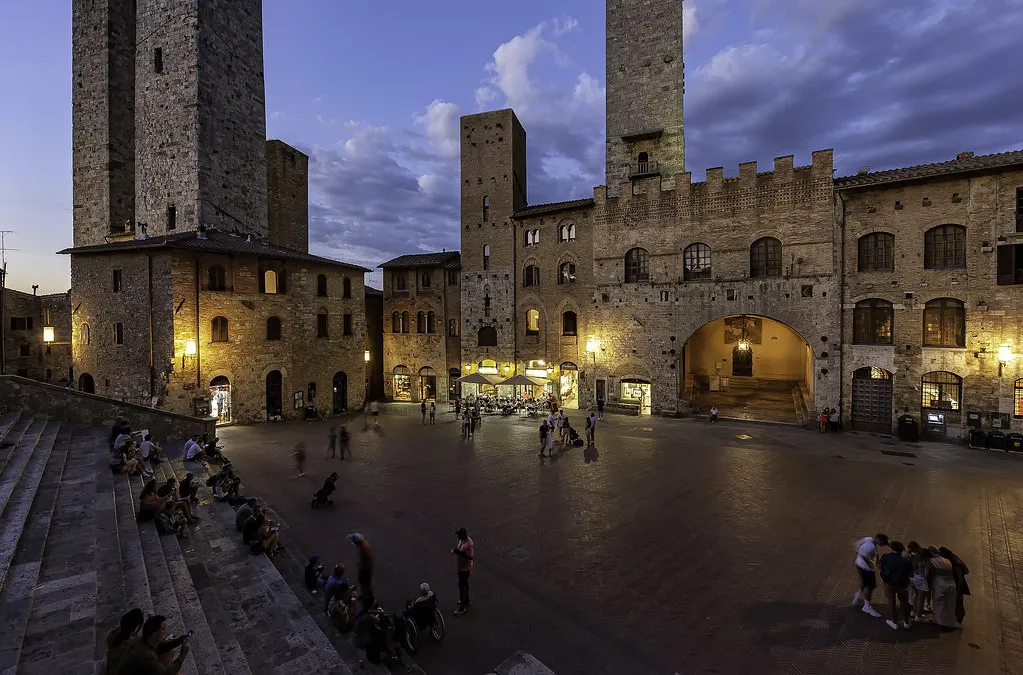
The university district around Via Zamboni, Via delle Belle Arti, and Piazza Verdi runs louder and cheaper. Graffiti-covered walls and plastic cups define the aesthetic, reflecting the city's activist roots since the 1970s. Students spend on average EUR 8-12 for an aperitivo here versus EUR 12-18 in the Quadrilatero. Check the nightlife scene across Italy to compare Bologna's student spirit with Rome or Milan.
Via del Pratello provides a middle ground, attracting a local crowd that prefers craft beer, live folk rock, and laid-back osterie. This long street on the western edge of the old walls is famous for its independent spirit, small co-op bars, and neighbourhood commitment to keeping chain outlets out. Most venues here stay busy until 02:00 on weekends and genuinely cater to residents, not tourists. For a niche fourth option, the Jewish Ghetto around Via Mascarella is where the jazz cellars cluster.
Bars in Bologna: historic taverns and modern aperitivo spots
Bologna's bar culture is built around the aperitivo, a pre-dinner drink that usually includes a buffet of tigelle, mortadella, and focaccia for the price of the cocktail. Expect to pay EUR 8-12 for a Spritz or glass of wine with buffet access between 18:30 and 21:00, with venues like Le Stanze inside a 17th-century former chapel near Via Borgo San Pietro offering the most unique backdrop for that first round.
For a stripped-back historic experience, Osteria del Sole on Vicolo Ranocchi has served wine since 1465 and operates on a strict no-food-sold-here rule. Buy bread, cheese, and mortadella at the adjacent Mercato di Mezzo and eat it at the communal tables while paying EUR 4-6 per glass of Sangiovese. Hours run Monday to Saturday 10:30 to 21:30, closed Sunday, and cash is strongly preferred. Arrive by 18:00 to secure a table before the post-work crowd.
In the Pratello scene, L'Ortica on Via Mascarella sits next to the Libreria Modo Infoshop bookstore, which stays open until midnight and lets you read with a EUR 6 pint. Birroteca Bukowski is a genuine bottle shop rather than a pub, open until 22:00 only, and it may close early if the owner decides to be a customer elsewhere. That erratic manifesto is deliberate, and it says more about Bologna's self-image than any guidebook quote.
Clubs in Bologna: where to dance until dawn
The city's club scene skews toward substance over spectacle, with programmes built around resident DJs and small international bookings rather than mega-headliners. Doors generally open around 23:00 but the floor does not fill until 01:00, and most nights wrap by 05:00. Entry runs EUR 10-20, usually including one drink, and almost every venue requires an ARCI or SIB membership card you can buy at the door for EUR 5-10, valid for a year across all affiliated clubs.
Link on Via Fantoni 21 remains the reference point for techno, drum and bass, and experimental electronic, with four rooms across two levels and regular appearances by European underground bookings. Kinki on Via Zamboni sits closest to the Two Towers and runs house and disco nights inside a space that has operated since the 1950s. Both peak after 01:30 on Friday and Saturday; checking Resident Advisor or the venue's Instagram before you arrive saves you from turning up on a private-hire night.
For Latin, reggaeton, and hip-hop, Qubò on Via Sampieri and Nama on Via Alfieri Maserati draw the student crowd. Matis in Casteldebole, west of the centre, programmes larger commercial nights and hosts dinner-and-show formats. Cassero on Via Don Giovanni Minzoni is the LGBTQ+ reference club, part of a broader cultural circle with events seven nights a week and a strong safe-space policy. Taxi back from suburban venues runs EUR 12-18 plus night surcharge.
Live music in Bologna: jazz cellars and rock venues
Bologna holds the UNESCO City of Music designation, awarded in 2006, and the city programmes live performance at a density that outpaces cities five times its size. Cantina Bentivoglio on Via Mascarella 4B is the institution to book first, a wine-cellar restaurant hosting live jazz nearly every night from 22:00. Expect a music charge of EUR 10-15 on top of dinner, with handmade tagliatelle at around EUR 14 and a reservation strongly required on weekends.
Bravo Caffè on Via Mascarella 1, two doors down, runs higher-production jazz and singer-songwriter evenings with a EUR 15-30 cover. For rock, folk, and experimental live bands, Bar Wolf on Via Massarenti 118 has operated since 1960 and keeps a pasta kitchen running until well past midnight alongside Italian craft beer on tap. The neighbourhood is a short bus ride east of the centre, easily reachable on the 14 line.
Every summer the programme moves outdoors. In July and August the Salotto del Jazz closes Via Mascarella for a street-concert series spread across four adjacent restaurants, and Cineteca di Bologna hosts the Sotto le Stelle del Cinema series in Piazza Maggiore with nightly free screenings for an audience of around 3,000 people. Explore the best bars in Bologna for pairings with these seasonal events.
Theatres, classical, and dance in Bologna
For a sophisticated night, Teatro Comunale di Bologna on Largo Respighi hosts the city's opera and ballet seasons inside an 18th-century house. The theatre reopened its refurbished main hall in late 2024 and is running a full 2026 programme. Tickets start at EUR 20 for restricted-view seats and climb to EUR 150 for a premiere in the stalls, with most performances starting at 20:00. The dress code is smart rather than formal; academic Bologna shows up in jackets over jeans as often as not.
For contemporary dance and experimental theatre, Teatro Arena del Sole on Via Indipendenza runs a prose season from October to May with tickets from EUR 15. DAMSLab on Via Azzo Gardino, run by the university's performing-arts department, programmes student-priced dance and music pieces for EUR 5-10, worth checking if you want a short, adventurous alternative to opera.
Bologna also has a strong improvised social-dance scene. Salsa and tango evenings run weekly at Nuova Oasi and at outdoor summer venues along the canals, with entry usually free or EUR 5 with one drink. These are genuinely mixed-age local events rather than tourist shows, so the etiquette is to ask for a dance rather than linger at the edge.
10 picks that cover every layer of the scene
The ten venues below are ordered so that 1 through 4 form a classic early-evening circuit, 5 through 7 run the late-night core, and 8 through 10 cover culture and alternatives. Every entry lists address, opening hours, and a realistic cost so you can plan a sequence rather than pick at random.
- Osteria del Sole (medieval wine bar, Vicolo Ranocchi 1D): open Monday to Saturday 10:30-21:30, glass of wine EUR 4-6, bring your own food from the Mercato di Mezzo next door. Arrive before 18:00 to claim a communal table.
- Mercato delle Erbe (evening food market, Via Ugo Bassi 25): food stalls and small bars serve until midnight most nights. Expect EUR 15-25 for a light dinner plus drinks, with the Altro? corner especially strong on craft cocktails.
- Le Stanze (cocktails in a 17th-century chapel, Via Borgo San Pietro 1): open 18:00 to 01:00, cocktails EUR 8-14 with an aperitivo buffet for EUR 1-2 extra. The frescoes are the selling point; acoustics are loud.
- Piazza Verdi (student social square, end of Via Zamboni): entirely free, peaks 22:00 to 02:00, cheap takeaway beer from the nearby 24-hour corner shops. Watch belongings in dense crowds.
- Cantina Bentivoglio (jazz cellar, Via Mascarella 4B): music from 22:00 most nights, music charge EUR 10-15, mains around EUR 14-20. Booking essential on weekends.
- Kinki (historic club, Via Zamboni 1): Friday and Saturday from 23:30, entry EUR 15-20 with one drink. Central location, 10-minute walk back to most hotels.
- Link (techno and experimental, Via Fantoni 21): open 22:00 to 05:00, entry EUR 10-20, tessera card required. Four rooms, serious sound system, expect a taxi back of EUR 10-14.
- Bar Wolf (live music and rock, Via Massarenti 118): open until 02:00, drinks EUR 5-9, small cover on gig nights. Take bus 14 from the centre.
- Senza Nome Bar (deaf-run social space, Via Belvedere 11b near Mercato delle Erbe): open late afternoon to midnight, drinks EUR 4-8. Use the sign-language order cards on the bar.
- Teatro Comunale (opera and ballet, Largo Respighi 1): shows from 20:00, tickets EUR 20-150. Book via teatrocomunalebologna.it at least a week ahead for premieres.
For same-day event calendars beyond the ten above, Bolognawelcome.com maintains a running listing of special club nights, Cassero events, and seasonal open-air programming.
Tessera cards, cash, and payment methods
The tessera associativa is the single detail most first-time visitors miss, and it is the main reason non-Italian guests get turned away at the door of venues like Link, Cassero, and dozens of Pratello bars. Italian law lets cultural associations run private-membership spaces, so these venues are technically circoli rather than clubs. You join for EUR 5-10 at the entrance, fill in a short form with your ID, and the card is valid for 12 months across the national ARCI network covering roughly 4,000 affiliated venues.
Bring a physical ID, cash for the card itself, and patience for a two-minute form. Weekend nights sometimes have a separate queue for non-members, so arriving before 23:30 saves you from a longer wait. The card is non-transferable and staff do check it against your ID inside. SIB is a smaller parallel network used by a handful of Bologna venues; the process is identical.
Beyond tessera, the broader payment landscape favours cards in clubs and cash in osterie. Major venues accept Visa and Mastercard with no minimum, but historic bars like Osteria del Sole and many Pratello spots will either refuse cards or apply a EUR 1-2 surcharge on small tabs. Carry EUR 30-40 in small notes for a night out and keep a debit card for taxis and club entry. Contactless works almost everywhere that accepts cards; Apple Pay and Google Pay are widely supported in 2026.
Where to stay for a night out in Bologna
The compact old centre means almost any hotel inside the walls puts you within a 15-minute walk of the main nightlife zones. The Quadrilatero and Via Indipendenza area are the safest bets for first-time visitors who want to walk home at 02:00 without thinking about it; expect three-star hotels at EUR 110-160 a night in 2026 shoulder season and around EUR 200 in October during festival weekends.
For Pratello immersion, the stretch west of Via Ugo Bassi has guesthouses and apartments from EUR 70-110, although the same street noise that makes the area fun also carries through the windows until 02:00. Light sleepers should look at the Galliera or Independenza streets one or two blocks north. The Jewish Ghetto around Via Mascarella is the sweet spot for jazz-focused travellers, with small B&Bs at EUR 90-130 and Cantina Bentivoglio two minutes away.
Avoid the fiera (trade-fair) district northeast of the centre unless you are attending an event there, as it is a 20-minute taxi from any nightlife and hotel prices double during major fairs. The area around Bologna Centrale station works for budget travellers at EUR 60-90, but the immediate blocks north of the station get rough after midnight and a taxi back from Pratello costs EUR 8-12.
Is Bologna nightlife worth it?
Travellers often ask whether the evening scene here competes with Milan's clubs or Rome's rooftop bars. The answer depends on what you value. Bologna excels at authenticity and conversation rather than manufactured glamour, and prices sit 30-40 per cent below Milan for comparable venues. Traveller discussions on Reddit.com consistently describe the city's vibe as more welcoming and less pretentious, with repeat visitors rating it their favourite Italian weekend.
The 80,000-student population keeps the energy high on Tuesday and Wednesday when other Italian cities are quiet. That demographic also ensures something affordable happens every night, from EUR 5 gallery openings to free piazza concerts. Travellers seeking ultra-exclusive VIP lounges or strict dress-code venues will find the selection limited; the city prioritises the osteria spirit, where good conversation and regional wine beat bottle service every time.
For first-time visitors, the variety justifies at least two or three evenings. Spend one in the Quadrilatero, one in Pratello, and a third mixing a jazz cellar with Piazza Verdi. The walkable scale means you can move between scenes in under 15 minutes, and the balance of history, youth, and culinary excellence makes the evening experience one of the most distinctive in Italy.
What to skip in Bologna after dark
Piazza Maggiore is stunning at night, but avoid the cafes directly on the square for drinks. Prices run double what you pay two streets away, and service is indifferent. On my first visit I paid EUR 14 for a mediocre Spritz that would have cost EUR 6 on Via del Pratello. Use the square for photos or an after-dinner walk through, and save your budget for authentic haunts.
Skip any restaurant displaying a tourist menu in multiple languages with photos of the food. Bologna is the culinary capital of Italy, and any place needing photos is cutting corners. Avoid the late-night kebab shops immediately outside Bologna Centrale station if you are looking for clean, safe environments after midnight; walk two blocks south to Via dell'Indipendenza for better options.
Finally, do not bother with the large commercial discos far outside the city unless you have a specific DJ you want to see. The logistics of getting there and back can be a nightmare (taxis of EUR 20-30 each way plus night surcharge), and the atmosphere lacks the unique Bolognese character found downtown. The city's strength lies in small, character-filled bars and historic taverns within or bordering the ancient walls.
Practical tips for a smooth night out
Safety in the city is generally very high, but Piazza Verdi gets rowdy and occasionally attracts petty theft. Keep your wallet in a front pocket and avoid leaving drinks unattended in crowded squares. Local police maintain a visible presence in the centre, and the late-night environment stays mostly peaceful. Walking home after midnight is usually safe on main streets; stick to lit arteries like Via Indipendenza rather than dark side alleys.
Transport after midnight relies on the N1, N2, and N3 bus lines, running Friday and Saturday until 02:30 and connecting the centre to suburbs. Taxis are hard to hail on the street; use the itTaxi or Free Now app or walk to a stand at Piazza Maggiore, Porta Saragozza, or the station. Expect a night supplement of EUR 3.50 on the meter for any ride after 22:00. Within the walls, walking is the fastest option for most routes.
Italy is moving cashless, but many osterie still prefer cash for small purchases, and Osteria del Sole effectively requires it. Carry EUR 5, 10, and 20 notes to pay for coffee or a single glass of wine without friction. For broader logistics on local customs check Tripadvisor.com, though venue-specific details like tessera requirements are rarely covered in mainstream travel sites.
Explore More Bologna Guides
Keep planning your Bologna trip with these guides.
Explore nightlife in other cities
Frequently Asked Questions
Which bologna nightlife options fit first-time visitors?
First-time visitors should start in the Quadrilatero district for a traditional aperitivo at Osteria del Sole. Following this with a visit to the Mercato delle Erbe offers a safe and lively introduction to the city's social food culture. These areas are central, easy to navigate, and showcase the city's most iconic historic atmosphere.
How much time should you plan for bologna nightlife?
You should dedicate at least two full evenings to experience the different sides of the city. Spend one night exploring the historic taverns and another diving into the alternative bars of Via del Pratello. Most locals start their evening around 7:00pm and continue until at least 1:00am on weekends.
What should travelers avoid when planning bologna nightlife?
Avoid the overpriced cafes directly on Piazza Maggiore as they primarily target tourists with higher prices. Travelers should also skip the suburban mega-clubs unless there is a specific event, as they lack the city's unique charm. Be cautious in the densest parts of the university district where pickpocketing can occasionally occur.
Bologna nightlife offers a refreshing alternative to the polished and often expensive scenes found in other major European cities. By focusing on communal spaces, historic wine culture, and vibrant student energy, the city creates an evening atmosphere that feels both ancient and alive. Whether you are sipping wine in a 15th-century cellar, paying EUR 6 for an ARCI tessera at a Pratello circolo, or watching opera in the restored Teatro Comunale, the experiences here are deeply rooted in local tradition.
Embrace the slow pace of the Italian evening and do not hesitate to wander off the main tourist paths. The best memories in this city are made in small bars where the menu is short but the hospitality is endless. Safe travels and enjoy every drop of Pignoletto as you explore everything this red city has to offer after dark.


