
9 Best Ways to Experience Antwerp Nightlife (2026)
After my third visit to Antwerp last autumn, I finally understood why this city rivals Brussels for the title of Belgium's nightlife capital. The scene is a brilliant mix of gritty industrial docks, centuries-old brown cafes, and some of the most serious techno rooms in the Low Countries. Whether you want a 1986 vintage Trappist ale or a 7:00 sunrise set, the city delivers an unusually wide after-dark range for its size.
I have updated this guide for 2026 to reflect new openings, revised closing times, and current transport rules. Antwerp's energy has quietly shifted north toward Het Eilandje's reclaimed docks while Het Zuid keeps its bohemian cocktail crowd and the Historic Center holds onto its brown-cafe soul. Each zone has its own pace, dress code, and closing hour, so a little planning saves you a long walk home.
Crucially, Antwerp nightlife runs on unspoken rules most guides skip, from how to order a 'Bolleke' without being flagged as a tourist to knowing that 'cafe' here means bar, not coffee shop. This guide breaks down every essential neighborhood, venue type, and piece of local etiquette you need for a smooth night in the Diamond City.
Key Takeaways
- Best for beer lovers: Kulminator on Vleminckveld stocks the deepest cellar of aged Belgian ales in Belgium.
- Best for live music: De Muze runs free nightly jazz from around 21:00 in a three-story historic cafe.
- Practical tip: Use the Velo bike-sharing system (EUR 4 day pass) to hop between Het Zuid, the center, and Het Eilandje.
- What to avoid: Skip the tourist-priced terraces directly on the Grote Markt and walk three blocks into the side streets for real value.
Antwerp's Best Nightlife Neighborhoods
Antwerp's nightlife splits cleanly across three zones, and locals rarely mix them in one evening. Het Zuid, centered on Marnixplaats and the museum quarter, is the bohemian heart of the scene. A dozen bars ring the circular square, terraces spill onto the cobbles in summer, and the vibe is arty, design-forward, and fashion-literate. Start here for cocktails, natural wine, or a plate of small bites before the room gets loud. You can find many of the best bars in Antwerp tucked into the side streets radiating off the plaza.
Het Eilandje, the reclaimed port district north of the center, is where the industrial-cool crowd goes after midnight. Former shipyard warehouses now hold techno clubs, pop-up dock bars like Paniek, and experimental art spaces that open late. Expect raw concrete, big sound systems, and a younger, more alternative crowd than in the South. The walk from the MAS museum along the water is atmospheric but windy, so a jacket matters even in August.
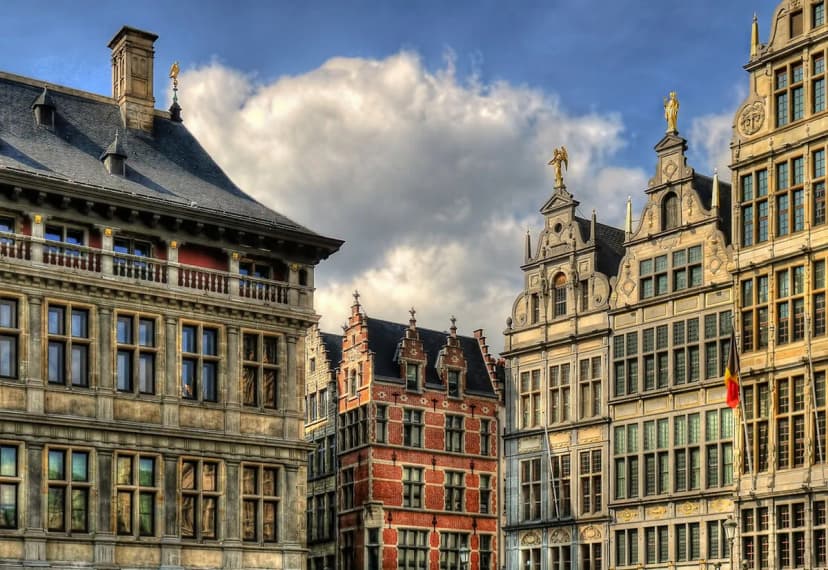
The Historic Center around the cathedral and Grote Markt holds the brown-cafe tradition. Cobbled alleys hide pubs with chalkboard beer lists longer than the wine menus in Het Zuid, and many of these rooms have operated continuously since the 1800s. The square itself is touristy, but three minutes on foot puts you on Pelgrimstraat or Oude Koornmarkt where locals actually drink. For a broader look at where to base yourself, see our guide to nightlife in Belgium.
Traditional Brown Cafes and Belgian Beer Culture
A brown cafe, or 'bruine kroeg', is the Belgian answer to the British pub and the beating heart of Antwerp's drinking culture. The name comes from walls and ceilings stained dark brown by decades of tobacco smoke, though smoking indoors has been banned since 2011. Expect wooden paneling, mismatched chairs, a tiny kitchen or none at all, and a focus squarely on the beer. Conversation is the entertainment, music is usually low, and the bartender often owns the place.
One vocabulary note saves real confusion: in Belgium a 'cafe' is a bar serving alcohol, while a 'coffee shop' is where you go for espresso. Neither has anything to do with the Amsterdam cannabis cafes. If you walk into a brown cafe at 10:00 and order a cappuccino you will get one, but the room expects you to move on to beer by evening. Kulminator on Vleminckveld is the serious beer pilgrimage, with a 600-strong list including 20-year vintages of Westvleteren and Rochefort. De Pelgrom, built into a 16th-century cellar near the cathedral, is more atmospheric and forgiving of groups.
Brown cafe etiquette rewards quiet observation. Take a seat at a table rather than standing at the bar unless the room is packed, and wait for the bartender to come to you. Never ask for a specific glass to be changed; every Belgian beer is served in its own branded glass and the bartender has already matched them. A 'Bolleke' is the local Antwerp pale ale from De Koninck served in a small round chalice, and ordering one by name instantly flags you as someone who has done the reading.
Upscale Cocktail Lounges and Speakeasies
Antwerp's cocktail scene punches well above its weight, with two bars regularly appearing on the World's 50 Best Bars extended list. Dogma on Wiegstraat in the Historic Center helped pioneer the city's modern cocktail movement and still sets the benchmark for technique; bartenders build drinks around your flavor preferences rather than a fixed menu. Cocktails run EUR 14 to 22, the room seats around 25, and a Friday reservation is essentially mandatory after 21:00.
Belroy's Bijou on Vlaamsekaai in Het Zuid is the more theatrical option, with a full cigar room, a short food menu, and a reputation for classic cocktails executed perfectly. Jones & Co further south has a funkier retro living-room feel and draws a younger design crowd. For a completely different register, the Botanic Sanctuary Antwerp hotel bar on Leopoldstraat pours serious drinks in a converted 16th-century convent garden; it is the rare Antwerp cocktail room where you can hear yourself speak after midnight.
Hidden entrances are part of the fun. Several of the newer speakeasies operate behind unmarked doors or inside other businesses; ask any bartender in Het Zuid for the current recommendation since the best rooms rotate every eighteen months or so. If you want something accessible without a reservation, the hotel bar at Musa on Marnixplaats stays open until 02:00 on weekends and mixes strong, tropical-leaning drinks in a plant-filled lounge.
Live Music and Legendary Jazz Cafes
De Muze on Melkmarkt is the single venue most worth planning a night around. This three-story cafe has hosted nightly free jazz since the 1960s, and the line-up rotates between local trios and touring European acts. Sets start around 21:00 Tuesday through Thursday and 22:00 on Friday and Saturday; they do not take reservations, so arrive by 20:30 to claim a table on the mezzanine where sight lines to the stage are best. A Bolleke runs about EUR 4.50, which makes it one of the better live-music bargains in Western Europe.
For louder, more contemporary rock and indie programming, Trix in Borgerhout hosts mid-size touring bands and has one of the best-maintained sound systems in Belgium; doors usually open at 19:30 with tickets EUR 15 to 35. Petrol on Eiermarkt keeps a rotating calendar of live electronic acts, hip-hop showcases, and album launches in a smaller club-style room. If you prefer classical or experimental, check the schedule at AMUZ, a restored baroque church near the cathedral that programs early music and acoustic sets several nights a week.
The Electronic Music and Clubbing Scene
Antwerp's techno reputation is disproportionate to the city's size, largely thanks to a handful of rooms that book international names Thursday through Saturday. Ampere near Central Station is the flagship, with a kinetic dance floor, strong acoustics, and bookings that cover deep house through raw techno. Covers run EUR 15 to 30 depending on the headliner, doors open around 23:00, and the party usually ends between 06:00 and 07:00. Check our full rundown of the best clubs in Antwerp for event previews.
Club Vaag is the more underground option, tucked into an industrial basement in Het Eilandje with a single long dark room and a soundsystem tuned for hard techno. Expect EUR 15 to 20 on the door and a dress code that is essentially black on black. For a broader look at who is playing any given weekend, Resident Advisor's Antwerp guide lists every ticketed event and links direct to promoters. Bossa also runs regular warehouse parties north of the center, often with pay-what-you-can entry before midnight.
Two clubbing tips specific to Antwerp. First, cash still rules the cloakroom; budget EUR 2 to 3 per item. Second, the Belgian 'social fee' (a small mandatory contribution on each drink) is included in prices, so do not tip on top at a techno bar the way you might in a cocktail lounge. Water at the bar is usually EUR 3 and drinking it regularly is the only way to survive a seven-hour night.
Late-Night Culture and Evening Walks
Antwerp has one of the best late-opening museum programs in Europe, and the KMSKA Late on Thursdays is the standout. The Royal Museum of Fine Arts stays open until 22:00 every Thursday, with drinks served in the atrium, live DJs or chamber sets in the galleries, and full access to the reopened collection after its recent eleven-year renovation. Tickets are around EUR 20 and the crowd is a genuine mix of students, retirees, and first-date couples rather than a club crowd. It pairs naturally with dinner on Marnixplaats afterward since the museum sits a six-minute walk from the square.
After 22:00 the Grote Markt becomes one of the quietest and most photogenic corners of the city. The 16th-century guild houses, the Renaissance Stadhuis, and the floodlit cathedral glow against a near-empty square once the last tour group leaves. Walk north along Suikerrui to the river, then south along Scheldekaaien for twenty minutes and you will cover the most beautiful nighttime stretch in Antwerp at no cost. Paniek Bar at the docks is a natural endpoint if the weather allows outdoor seating.
Sunset itself is worth building an evening around between April and September. The terrace at Paniek, the rooftop at MAS museum (free access until 22:00), and the river wall at Het Steen all face west and clear by 21:30 on long summer evenings. Bring a light jacket; the Scheldt breeze drops the temperature noticeably once the sun goes down.
Last Call: Where to Eat and Drink After 2:00
The practical gap most Antwerp guides skip is what to do when the bars shut. Most brown cafes and cocktail rooms close by 02:00 on weekends, but the city has a functional late-night layer that stays open until sunrise if you know where to look. The night shops (nachtwinkels) along De Keyserlei near Central Station sell beer, wine, and basic snacks until 03:00 or 04:00 and are where locals restock for house parties. Pita and kebab spots along Statiestraat run until roughly 04:00 on Friday and Saturday and are the default post-club dinner.
For a proper sit-down meal after 02:00, the options narrow to two or three addresses. Frituur No. 1 on Hoogstraat stops serving around 01:30, but Frietkot Max near the Groenplaats sometimes pushes to 03:00 on weekends. If you are dancing at Ampere or Club Vaag and want coffee before the first tram, Brooklyn Cafe near Dageraadplaats opens at 06:00 and is geared to the post-club crowd. Keep EUR 15 to 25 in cash for this stretch since many late-night spots still prefer it over card.
Is Antwerp Nightlife Expensive?
Compared to London, Paris, or Amsterdam, Antwerp is meaningfully cheaper, but costs vary sharply by venue type. A standard draft beer (pils or Bolleke) in a brown cafe runs EUR 3.50 to 4.50. Specialty craft beers and Trappist ales land between EUR 5 and 9, with aged vintages at Kulminator reaching EUR 40 or more. A cocktail at Dogma or Belroy's costs EUR 14 to 22, which is roughly half what a comparable drink costs in central London.
Club covers are reasonable by Western European standards: EUR 15 to 25 for a standard Friday or Saturday night, climbing to EUR 30 for a marquee international DJ. Cloakroom fees are EUR 2 to 3 per item and always cash. Bottled water inside clubs is EUR 3 and worth buying regularly. For official event calendars and occasional city-run free nights, the Visit Antwerpen portal lists festival weekends that can cut costs substantially.
Tipping is not expected since service is legally included, though rounding up to the nearest euro on a table bill is polite. A realistic budget for a full night out, covering three brown-cafe beers, a cocktail, club entry, cloakroom, and late-night food, is EUR 55 to 85. If you stick entirely to brown cafes and skip the clubs, EUR 35 covers a comfortable evening.
What to Skip: Overrated Nightlife Picks
The Grote Markt is stunning for a photo at dusk, but skip the terraces that ring it for serious drinking. Most charge a EUR 1.50 to 2 premium per drink for the view, service is slower during peak season, and the beer menus are thinner than what you find three blocks away on Suikerrui or Oude Koornmarkt. Use the square as a waypoint, not an anchor.
The bars immediately around Central Station on De Keyserlei and Koningin Astridplein cater almost entirely to travelers killing time between trains. Prices are inflated, the beer selection is generic, and the atmosphere is transactional. Unless you have luggage, walk fifteen minutes south to Meir or west to the cathedral and the quality curve climbs immediately. The 'Irish pub' strip near the station is the one specific stretch locals unanimously avoid.
Practical Tips for a Night Out in Antwerp
Antwerp is compact enough to walk, but Velo bikes are the single most useful tool for hopping between Het Zuid, the center, and Het Eilandje. A 24-hour pass costs EUR 4 and gives unlimited 30-minute rides between the 300-plus stations; the app lets you extend in 30-minute blocks. Watch the cobblestones in the old center; they are genuinely slippery after rain and narrow tires will slide. For night-bus schedules running on Friday and Saturday, De Lijn operates lines N1 through N5 from central hubs until around 03:00.
Dress codes run from relaxed to strict depending on the room. Brown cafes and jazz bars have no code at all; a flannel and jeans are fine. Het Eilandje techno clubs prefer dark, functional clothing and will occasionally turn away obvious bachelor parties or all-white sneakers. The high-end cocktail bars accept smart casual but reject shorts and gym gear after 20:00. Nothing about Antwerp nightlife is formal, but looking like you thought about your outfit helps at the door of Ampere or Club Vaag.
Safety is rarely an issue in the center, Het Zuid, or the walking route between them. The immediate streets south and east of Central Station get quieter and less pleasant after 02:00, so use a tram, Velo, or Uber for that specific stretch rather than walking alone. Bike theft is the most common problem; always use the built-in Velo lock and park in well-lit racks. Emergency number is 112, and most bar staff speak fluent English if you need help.
Explore More Antwerp Guides
Keep planning your Antwerp trip with these guides.
Explore nightlife in other cities
Frequently Asked Questions
What time do bars close in Antwerp?
Most bars in the city center stay open until 2:00 AM on weekdays and 4:00 AM on weekends. Some legendary brown cafes have 'open-ended' closing times, meaning they stay open as long as customers are drinking.
Is Antwerp safe to walk around at night?
Antwerp is generally very safe for pedestrians, even in the late hours. Stick to well-lit main streets in the South and Historic Center, and use common sense when exploring the more industrial dock areas.
What should I wear to an Antwerp nightclub?
Most clubs like Club Vaag or Ampere prefer a casual, edgy, or alternative style. Avoid dress shoes and formal shirts, opting instead for comfortable sneakers and dark clothing to blend in with the local crowd.
Antwerp nightlife rewards visitors who treat the city as three distinct scenes rather than one. A great night usually starts with sunset drinks on a Het Zuid terrace, moves to a brown cafe in the Historic Center for serious beer, and ends with techno in Het Eilandje or a late KMSKA gallery walk if it is a Thursday. Understanding the vocabulary, the closing times, and the dress signals is what turns a passable evening into a genuinely local one.
Pace yourself with the Belgian beers, keep small cash for cloakrooms and late-night food, and rely on Velo bikes to connect the zones without burning an hour on each transfer. Antwerp is small enough to cross in twenty minutes and deep enough to spend a week exploring after dark; come back for a second night if the calendar allows.