
Amsterdam Red Light District Guide
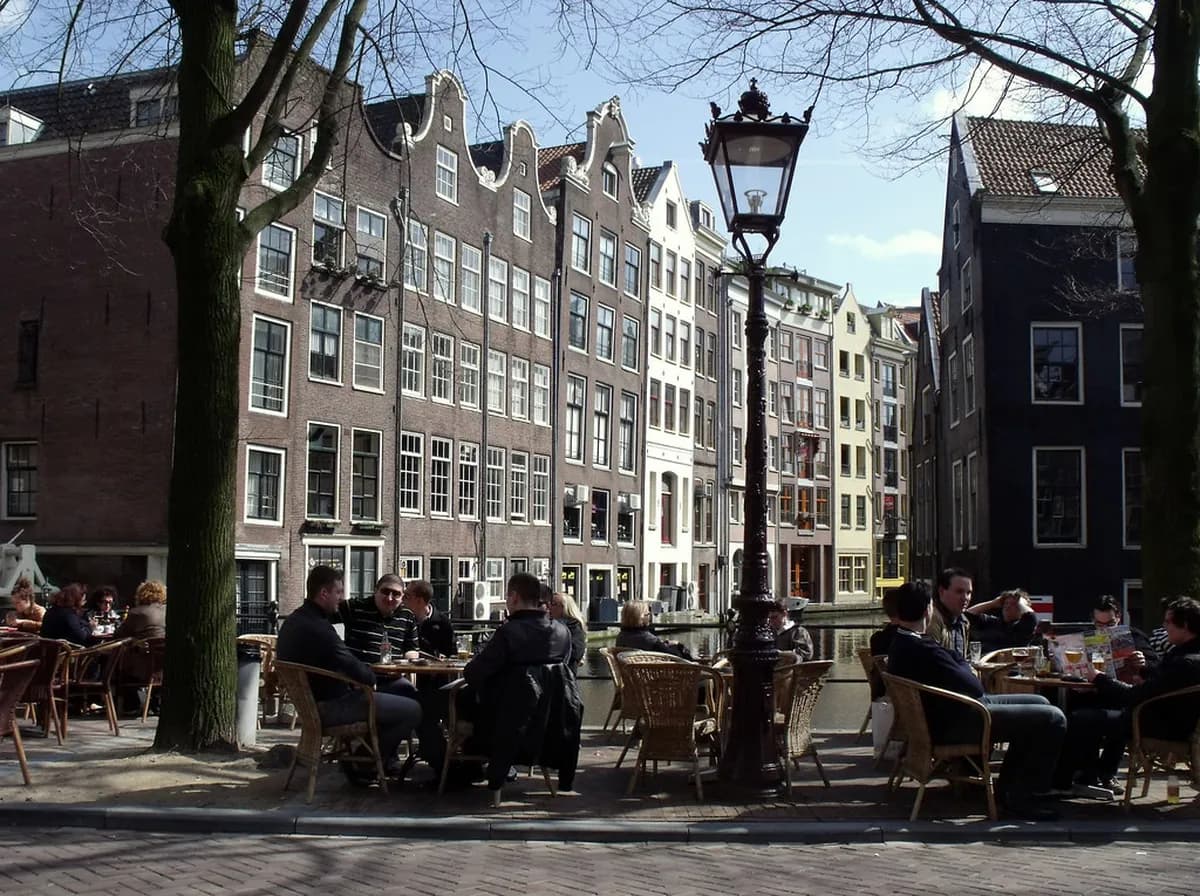
Exploring the amsterdam red light district reveals a complex mix of historic architecture and vibrant modern nightlife. This famous neighborhood, known locally as De Wallen, sits right in the oldest part of the city.
Visitors often come for the neon lights but stay to discover hidden alleys and beautiful medieval canals. Understanding the local rules ensures you have a respectful and safe experience while walking these streets.
This guide covers everything from the area's maritime history to the best places for a traditional Dutch meal. You will learn how to navigate the busy crowds while respecting the people who live and work here.
What is the Amsterdam Red Light District (De Wallen)?
The amsterdam red light district, known locally as De Wallen, sits in the medieval heart of the city and fans out along two parallel canals called Oudezijds Voorburgwal and Oudezijds Achterburgwal. The official red-light zone covers only a few blocks, but the wider De Wallen neighborhood stretches roughly from Centraal Station south to Dam Square and east toward Nieuwmarkt.
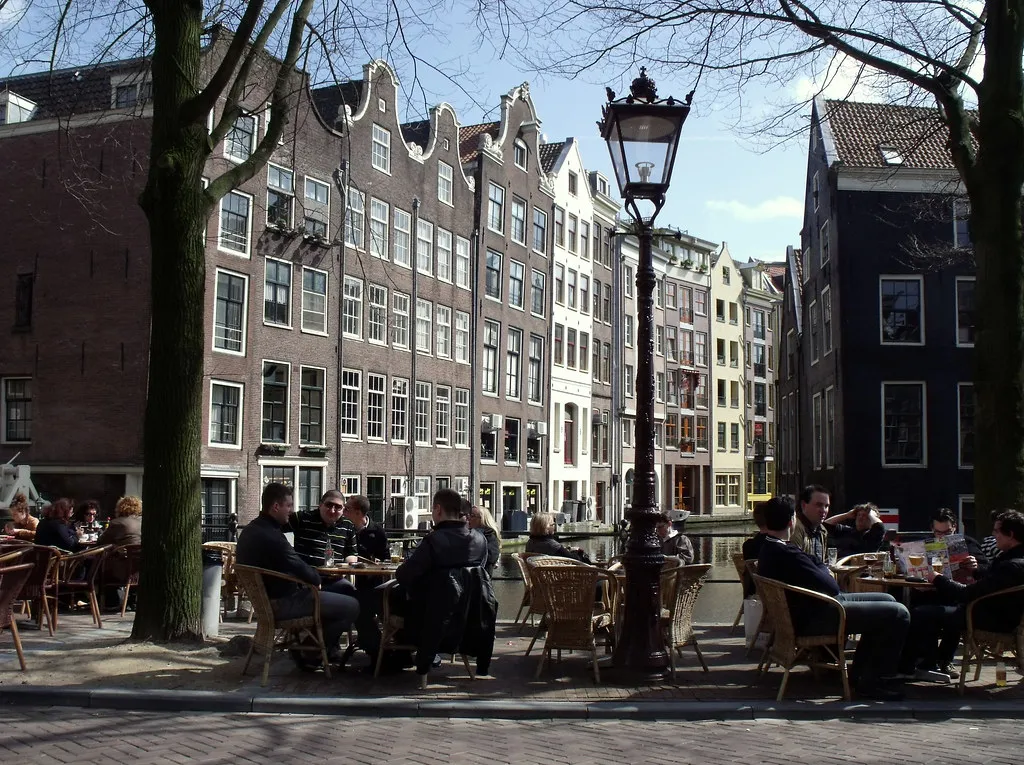
Around 1,100 residents still live in the canal houses above the bars, shops, and windows, which is why the district is treated as a real neighborhood rather than an entertainment zone. The buildings lean forward over the water on purpose, a 17th-century design that allowed merchants to hoist goods up to their attics without hitting the façade.
Window prostitution is legal and licensed, but it shares the streets with Amsterdam's oldest church, a Buddhist temple, Chinatown, and dozens of independent bookshops and studios. The contrast is the point: a working-class port district that the Dutch chose to regulate instead of hide.
By day, De Wallen looks like any other canal neighborhood with coffee on the terraces and kids cycling to school. After 20:00, the red lights switch on, bachelor parties roll in, and the same streets become one of the busiest tourist circuits in Europe.
The History and Story Behind the Red Lights
The trade dates to the 14th century, when De Wallen sat directly next to Amsterdam's harbour and sailors came ashore after months at sea. City authorities chose to tolerate prostitution near the docks rather than push it into back alleys, setting a pragmatic pattern that still shapes Dutch policy today. Historians tracing individual houses — you can see examples of the painstaking archival work in the researching what it was project by Stadsherstel — have documented continuous sex-work use on some streets since the 1400s.
The red lanterns themselves came much later. They were adopted in the late 19th century because the warm glow flattered skin tone and was easier on the eyes of customers after a few drinks. Street prostitution has always been illegal in the Netherlands, so the neon red window became the legal workaround: workers rent a room by the shift and advertise from inside.
Prostitution was formally legalised as labour in 2000, which gave workers access to taxes, unions, and health insurance. The number of licensed windows has since fallen from around 482 in the early 2000s to roughly 200 today, a drop driven largely by the city's Project 1012 urban renewal plan.
Project 1012 — named after the postcode covering De Wallen — buys out brothel leases and converts the ground floors into ateliers, fashion boutiques, and restaurants. Walk along Oudezijds Achterburgwal and you will see former windows now occupied by streetwear labels, ceramics studios, and a Dutch designer collective called Red Light Fashion. The city's stated goal by 2027 is to relocate a larger share of sex work to a purpose-built "erotic centre" outside the historic core, though the project has faced repeated delays and community pushback.
Essential Rules and Etiquette for Visitors
The amsterdam red light district runs on a short list of rules that are strictly enforced in 2026. Breaking them can cost you a fine, your phone, or a same-night police encounter. Read this section before you walk in, not after.
- No photos or video of workers. Zero tolerance — more on enforcement below.
- No street drinking anywhere in the 1012 postcode. On-the-spot fine is 100 EUR.
- No cannabis smoking on the street in De Wallen as of the 2023 ban. Fine is also 100 EUR. Smoke inside a coffeeshop, on a terrace that allows it, or in your hotel if permitted.
- No organised tours through the red-light zone after 17:00, and no tour groups stopping in front of windows at any time. This rule took effect in April 2020 and is actively enforced.
- No blocking the windows. Do not stand, stare, or pose. Keep moving — workers can and do bang on the glass to move you along.
- Keep noise down after 22:00. Residents live above you. Yelling, chanting, and stag-night behaviour draw fast police attention under the city's Stay Away anti-nuisance campaign.
- Bachelor and bachelorette parties face extra scrutiny — Amsterdam launched a targeted "Stay Away" ad campaign aimed at British stag groups in 2023 and has not backed off.
- Follow coffeeshop rules: ID required, 18+ only, no alcohol sold on the same premises, no outside drinks, and a 5 g personal purchase limit per day.
If you want to understand the rules from the worker side, the Prostitution Information Center (PIC) on Enge Kerksteeg sells a short printed visitor guide for a few euros and runs weekly "Walk and Talk" sessions hosted by current or former sex workers.
How the "No Photo" Rule Is Actually Enforced
Every competitor guide mentions the photo ban. Almost none explain what happens when you break it, which is the detail that actually changes behaviour. Enforcement in De Wallen is a three-layer system and it works fast.
The first layer is the workers themselves. Many windows now have tinted glass, one-way film, or small motion-triggered alarms that chirp when a phone camera is raised. Workers routinely step outside, confront visitors, and demand to see the phone's camera roll. Refusing to show it escalates the situation immediately.
The second layer is private security. The Beheer De Wallen foundation, funded by window operators, employs uniformed stewards in red jackets who patrol the busiest streets from around 19:00 to 03:00. They are authorised to stop people, ask them to delete photos, and call the police if the person refuses. Reports of phones being snatched and thrown into the canal are not urban legend — this has been documented repeatedly, and local police have generally declined to pursue theft complaints against the workers involved.
The third layer is the uniformed Dutch police, who issue formal fines under Article 151a of the municipal ordinance. In 2026, posting a recognisable photo of a worker to social media can trigger a separate privacy complaint under Dutch GDPR implementation, with fines that have reached four figures. The practical rule: keep the phone in your pocket when you are near a window, and if you must photograph architecture, turn your back to the glass and frame the canal instead.
Top Things to See and Do in De Wallen
There are more museums, churches, and curiosities packed into these ten blocks than in most entire Dutch towns. The Oude Kerk, dating to 1306, sits on a square ringed by window brothels, and the contrast is the single most photographed architectural detail in the city — framed correctly so no workers are in shot.
The Museum Ons' Lieve Heer op Solder (Our Lord in the Attic) is a 17th-century canal house with an entire Catholic church hidden in its top three floors, built during the years Protestants outlawed public Catholic worship. Red Light Secrets on Oudezijds Achterburgwal puts you inside a reconstructed window booth so you can see the street from the worker's side of the glass.
Cannabis history gets two museums on the same block — the touristy Cannabis Museum and the denser Hash, Marijuana & Hemp Museum — while the 18th-century Jacob Hooy apothecary on Kloveniersburgwal still sells loose herbs and licorice from its original oak drawers. Visitors interested in the broader amsterdam nightlife scene will find traditional brown cafés, craft beer bars, and a few live-music venues tucked into the same side streets.
Use the table below to compare the three museums most visitors consider first. All prices are 2026 walk-in rates; booking online usually shaves 1–2 EUR.
- Red Light Secrets Museum — 14.50 EUR, open 10:00–00:00 daily, allow 45 minutes. The only museum dedicated to window prostitution itself; good for understanding the trade's mechanics and regulation.
- De Oude Kerk (Old Church) — 13.50 EUR, open Mon–Sat 10:00–18:00 and Sun 13:00–17:30, allow 60 minutes. Amsterdam's oldest building, now doubles as a contemporary art space. Tombstones in the floor, original 15th-century ceiling paintings, and rotating exhibitions.
- Museum Ons' Lieve Heer op Solder — 16.50 EUR, open Mon–Sat 10:00–18:00 and Sun 13:00–18:00, allow 75 minutes. The hidden Catholic church in an attic. Very steep stairs throughout but the museum offers a free co-visit video-call option for visitors who cannot climb, so a companion can walk the building while you stay on the ground floor and watch in real time.
- Hash, Marijuana & Hemp Museum — 9.00 EUR, open daily 10:00–22:00. Cheapest of the four and the most content-dense if you want actual cannabis history rather than a gift shop experience.
Sex, Drugs, and Naughty Souvenirs: Navigating the 'Vice'
The adult economy in De Wallen is tightly regulated in ways most visitors do not expect. Windows are rented by the eight-hour shift, typically 150–180 EUR per shift, which is why workers advertise aggressively — they are covering rent before they start earning. Live sex shows at venues like Casa Rosso and Moulin Rouge run from 20:00 to 02:00 with admission starting around 50 EUR.

Coffeeshops sell cannabis under a decades-old "tolerance" policy, not full legalisation. Expect ID checks at the door, a 5 g daily cap per customer, no alcohol on the menu, and a separate rule banning tourists in coffeeshops in some cities — though Amsterdam still admits non-residents as of 2026. Street dealers offering "coke" or "MDMA" are almost always selling ground aspirin, ketamine, or worse; the Dutch drug testing service Jellinek publishes regular warnings.
Souvenir shops range from wooden-shoe tourist bait to the Condomerie on Warmoesstraat, the world's first speciality condom shop, which has been trading since 1987. The Prostitution Information Center next to the Oude Kerk is the only worker-run retail space and sells books, prints, and the iconic Belle statue replica.
One consistent mistake: visitors buy cannabis seeds thinking they are a harmless souvenir. They are legal to purchase in the Netherlands but illegal to import into most countries, and customs dogs flag them easily. The same applies to "magic truffles" sold in smartshops — legal to consume in Amsterdam, illegal to carry across almost any border.
Where to Eat and Drink in the District
The main drag along Warmoesstraat and the north end of Damrak is a tourist-trap corridor of Argentinian steakhouses, "original" pancake shops, and illuminated pizza-by-the-slice windows. Prices there run 25–35 EUR for mediocre food. Walk two streets inland and the neighborhood gets much better.
For traditional Dutch snacks, Van Stapele Koekmakerij on Heisteeg (just west of the district) bakes a single-variety chocolate-centre cookie that has a permanent queue for good reason. Bitterballen and kroketten at any brown café along Zeedijk or Nieuwmarkt go for 6–8 EUR and pair with a small Heineken or a glass of jenever. Brouwerij de Prael on Oudezijds Armsteeg is a social-enterprise craft brewery with a big taproom and genuinely local beer at 5–6 EUR a glass.
Chinatown runs along Zeedijk and the adjoining streets, giving De Wallen some of the best Cantonese and Sichuan food in the Netherlands. New King, Nam Kee, and Oriental City are the three reliable sit-down options, all open until at least 22:00. The district also overlaps with some of the best nightlife in the Netherlands, especially for historic brown cafés serving local jenever and Dutch pilsner.
A practical filter: any menu posted in more than four languages, any host standing outside waving you in, and any restaurant on the Damrak itself is a trap. A brown café with a handwritten chalkboard in Dutch is almost always a better meal at half the price.
Where to Stay: Best Hotels Near the Red Light District
Staying inside De Wallen puts every canal, church, and coffeeshop within a five-minute walk, but it also means noise until around 03:00 on weekends. If you plan to sleep before midnight, look for hotels on the quieter edges — Nieuwmarkt, the canal belt, or the Jordaan just across Singel.
The Sofitel Legend the Grand Amsterdam occupies a former city hall on Oudezijds Voorburgwal with a 450-year history of royal receptions. Rooms start around 550 EUR per night in 2026 and the courtyard is one of the quietest spots in the entire district.
For a mid-range choice, the Radisson Blu Hotel, Amsterdam City Center on Rusland combines a restored 17th-century paper warehouse with a glass atrium, usually running 220–320 EUR. Solo travellers on a budget should look at Hotel Luxer on Warmoesstraat or Shelter City hostel on Barndesteeg — both central, both under 120 EUR in low season.
One local tip: any hotel advertising "red-light district views" is almost certainly above a working window, which means continuous foot traffic and amplified street noise. Pay for a room facing a courtyard or canal instead.
How to Get to the Red Light District
De Wallen sits directly south of Amsterdam Centraal Station, and walking is almost always the fastest option. Exit Centraal through the IJ-side or the city-side main hall, cross to Damrak, and turn left onto Warmoesstraat or Zeedijk. The first red windows appear within 400 metres — a 5 to 7 minute walk.
For public transport, tram lines 2, 12, 13, 14, 17, and 24 all stop at Dam Square, a three-minute walk from the western edge of the district. The metro is the fastest option from southern neighborhoods: line 51, 53, or 54 to Nieuwmarkt drops you at the eastern edge by the historic Waag building. A standard public-transport fare is 3.40 EUR single or 9 EUR for an unlimited 24-hour GVB card.
Do not drive into the district. The 1012 postcode is a low-emission zone with tight one-way streets, and the nearest parking garage (Q-Park Bijenkorf) charges around 7.50 EUR per hour. Cycling is the local default but pedestrian traffic on the main canals after 20:00 is so dense that most Amsterdammers park their bikes outside the zone and walk in.
Water taxis from Centraal to Oudezijds Voorburgwal run during summer months and cost 10–15 EUR per person — not practical, but a memorable arrival if you have the budget.
Best Time to Visit and Safety Tips
The district has two completely different personalities. From roughly 10:00 to 18:00 it is a quiet residential neighborhood where you can visit churches, museums, and bookshops without crowds. From 20:00 onwards — and especially after 22:00 on Friday and Saturday — it turns into a dense corridor of bachelor parties, guided bar crawls (tours are banned but bar crawls persist), and stop-and-start foot traffic.
Tuesday and Wednesday evenings are the best compromise if you want the neon-lit atmosphere without the weekend chaos. Sunday afternoons are the quietest of all, though some windows stay closed and a few museums operate shorter hours.
Safety is high by European standards — thousands of tourists move through the district every night and the combined police, municipal BOA officers, and private security keep a visible presence. Pickpockets do work the busiest choke points, especially on Damstraat and around the Oude Kerk; keep wallets in front pockets and bags zipped across the chest.
Solo women are generally safe throughout the district; lone men who look lost or drunk are the group most often targeted by drug scams and by pre-arranged robberies in side alleys. If you feel followed, step into any lit café, bar, or hotel lobby — staff across De Wallen are trained to let tourists use their phone to call a cab.
Is the Red Light District Worth Visiting?
For most first-time visitors to Amsterdam, yes — De Wallen is a compressed history of the city in ten walkable blocks. You move from the oldest church to the oldest non-religious building, past a Buddhist temple and a hidden Catholic attic chapel, alongside the most visible working example of Dutch tolerance policy in action.
If you are travelling with children or you find the nature of the district genuinely uncomfortable, the daytime version of the neighborhood gives you all the architecture and museums without the neon trade. Many families visit between 10:00 and 17:00 and skip the evening entirely, which is a perfectly reasonable choice.
Where the district stops being worth it is if you come purely to gawk at workers, film them, or treat the streets like a zoo. Those visits are increasingly unwelcome, visibly enforced against, and the reason the city launched the Stay Away campaign in the first place.
The honest answer: walk through once in daylight for the history, once at night for the atmosphere, spend money at a museum or a PIC walk, and move on. An hour or two is enough to understand why De Wallen has shaped Amsterdam's identity for six centuries — and why the city is now trying to reshape the district one window at a time.
Frequently Asked Questions
What is the Red Light district?
The Red Light District, or De Wallen, is the oldest neighborhood in Amsterdam. It is famous for its legal window prostitution, historic canal houses, and vibrant nightlife scene. Visitors can explore museums, churches, and shops within this unique and historic urban area.
Can you take pictures of girls in Red Light District?
No, you are strictly prohibited from taking photos or videos of workers in the windows. This rule is enforced by local security and workers to protect privacy. Violating this rule can result in your camera being taken or being escorted out of the area by security.
Is Red Light District safe for tourists?
Yes, the district is generally very safe for tourists due to a high police and security presence. However, you should watch out for pickpockets in crowded areas and avoid buying anything from street dealers. Staying in well-lit main streets ensures a secure experience at night.
What is the best time to visit the Red Light District?
The best time to visit for architecture and museums is during the day when crowds are thin. For the full neon experience, visit on a weeknight evening to avoid the massive weekend crowds. Sunset offers a beautiful transition as the red lights begin to glow.
The amsterdam red light district remains one of the most misunderstood yet fascinating neighborhoods in the world. By following the local rules and respecting the residents, you can enjoy a safe and enlightening visit.
From the historic Oude Kerk to the modern Project 1012 studios, the area offers something for every type of traveler. Make sure to look beyond the neon signs to find the true heart of this ancient city center.
Whether you are interested in history, art, or nightlife, De Wallen provides a unique atmosphere that you will never forget. Plan your visit carefully to make the most of everything this iconic district has to offer.


