
15 Best Pubs in Budapest
After a decade of winter visits to District VII, I still uncover new rooms inside bars I thought I already knew. Budapest's drinking scene is defined by the romkocsma, a ruin pub concept that converted derelict Jewish Quarter courtyards into eclectic cultural spaces. Whether you want a quiet craft beer, a wine-cellar tasting, or a chaotic seven-dancefloor party, this city offers a venue for every specific mood.
Last refreshed January 2026 after my winter visit, this guide reflects current pricing in Hungarian Forint, the 2025 reusable-cup deposit rules, and venue changes. Navigating the Budapest nightlife scene requires a little local knowledge to avoid paying double for a pint of Dreher. Every venue below has been vetted for authentic atmosphere, fair prices, and transparent billing.
The 15 pubs cover three layers of the scene: the world-famous titans, the local intellectual haunts where a beer still costs under 900 HUF, and the refined wine cellars and rooftops for a slower night. I still remember losing an hour in the basement forest at Instant-Fogas on a Thursday, and that disorientation is exactly what the romkocsma aesthetic was built for. Expect mismatched furniture, Trabant-car tables, street-art-covered walls, and some of the most affordable pints in Central Europe.
What are Budapest's Ruin Pubs? (The History of Romkocsma)
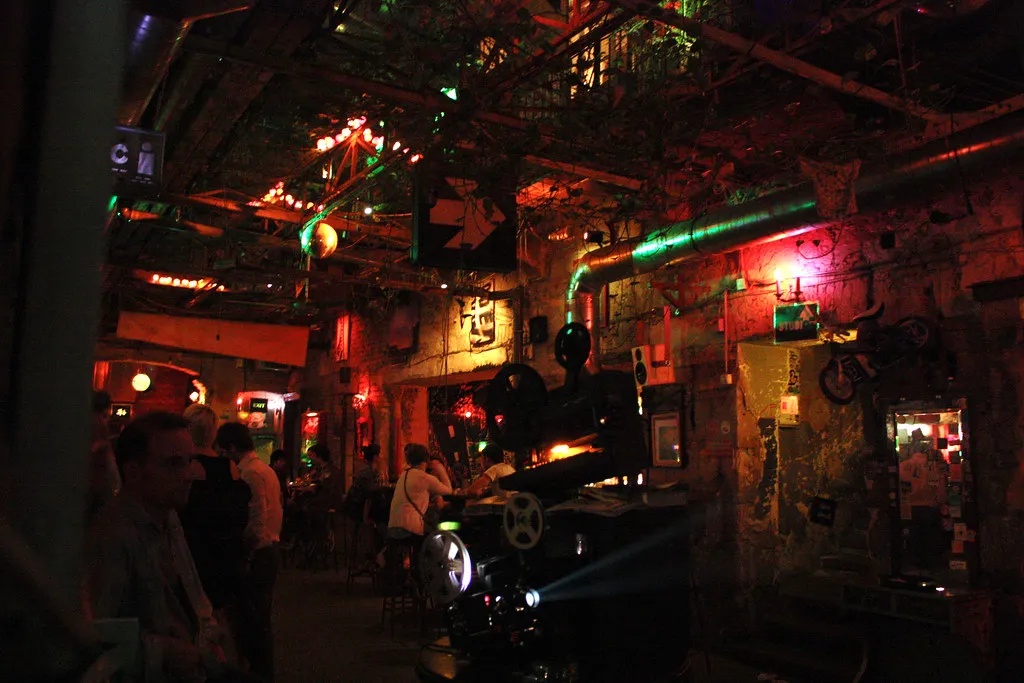
Romkocsma translates literally as ruin pub and refers to bars established inside the abandoned buildings and internal courtyards of Budapest's 7th District, the historic Jewish Quarter. The movement began in 2002 when the founders of Szimpla Kert occupied a derelict courtyard on Kazinczy Street and filled it with salvaged flea-market furniture. Szimpla Kert moved to its current factory building in 2004, and that space set the template the rest of the scene would copy.
The neighborhood became available for this experiment for a tragic reason. The Jewish Quarter was devastated during World War II, and decades of Communist-era neglect left its beautiful courtyard buildings crumbling. When rents collapsed in the early 2000s, a generation of young entrepreneurs treated the rubble as raw material. These venues are part of the wider Hungary travel experience that most repeat visitors cite as the most memorable.
A respectful visit matters in this district. The streets around Kazinczy, Kertész, and Rumbach Sebestyén still hold active synagogues, the Dohány Street Holocaust memorial, and residents who live above the courtyards. Keep noise levels sensible after midnight on residential streets, and consider a guided Budapest Ruin Bars, Street Art, and Jewish Quarter Tour that contextualises the area before you drink in it.
Designed to Be Undesigned: The Aesthetic Philosophy
First-time visitors sometimes walk into Szimpla Kert, see an old bathtub repurposed as a couch, and assume the bar is just poorly maintained. That reading misses the point. The ruin pub aesthetic is a deliberate counter-cultural statement against polished hotel-lobby bars, often described by locals as the anti-club club. Nothing matches on purpose, and layered graffiti is left in place as a record of the crowd.
Look for the signature elements across every venue on this list. Walls carry decades of patron scrawls in a dozen languages. Ceilings hang with vintage bicycles, Communist-era radios, and Soviet TV sets that flicker on nightly loops. Furniture is salvaged from basements, churches, and flea markets, so no two chairs in the same room are likely to match. Surreal sculptures from local artists rotate through the courtyards, which turns each room into an evolving gallery.
Understanding this philosophy changes how you move through a pub. Rather than hunting for the best seat, wander the labyrinth first and treat the early hours like a museum visit. The decay is the design, and the buildings themselves are the primary exhibit.
15 Best Pubs in Budapest
Our shortlist of the best bars in Budapest is grouped into three clusters for easier planning. The first group covers the iconic titans inside the Jewish Quarter, the second focuses on local cultural hubs and craft beer specialists, and the third handles refined wine cellars, rooftops, and seasonal gardens. Every venue sits within walking distance of at least two others, which makes a logical crawl trivial to assemble.
If you want a full structured night, follow a step-by-step Budapest pub crawl guide or use our walkable itinerary further down. Most venues are free to enter, though multi-floor complexes like Instant-Fogas charge roughly 1,000 to 3,000 HUF on weekends after 22:00. A standard half-litre of local lager typically runs 1,000 to 1,800 HUF (around 2.50 to 4.50 EUR) in Jewish Quarter tourist spots, and 700 to 900 HUF in local bars a few blocks outside.
Card payment is accepted almost everywhere, but carry at least 5,000 HUF in cash for the reusable-cup deposit, small-bar kiosks, and tipping. Most pubs open between 15:00 and 18:00 and close at 02:00 on weeknights, stretching to 04:00 or 06:00 on Friday and Saturday.
- Szimpla Kert the original ruin bar
- Szimpla Kert remains the most famous romkocsma on earth for its labyrinth of themed rooms, Trabant tables, and relentless street-art layering on Kazinczy Street.
- A half-litre of Dreher runs 1,400 to 1,800 HUF, cocktails 2,500 to 4,500 HUF, and the bar opens 12:00 to 04:00 daily in the heart of the Jewish Quarter.
- Trade-off: the historical significance and the sheer density of art make it unmissable, but expect tourist crowds, queues after 22:00, and a 300 to 500 HUF reusable-cup deposit on every drink.
- First-timer tip: arrive at 15:00 on a weekday to photograph the rooms empty, or come Sunday 09:00 to 14:00 for the farmers market inside the courtyard.
- Instant-Fogas massive nightlife party complex
- Two legendary bars merged in 2017 into a single labyrinth of over 15 bars and 7 dancefloors on Akácfa Street, themed from techno and hip-hop to classic rock and pop.
- Drinks run 1,500 to 3,500 HUF, weekend cover is typically 1,500 to 3,000 HUF after 22:00, and the complex stays open until 06:00 every night.
- Trade-off: the party vibe is unmatched in Central Europe, but the scale is genuinely overwhelming for some visitors and the crowd skews heavily toward international stag parties.
- First-timer tip: pick one dancefloor that fits your music and anchor there rather than wandering, keep your phone in a zipped front pocket, and map the exit before you start drinking.
- Csendes Létterem vintage vibes and quiet drinks
- Csendes sits near Kálvin tér and Astoria, and feels more like a surreal vintage café than a pub, with mannequins, creepy dolls, and a chaotic collage covering every surface.
- House wine costs 900 to 1,400 HUF per glass, bottled beer 900 to 1,300 HUF, and opening hours run 10:00 to 24:00 Monday through Saturday.
- Best for afternoon coffee that turns into early evening conversation, or an intimate date where you actually want to hear each other speak.
- Kőleves Kert chilled out garden pub
- Kőleves Kert is a gravel-floored courtyard on Kazinczy Street with brightly-painted picnic tables, hammocks strung between trees, and fairy lights above the seating.
- Drinks range 1,000 to 1,700 HUF, and the garden operates seasonally from mid-April through early October, open until midnight on most nights.
- The adjacent Kőleves Vendéglő serves excellent Jewish-Hungarian fusion plates if you want a sit-down meal before the next round.
- Élesztőház the premier craft beer hub
- Housed in a former glass factory in District IX, Élesztőház runs over 20 rotating taps of Hungarian and international craft beer for a notably more mature crowd than the Kazinczy titans.
- Pints range 1,500 to 2,800 HUF, tasting flights of four beers cost around 2,500 HUF, and hours run 15:00 to 01:00 daily.
- Ask the bar team for a flight of Hungarian IPAs alongside a traditional meggy (sour cherry) fruit beer for a genuine sense of the local scene.
- Mazel Tov stylish dining and drinks
- Mazel Tov on Akácfa Street sits at the gentrified end of the ruin pub evolution, with a soaring glass roof, lush greenery, and a Middle Eastern fusion menu of hummus, falafel, and grilled shawarma.
- Cocktails cost 2,800 to 4,500 HUF, mains 4,500 to 8,000 HUF, and the restaurant opens 12:00 to 24:00 daily.
- Reservations are essential and often need booking two to three weeks ahead for Friday and Saturday evenings.
- Kisüzem where the local intellectuals gather
- Kisüzem sits near Klauzál tér and draws left-wing writers, artists, and international students for rotating art exhibitions and strong espresso alongside the wine list.
- A half-litre of beer is 700 to 900 HUF, a glass of Hungarian wine 800 to 1,200 HUF, and the bar opens 12:00 to 02:00 daily.
- Trade-off: the local intellectual vibe is the most authentic anywhere in District VII, but seating is extremely limited after 21:00 and the kitchen closes earlier than the bar suggests.
- Manyi Kulturális Műhely underground cultural hub
- Manyi is a community-run space on Üllői út in District IX that hosts film screenings, workshops, experimental theatre, and live electronic sets in a raw industrial room.
- Drinks are genuinely cheap at 600 to 1,000 HUF, and the schedule varies, typically running 17:00 until 01:00 depending on the evening's event.
- Trade-off: the programming and atmosphere are more authentic than anything in the Jewish Quarter, but the location is a 15-minute tram ride from Kazinczy and the vibe shifts completely between afternoon and late night.
- Pótkulcs Budapest hidden live music gem
- Pótkulcs tucks behind an unmarked door on Csengery utca in District VI and runs a cozy back garden plus frequent folk, jazz, and blues sessions.
- Expect 700 to 1,200 HUF for drinks, a small cover for ticketed gigs, and opening hours from 17:00 until 01:00 daily.
- The entrance is notoriously hard to find, so look for the faint hand-painted sign near the corner and ring the buzzer if the door looks closed.
- Hintaló Iszoda quirky neighborhood favorite
- Named for a rocking horse (hintaló) hanging from the ceiling, this tiny District VIII bar packs in character, mismatched lamps, and a loyal local following.
- Most drinks run 700 to 1,400 HUF, and the bar is open Tuesday through Saturday from 17:00 until 01:00.
- Try the house-infused pálinka variations, which the owners flavour with seasonal fruit and herbs each month.
- Fekete Kutya tapas and craft beer
- Fekete Kutya, meaning Black Dog, is a narrow Jewish Quarter bar known for a short but excellent tapas menu and a tight craft beer list.
- Small plates and drinks cost 1,200 to 2,500 HUF, and the bar opens 16:00 until 01:00 daily.
- The mushroom tapas are a local legend and pair exceptionally well with a cold Hungarian pilsner from a small producer like First.
- 360 Bar best rooftop city views
- 360 Bar sits atop the former Paris Department Store on Andrássy Avenue with panoramic views of Parliament, St Stephen's Basilica, and the Buda hills.
- Cocktails range 2,800 to 5,500 HUF, and the bar opens 14:00 until 24:00 daily, stretching later on weekends.
- Trade-off: the views are the best in the city at sunset, but expect to pay roughly double the Kazinczy rate for a cocktail and occasional queues for the rooftop lift; in winter they set up heated igloos bookable for groups of four to six.
- Doblo Wine Bar rustic Jewish Quarter elegance
- Doblo on Dob Street focuses entirely on Hungarian wine, served in a vaulted brick cellar with candlelight and a small plate menu of local cheese and charcuterie.
- Wine flights of five Hungarian regions cost 4,500 to 7,500 HUF, and the cellar opens 18:00 until 01:00 or later.
- The sommeliers are extremely well-informed on Tokaj and Villány, so ask for a comparison flight between a Furmint from Tokaj and a Kékfrankos from Eger.
- Grandio Jungle Bar courtyard party hostel
- Grandio on Nagy Diófa utca is a plant-filled ruined courtyard attached to a party hostel, with a high-energy backpacker crowd and live DJs most nights.
- Drinks run 900 to 1,800 HUF, and the bar opens 12:00 until late, with the courtyard busiest between 22:00 and 03:00.
- Best for solo travellers who want to meet people quickly, less suited to couples or anyone seeking a calm conversation.
- Kertem seasonal City Park garden bar
- Kertem sits inside Városliget (City Park) and is beloved for Balkan burgers, loose benches, picnic tables, and a famously relaxed afternoon crowd.
- Drinks cost 1,000 to 1,700 HUF, and the garden opens seasonally from early May until late September, running daily until 01:00.
- This is the ideal unwind spot after an afternoon at the nearby Széchenyi Baths or a stroll through the Museum of Fine Arts.
What to Drink: Beyond the Standard Pint
Hungarian lagers like Dreher, Borsodi, and Soproni are everywhere, cheap, and perfectly fine. The more interesting drinking happens once you move past the 500ml glass into the categories locals actually drink when they have a choice.
Fröccs is the quintessential summer drink and a cultural institution with its own vocabulary. It is a wine spritzer built from white or rosé wine topped with soda water, and the ratio has a name for every combination. Order a nagyfröccs for two parts wine to one part soda, a kisfröccs for the reverse, or a hosszúlépés for roughly equal parts. Ask for rosé fröccs on a summer evening and you will immediately look like a regular.
Pálinka is a potent fruit brandy usually sitting between 40 and 50 percent alcohol, traditionally made from apricot (barack), plum (szilva), or pear (körte). Locals will shoot it, but high-quality pálinka is worth sipping first to catch the fruit on the nose. Unicum is Hungary's national herbal liqueur, a dark bitter spirit aged in oak with over forty botanicals and served ice cold as a digestif. It tastes like a more complex Jägermeister and is a standard last round at 700 to 1,200 HUF per shot.
The Reusable Cup Deposit: How the Repohár System Works
This is the single most common first-timer trap in Budapest's bigger ruin pubs, and no English-language guide covers it properly. Szimpla Kert, Instant-Fogas, Doboz, and most outdoor courtyards operate a reusable plastic cup system to reduce waste. Your first drink is charged an extra 300 to 500 HUF deposit for the cup itself, and you typically receive a small plastic token as proof.
To reclaim the deposit, you must return both the cup and the token to a designated return counter near the main exit before you leave. If you abandon the cup on a table, lose the token, or hand back only one of the two, the deposit is forfeit. On a four-drink night this is a 2,000 HUF leak roughly equivalent to a free beer.
Two practical rules. First, dedicate one pocket to the cup tokens and treat them like coat-check tickets, not disposable receipts. Second, return the cup during the transition between bars rather than at the end of the night, because the return counters close earlier than the main bar and can develop queues after 02:00. Smaller local bars like Kisüzem and Csendes generally use real glassware and skip this system entirely.
A Walkable Jewish Quarter Pub Crawl Itinerary
Four stops over roughly four to five hours, all within an 800-metre walking radius inside District VII. This route alternates iconic venues with local breathing room so the night does not collapse into one overcrowded room.
- 19:00 at Szimpla Kert (Kazinczy utca 14): Arrive before the evening queue forms, grab a Dreher plus a Fröccs, and spend 45 minutes photographing the labyrinth while the light is still workable.
- 20:30 at Fekete Kutya (Dob utca 31): A 4-minute walk west. Sit down for mushroom tapas and a craft pilsner to line the stomach before the later rounds.
- 22:00 at Kisüzem (Kis Diófa utca 2): A 3-minute walk north. Order a glass of Hungarian Kékfrankos and settle into the local intellectual crowd for real conversation.
- 23:30 at Instant-Fogas (Akácfa utca 49): A 6-minute walk south. Pick one dancefloor, stay on that floor, and end the night between 02:00 and 04:00.
Swap Instant-Fogas for Doblo Wine Bar (Dob utca 20) if you prefer a slower final round, or extend the crawl with a nightcap Unicum at Hintaló Iszoda for a smaller, quieter end. Following this route from the Budapest pub crawl guide keeps transit time under 20 minutes total.
Is Nightlife in Budapest Safe for Travelers?
Budapest remains one of the safest European capitals for nightlife, and the Jewish Quarter is heavily patrolled and active well past 04:00 on weekends. Most visitors find the atmosphere in the best clubs in Budapest welcoming and inclusive, with mixed local and international crowds.
Three specific scams deserve attention. First, never hail an unmarked taxi on the street; use Bolt or a reputable dispatcher like Főtaxi, which are both metered and cap Airport-to-centre rides at a predictable rate. Second, avoid consumption-menu bars around Király utca and the outer edges of District VI, where hostesses invite men to private rooms and the final bill arrives at four-figure EUR territory. Third, watch for pickpockets in the densest rooms at Szimpla and Instant-Fogas, especially the basement dancefloors.
Solo travellers do well in ruin bars thanks to the communal seating and bartenders who speak excellent English. Women travelling alone generally report no issues, though standard precautions apply on quieter streets around the outer edges of District VII after 02:00. Walk in pairs past Rákóczi út or take a Bolt.
How Much Does a Night Out in Budapest Cost in 2026?
A realistic four-stop night for one person in 2026 costs 12,000 to 20,000 HUF (roughly 30 to 50 EUR), including four to five drinks, a shared tapas plate, one weekend cover charge, and a late-night Bolt home. Rooftop venues and cocktail-focused spots like 360 Bar or Mazel Tov push a comparable night to 25,000 to 35,000 HUF.
Budget breakdown by venue category: local bars like Kisüzem or Pótkulcs run 700 to 1,200 HUF per drink, Jewish Quarter titans like Szimpla run 1,400 to 2,000 HUF per drink plus the cup deposit, and rooftop or wine-focused spots like 360 Bar or Doblo run 2,800 to 5,500 HUF per cocktail or flight. Cover charges of 1,500 to 3,000 HUF apply only to multi-floor complexes on Friday and Saturday after 22:00.
Cards work almost everywhere, but keep 5,000 to 10,000 HUF in cash for tipping, cup deposits, and smaller local bars. Wine drinkers should skip imported labels entirely; local Tokaj, Villány, and Eger wines offer genuine value at 900 to 2,000 HUF per glass. Happy hour is rare, but some student-focused bars in Districts VIII and IX run 17:00 to 19:00 discounts. Expect the final bill at the best rooftop bars in Budapest to run 30 to 50 percent above a ground-floor ruin pub.
Winter vs Summer: When Each Venue Actually Works
Half the pubs on this list are outdoor gardens or courtyards, and Budapest winters drop well below freezing from December through February. A venue that looks magical on a July afternoon can be physically closed or unbearably cold in January, and no SERP competitor flags this clearly.
Seasonal closures to plan around: Kőleves Kert garden closes from roughly mid-October until mid-April. Kertem in City Park shuts entirely from late September until early May. Most Pótkulcs and Fekete Kutya courtyard seating goes indoor-only from November through March. Grandio's outdoor courtyard stays open with heaters but drops in capacity by roughly half.
Winter-proof picks: Szimpla Kert runs year-round with heated courtyards, Instant-Fogas is entirely indoors after the main entry courtyard, Doblo's brick cellar is warmer than the street in January, and 360 Bar runs heated igloos bookable for groups of four to six. If you are visiting between December and February, weight your itinerary toward cellars, indoor complexes, and wine bars rather than garden venues.
What to Skip: Overrated Drinking Spots
The city has real gems, but three categories consistently disappoint. Váci utca bars charge double the Jewish Quarter rate for generic commercial lager and use aggressive promoters who promise free shots that never materialise. Generic Irish pubs in the central pedestrian zone charge 2,500 HUF for a pint of Guinness when the same money buys a flight at Élesztőház.
Consumption-menu clubs around Király utca and the outer edges of District VI operate on a predatory model where hostesses invite groups into private rooms and present a three-figure EUR bill at the end. Reputable listings never direct travellers there; if a tout on the street hands you a flyer for a club you have never heard of, keep walking.
My rule: skip any venue without a clearly displayed price list at the entrance or behind the bar. Transparent pricing is the baseline hallmark of the good spots on Kazinczy, Dob, and Akácfa. Hidden fees and vague tabs are the single strongest red flag in the city.
Practical Guide: Dress Code, Tipping, and Ordering at the Bar
Tipping in Budapest pubs is customary but lower than North American standards. Ten percent is generally appreciated for table service, while bar service is typically handled by rounding up to the next 500 HUF. Check the receipt carefully, because some popular venues now automatically include a 12 to 15 percent service charge (szervízdíj) on the bill, in which case an additional tip is neither expected nor necessary.
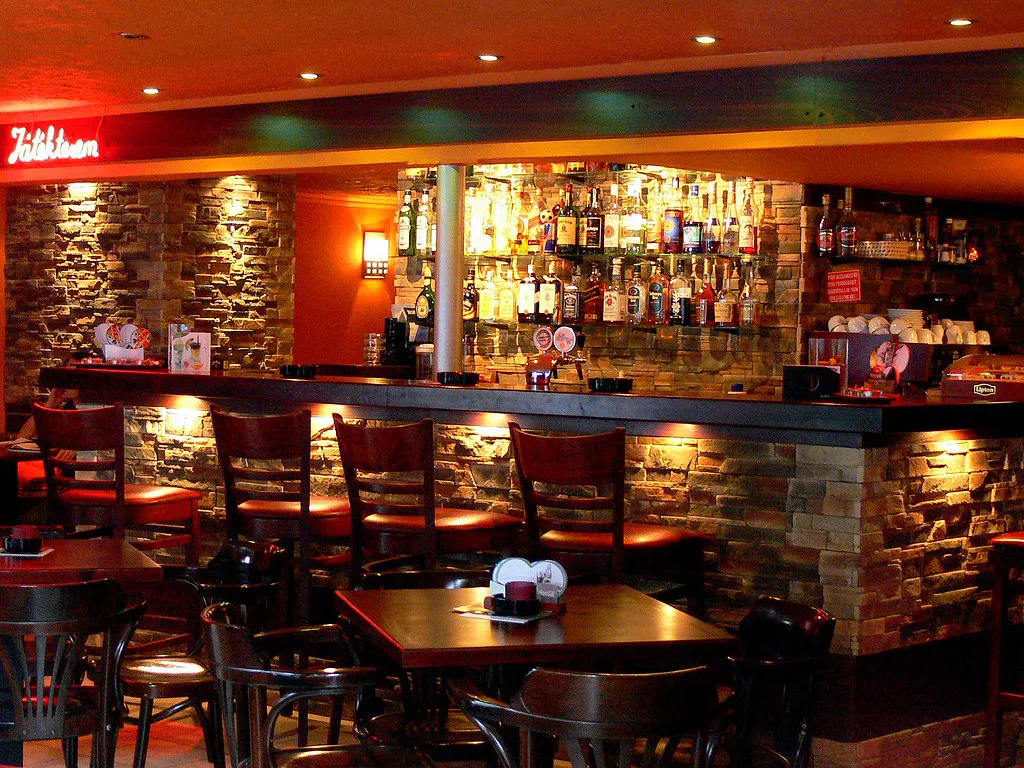
Ordering at the bar works differently than in the US or UK. You wait in a loose line rather than waving cash, order first and pay at the end of the order rather than per drink, and say köszönöm (thank you) when collecting the glass. Do not tip the individual bartender per drink; the service tip goes into a shared jar at the end or on the card machine. Pay in HUF rather than EUR where possible, because EUR-accepting venues often apply an unfavourable house exchange rate.
The dress code across ruin pubs is aggressively casual, and heels are actively a bad idea on uneven courtyard floors. Upscale wine bars, rooftops, and dining-focused venues like Mazel Tov or 360 Bar expect smart casual. Booking a table is rarely needed for a standard pub, but essential for dinner-focused spots like Mazel Tov and Doblo, where weekend reservations often need two to three weeks lead time. For lodging, the Wombats City Hostel Budapest sits inside walking range of every venue on this list, while the Eurostars Danube Budapest works well if you prefer a mid-range hotel closer to the river.
Frequently Asked Questions
What are Budapest’s ruin pubs?
Ruin pubs are unique bars established in abandoned buildings and courtyards within the city's old Jewish Quarter. They are famous for their eclectic, recycled decor and vibrant, community-focused atmosphere. These spaces often serve as cultural hubs for art and music.
Are ruin bars in Budapest safe for solo travelers?
Yes, ruin bars are generally very safe for solo travelers due to their busy, social nature and friendly staff. Most venues are well-lit and located in active neighborhoods with plenty of people around. Always keep an eye on your belongings in crowded spaces.
How much does a beer cost in Budapest 2026?
In 2026, a standard pint of local beer typically costs between $3.50 and $6.00 at most central pubs. Craft beers and imported labels will generally range from $6.00 to $10.00. Prices are slightly higher at rooftop bars and upscale restaurants.
Budapest offers one of the most distinctive and affordable nightlife experiences in Europe thanks to a ruin bar culture that is equal parts urban reclamation, art installation, and community space. From the chaotic energy of Szimpla Kert to the candle-lit brick cellar at Doblo, there is a seat for every mood. Follow the pricing, repohár deposit, and walkable-itinerary advice above and you will navigate the scene with the confidence of someone on their fifth visit rather than their first.
Drink responsibly, respect the residential streets of District VII, and take the time to understand why the decay is celebrated rather than cleaned up. Whether you stay one night or a full week, the rooms inside these old courtyard buildings are likely to be the memory that stays longest from your trip. Cheers (Egészségére) to a memorable night out in the Hungarian capital.