

12 Best Cities for Cheap Nightlife in Europe
Finding a huge night out for the price of a London cocktail round is still possible in 2026, but only if you skip the obvious hubs. This guide ranks twelve cities where a pint costs under EUR 3, clubs wave entry fees before midnight, and the walking distance between your hostel and the dance floor is usually under ten minutes.
Every price below was cross-checked in April 2026 against the Post Office Travel Money city barometer, local menus, and reader reports. Each city section names the exact district to base yourself in, two or three venues worth your time, a budget breakdown in euro, and the ride app that actually has drivers on the road at 03:00.
You can branch into deeper guides on our Europe nightlife hub and map a four or five city route. Budget carriers like Ryanair and Wizz Air link most of these capitals for under EUR 40 return if booked six weeks out. Prepare for ruin bars, river barges, shot bars, cellar clubs, and medieval squares that do not close until the trams restart. And if your route runs north, Copenhagen's cosy brown bars (bodegas) keep a night affordable — see our guide to the best pubs in Copenhagen.
Planning Your Budget European Party Trip
Central, Eastern, and Balkan Europe remain the continent's cheapest nightlife zones in 2026. A local pint averages EUR 1.80 in Sofia and Prague, EUR 2.50 in Budapest and Warsaw, and creeps up to EUR 4 in Athens and Tallinn. Club entry is almost always free before 23:00 outside of Saturday nights and special DJ bookings, so arriving early is the single biggest money-saver.
Local currencies still beat the euro in Poland (zloty), Hungary (forint), Czechia (koruna), Serbia (dinar), and Romania (leu). Pay in the local currency at every terminal and decline "dynamic currency conversion" when the card machine asks if you want to be charged in euro or pounds. That one setting can cost you an extra 5 to 12 percent per transaction. The nightlife in Europe is broadly cashless now, but keep a EUR 10 note for cloakrooms and small cellar bars.
Weekday city-hopping beats weekend travel on price. Prague to Berlin by bus on a Tuesday can sit under EUR 12, and Budapest to Belgrade by night train runs around EUR 35 with a couchette. Flight prices into Riga, Vilnius, Bucharest, and Sofia also drop 30 to 40 percent mid-week, which matters because two of those three cities are also at their liveliest on Thursday and Friday nights.
Nightlife Index: Average Prices Across the 12 Cities
These ranges reflect what you will actually pay in a typical city-centre bar or mid-tier club in April 2026, not hostel-bar specials or airport-area rip-offs. Use the table to plan a rough nightly budget: a basic weekday night in Sofia or Bucharest runs under EUR 25, while Athens or Tallinn pushes closer to EUR 45.
- Sofia: local beer EUR 1.50 to 2.00, cocktail EUR 5 to 7, club entry EUR 0 to 5.
- Prague: local beer EUR 1.80 to 3.00, cocktail EUR 6 to 9, club entry EUR 5 to 12.
- Bucharest: local beer EUR 2.00 to 3.00, cocktail EUR 5 to 8, club entry EUR 0 to 7.
- Budapest: local beer EUR 2.00 to 3.00, cocktail EUR 6 to 8, club entry EUR 0 to 8.
- Warsaw: local beer EUR 2.30 to 3.50, cocktail EUR 6 to 9, club entry EUR 0 to 10.
- Krakow: local beer EUR 2.50 to 3.50, cocktail EUR 6 to 9, club entry EUR 0 to 8.
- Bratislava: local beer EUR 2.50 to 3.50, cocktail EUR 6 to 9, club entry EUR 0 to 8.
- Vilnius: local beer EUR 2.50 to 3.50, cocktail EUR 6 to 9, club entry EUR 5 to 12.
- Belgrade: local beer EUR 2.50 to 4.00, cocktail EUR 5 to 8, club entry EUR 0 to 10.
- Riga: local beer EUR 3.00 to 4.00, cocktail EUR 7 to 10, club entry EUR 0 to 10.
- Tallinn: local beer EUR 3.50 to 5.00, cocktail EUR 8 to 11, club entry EUR 0 to 12.
- Athens: local beer EUR 3.50 to 5.00, cocktail EUR 8 to 12, club entry EUR 0 to 15.
Prices at tourist-square terraces are typically 40 to 60 percent higher than the figures above. If a waiter hands you a drinks list without prices, ask for the printed menu before ordering or walk out.
Prague, Czech Republic
Prague still has the cheapest full-strength beer in the EU: a half-litre of Pilsner Urquell runs EUR 1.80 to 2.50 at a real hospoda, and under EUR 2 at spots like U Sadu in Zizkov. Base yourself in Vinohrady or Zizkov rather than Old Town Square, where the same pint jumps to EUR 5. Trams 91, 92, 93, and 96 run as night service every 30 minutes and cost EUR 1.60 per ride.
Karlovy Lazne on Smetanovo nabrezi is the five-storey super-club every first-timer tries once, with one floor per genre and entry around EUR 10 to 15. For something less touristy, Roxy in the Jewish Quarter runs world-class techno and drum and bass nights for EUR 7 to 10, and Cross Club in Holesovice is a steampunk-industrial warren with live bands and DJs. Traditional beer halls worth the walk include U Fleku and Lokal Dlouha.
Use Bolt or Liftago rather than hailing a street taxi. The tram network handles almost all night travel, but if you land in Zizkov at 04:00, a 10-minute Bolt back to Vinohrady is around EUR 5. Women travelling alone report feeling safest on the well-lit Vinohradska and Jecna corridors rather than the dark park paths around the main train station.
Budapest, Hungary
Budapest's ruin bar scene is concentrated in the old Jewish Quarter (District VII), specifically Kazinczy utca and Dob utca. Szimpla Kert is the famous one, but Instant-Fogas next door is actually a seven-room complex with more dance floors and lower drink prices. Expect EUR 2 to 3 for a Dreher pint and EUR 0 to 5 cover before 23:00 at most venues.
For something the tour groups skip, try the summer "Sparty" nights at Szechenyi Baths: swimwear, lasers, and house music in the actual thermal pools from around EUR 55 on Saturdays (pricey but a once-per-trip experience). Akvarium Klub under Erzsebet Square is the best option for live indie and electronic gigs, and the outdoor terrace is free to enter until the club downstairs opens.
Bolt dominates Budapest ride-sharing and will undercut yellow cabs by half. From District VII back to anywhere inside the ring road runs EUR 4 to 7. The 6 tram runs 24/7 along the Grand Boulevard (Nagykorut) and is the safer choice than walking the stretch between Blaha Lujza ter and Oktogon alone after 02:00.
Warsaw, Poland
Warsaw's best-kept nightlife secret is the Pawilony cluster at Nowy Swiat 22 to 28: a hidden courtyard of more than 20 tiny bars with shots from 8 zloty (EUR 1.90) and beer from 12 zloty (EUR 2.80). Base yourself in Srodmiescie or Praga, where you are within 15 minutes of both Pawilony and the larger clubs on Mazowiecka street. Student nights on Thursdays are consistently cheaper than Saturdays.
Smolna 38 remains Warsaw's most respected techno venue and rarely charges more than 30 zloty (EUR 7) entry. For a grittier, across-the-river vibe, Hydrozagadka and Chmury in Praga attract a younger indie crowd and charge no cover most nights. Shot-bar chain Pijalnia Wodki i Piwa has multiple Warsaw branches where shots and zapiekanka snacks are flat-priced, making it the standard pre-gaming stop for locals.
Bolt and FreeNow both operate in Warsaw, and FreeNow typically beats Bolt on price for longer rides across the Vistula. Night trams run hourly on lines 1, 2, 3, 7, and 36, and the metro runs until roughly 03:00 on weekends. The Centrum to Powisle walk is well-lit and safe, but avoid the underpasses around Dworzec Centralny alone after midnight.
Belgrade, Serbia
Belgrade's signature party experience is the splavovi, a string of floating river clubs moored along the Sava and Danube. From May to September, boats like 20/44, Hot Mess, and Freestyler host techno, house, and turbo-folk nights, with entry usually EUR 5 to 10 and local Jelen or Lav beer around 250 dinars (EUR 2.10). In winter the scene moves to Savamala and Cetinjska 15, an abandoned brewery compound with eight clubs under one roof.
Cetinjska 15 is walking distance from most hostels in Stari Grad and is the single best-value nightlife stop in the Balkans: cover is usually free, beer is EUR 2 to 3, and you can move between rock bar, techno club, and kafana in two minutes. Drugstore in Dorcol is the city's most respected underground techno venue and stays open well past sunrise on weekends.
CarGo is the local ride app and is significantly cheaper and safer than flagging taxis on the street (unregistered "wild taxis" are the most common tourist scam in Belgrade). A ride from the river clubs back to Stari Grad is around 600 to 900 dinars (EUR 5 to 8). Keep a small amount of dinar cash for cloakroom fees and splav entry, which sometimes does not accept cards.
Bucharest, Romania
Bucharest's nightlife packs into Lipscani (Old Town) and the stretch around Piata Universitatii. A pint of Ursus or Ciuc costs 10 to 14 lei (EUR 2 to 2.80), and most venues in Lipscani drop their cover entirely before midnight. The density is ridiculous: you can hit six bars in a ten-minute walk along Strada Lipscani and Strada Smardan without crossing a main road.
Control Club on Strada Academiei is the alternative-scene anchor and hosts indie, punk, and electronic gigs for 25 to 45 lei (EUR 5 to 9). Expirat in the Universitatii area draws a student crowd for cheap beer and live bands, while Fratelli is the spot if you want a more upscale, EDM-focused night. Shot bars like Shoteria on Strada Smardan sell shots from 10 lei (EUR 2).
Bolt is the default ride app in Bucharest and typically charges EUR 3 to 5 for a crosstown ride. Night bus 123 covers Lipscani to Gara de Nord every 40 minutes after the metro shuts at 23:00. Solo travellers should stick to Lipscani, Piata Romana, and Piata Victoriei at night, and avoid the northern Gara de Nord station surroundings after dark.
Sofia, Bulgaria
Sofia is arguably the cheapest capital on this list for a full night out. A 500ml Kamenitza or Zagorka costs 3 to 4 lev (EUR 1.50 to 2), and a double rakia sits around 5 lev (EUR 2.50). The nightlife spine is Vitosha Boulevard for bars and restaurants, while the clubbing moves to Studentski Grad (student town) and the strip around NDK (National Palace of Culture) for electronic and hip-hop nights.
Hambara, the candle-lit bar in a former communist-era hideout off Ulitsa 6 Septemvri, has no sign, no electric lights, and no menu beyond local rakia and wine from EUR 2. Terminal 1 in Studentski Grad is the go-to techno and drum-and-bass club, and Biblioteka under the National Library runs the cheapest student nights in the city for a 5 lev (EUR 2.50) cover.
TaxiMe and Yellow 333 are the trusted Sofia taxi apps; Bolt operates but has fewer drivers late at night. Decline any taxi from outside the airport terminal that does not have a "OK Supertrans" or "Yellow 333" company sticker, as Sofia airport-taxi overcharging is the single most reported scam. From Vitosha Boulevard back to Studentski Grad is around 10 to 15 lev (EUR 5 to 7.50) by app.
Riga, Latvia
Riga's Old Town (Vecriga) is compact enough that you will walk between every venue on your list. Free club entry is standard on weeknights, and cocktails at bars like Tallinas Street Quarter creative district cost EUR 7 to 9. Local beer (Valmiermuiza or Uzavas) runs EUR 3.50 to 4.50 in the Old Town and drops to EUR 2.80 if you walk five minutes into the Centrs district.
Ala Folkklubs in the Old Town cellar is the traditional stop, with massive jugs of local beer (EUR 8 for a 2-litre jug) and live folk music until 02:00. One One on Kalku iela and Coyote Fly on Ratslaukums are the mainstream clubs where free entry holds until 00:00. For a grittier night, head to Tallinas Street Quarter, where bars like Ezis aiz stura and Rigas Saragoga run indie and techno nights with cover under EUR 8.
Bolt runs Riga and will get you from the Old Town to the airport for under EUR 15. Night buses 1N, 2N, and 3N cover the main corridors hourly from 00:00 to 05:00 at EUR 1.50 per ride. The riverside park strip between Old Town and the Central Market is poorly lit at night; walking with a friend or taking a EUR 4 Bolt is the sensible call.
Vilnius, Lithuania
Vilnius is once again Europe's quietly-best budget capital in 2026, thanks to the UNESCO Old Town packing more quirky bars per square kilometre than anywhere in the Baltics. Base yourself in the Old Town or the boho Uzupis republic across the river. A pint of Svyturys costs EUR 2.80 to 3.50, and most bars around Vokieciu and Traku streets have free entry until 01:00.
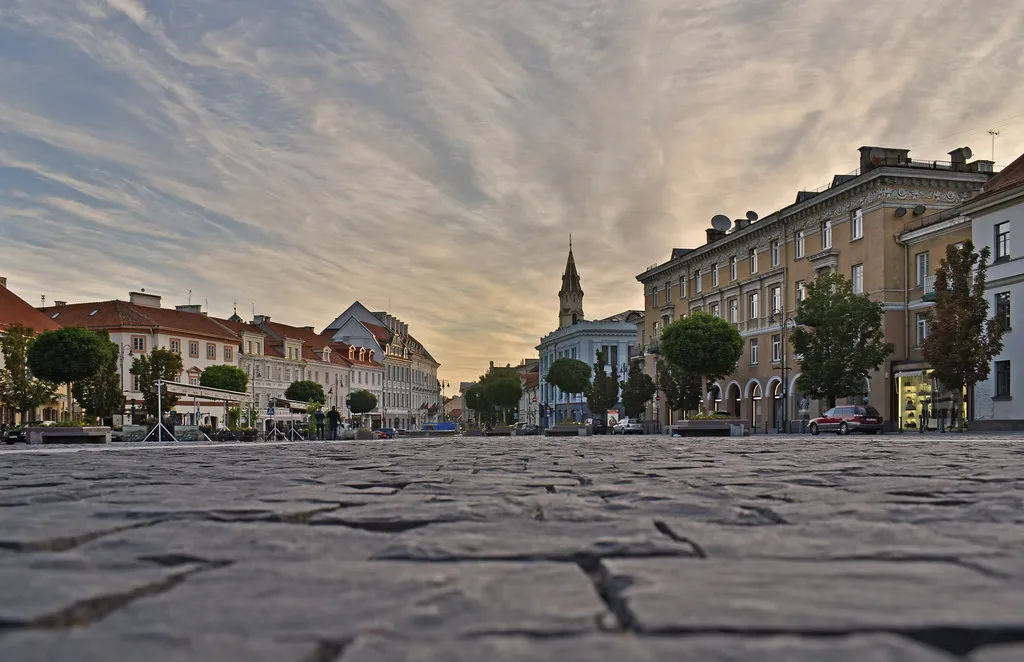
Opium Club on Islandijos is the respected techno institution, with entry EUR 8 to 15 and a strict no-photo policy on the dance floor. Kabuki near the Cathedral blends cocktail bar and club with entry rarely above EUR 5. For cheap local character, Snekutis in Uzupis pours 16 varieties of Lithuanian craft beer at EUR 3 a pint, and Bambalyne cellar bar serves the same range in medieval vaults for EUR 3.50.
Bolt is the dominant Vilnius ride app and a crosstown ride rarely exceeds EUR 5. Night buses run Friday and Saturday from 00:30 to 04:30 on routes 3N, 4N, and 5N at EUR 1 per ride (app-purchased). Vilnius is statistically one of the safer European capitals after dark, but the riverside path between the Cathedral and Uzupis has limited lighting, so the 10-minute walk is best done in a group.
Tallinn, Estonia
Tallinn is the priciest of the Baltic three but still well under Western-European rates. The medieval Old Town is the obvious base, and walking between venues on Vana-Posti, Sauna, and Mere puiestee takes five minutes. A house beer at Hell Hunt, the self-proclaimed "first Estonian pub," runs EUR 4.50, and entry to most Old Town clubs is free until 23:00.
Club Hollywood near Viru Gate is the mainstream spot with hip-hop upstairs and house downstairs; entry stays free on Wednesdays and jumps to EUR 10 on Saturdays. For a less-touristy night, head to the Kalamaja district around Telliskivi Creative City, where bars like Sveta Baar and Frank host alternative DJs and charge EUR 0 to 5 cover. HALL in the Rotermann Quarter is the local techno flagship and runs sunrise parties most weekends.
Bolt was founded in Tallinn and is the cheapest and most reliable ride option. From the Old Town to Kalamaja is a EUR 4 ride or a 20-minute walk along Toompea. Tallinn trams and night buses 1N and 2N cover the core routes hourly after midnight. Women travellers consistently report Tallinn as one of Europe's safer nightlife cities for solo walks, with well-lit main corridors and low street-crime rates.
Krakow, Poland
Krakow's Old Town and the Jewish Quarter (Kazimierz) pack more cellar bars into one square kilometre than any other European city. Kazimierz around Plac Nowy is where locals drink, with bars like Alchemia, Mleczarnia, and Singer serving local Zywiec or Tyskie pints for 12 to 15 zloty (EUR 2.80 to 3.50). The Old Town's Main Market Square terraces are twice as expensive; cross into the side streets for proper value.
Pijalnia Wodki i Piwa, the flat-priced shot bar chain, has multiple Krakow branches where every shot, beer, and snack costs 8 zloty (EUR 1.90). This is the budget pre-gaming anchor that locals use before heading to clubs like Prozak 2.0 on Plac Dominikanski, Krakow's serious techno venue, where cover is usually 20 to 40 zloty (EUR 4.70 to 9.50). Shisha Club and Piekny Pies in Kazimierz run free-entry indie nights.
Bolt and FreeNow both operate in Krakow and prices are near-identical: a ride from Kazimierz to the Old Town is under EUR 4. Night buses 601, 602, 603, and 605 run hourly from 23:30 to 04:30 and reach all main neighbourhoods. Pickpockets are the main concern in Krakow nightlife; keep phones and wallets in zipped front pockets at crowded venues like Prozak and Alchemia.
Bratislava, Slovakia
Bratislava is the smart alternative to Vienna: the two cities are 60 kilometres apart, but drink prices in Bratislava are roughly half. A Zlaty Bazant pint runs EUR 2.50 to 3.50, and bars on Michalska and Venturska in the compact Old Town rarely charge cover. A day trip from Vienna by train costs EUR 16 return, making Bratislava a popular evening escape for Austrian partiers.
Subclub, housed in a former nuclear bunker under the castle hill, is the city's most interesting venue and hosts international techno and drum-and-bass acts for EUR 5 to 10 entry. Nu Spirit Club runs jazz early and house late for similar prices. For budget-anchor drinking, Slovak Pub on Obchodna serves local beer from EUR 2 alongside halusky (potato dumplings) until 23:00, which is useful food before a late club night.
Bolt runs Bratislava and rides inside the small Old Town footprint are often under EUR 3. Night buses N29, N33, and N47 cover the main routes hourly after 23:30 at EUR 0.90 per ride. The city is small enough that most nightlife is walkable; the stretch between the Old Town and the main bus station is the one block to avoid walking alone after 02:00.
Athens, Greece
Athens is the priciest entry on this list but still cheaper than Barcelona or Lisbon for late-night drinking. The key districts are Psyri for rooftop bars, Exarchia for alternative scene, and Gazi for big clubs. A Mythos or Fix pint runs EUR 3.50 to 5, and most rooftop bars add a EUR 2 "terrace supplement" per drink for the Acropolis view (often worth it once).
A for Athens and 360 Cocktail Bar in Monastiraki have the most-photographed Acropolis rooftop views, with cocktails EUR 10 to 14. Six d.o.g.s near Syntagma is a multi-space creative hub with a sandy-floor garden, live gigs, and a techno club where entry stays free most weeknights. For a grittier night, Exarchia's Six Dogs Underground and Romantso host alternative DJs with EUR 5 to 10 cover. Clubs in Gazi like Pixel and Lohan Nightclub run until sunrise.
Beat (local app) and Uber both work in Athens, and Beat is typically cheaper. A ride from Gazi to Koukaki is around EUR 5 to 7. The Athens metro runs until 02:30 on Fridays and Saturdays, extending to 03:30 on summer weekends. Exarchia has a reputation for pickpocketing and late-night tension; sensible behaviour and daylight-hours scouting of your return route go a long way.
Shot Bars and Pre-Gaming: The Budget Anchor Locals Actually Use
Every generic listicle tells you to "pre-game at your hostel." What they miss is that across Central Europe, the cheapest pre-gaming is already baked into the street in the form of shot bars (pijalnia in Polish, shoteria in Romanian, nalyvaika in Ukrainian). These are flat-priced chains where every shot, snack, and small beer costs one fixed figure: 8 zloty in Poland, 10 lei in Romania, 5 lev in Bulgaria. That is EUR 1.90 to 2.50 per round, which is cheaper than the supermarket beer most hostels sell.
The three worth knowing: Pijalnia Wodki i Piwa (Poland, dozens of branches across Warsaw, Krakow, Gdansk, Wroclaw), Shoteria (Romania, concentrated in Bucharest Lipscani), and various "na zdrowie" style bars in Prague and Bratislava. They open around 16:00 and stay busy until 03:00 or 24/7 in the Polish case. Sitting at one for an hour before a club night will cost EUR 6 to 10 versus EUR 25 at a trendy cocktail bar for the same alcohol volume.
The adjacent tip competitors skip: ride apps vary sharply by country. Bolt is dominant and cheapest in the Baltics (Estonia, Latvia, Lithuania), Bulgaria's Terminal-1 nights, and Romania. FreeNow beats Bolt in Warsaw and most German-adjacent cities. CarGo is safer than any taxi in Belgrade. Uber has almost disappeared from Central and Eastern Europe since 2023 and is rarely the cheapest option anywhere on this list except Athens. Download two apps per city and compare the first quote, not the first estimate.
What to Skip: European Nightlife Tourist Traps
Ice bars, "medieval dinner shows," and any venue within 50 metres of Old Town Square (Prague, Krakow, Riga, Tallinn) routinely charge two to three times fair-market prices. The same Pilsner that costs EUR 1.80 in Zizkov costs EUR 5 on the Prague Old Town Square. Walk five minutes off the square and you immediately double your drinking budget's lifespan.
Street promoters handing out "free shot" flyers or offering to "take you to the best club" work on commission. The venues that need to pay a human to drag tourists off the street are, without exception, not worth visiting. In Budapest, Barcelona, and Prague, promoter-led bars regularly hit victims with EUR 30 "club entry" charges or EUR 20 cocktails that turn out to be vodka and fruit juice.
Tourist pub crawls vary wildly in quality; check recent reviews on the actual crawl company (not generic Google) before paying EUR 15 to 25. Some stops are genuinely the bars locals drink at and include one or two free shots; others visit empty, overpriced chain bars and rush you out before you finish. A good rule: if the crawl's route is not published on their site, skip it.
How to Stay Safe While Partying in Europe?
All twelve cities on this list rank in Europe's upper-half for tourist safety, but partying adds predictable risks. Spiking is rare but documented in Prague, Budapest, and Barcelona; keep your drink in hand or covered, and order direct from the bar rather than accepting a drink from a stranger. Pickpocketing is the single most common crime affecting nightlife tourists, concentrated on packed dance floors and metro platforms after 02:00.
Use ride apps with live tracking turned on and share your trip with a friend via the app's built-in share-trip feature, which works in Bolt, FreeNow, Uber, Beat, and CarGo. Avoid the un-apped "taxi" touts waiting outside airports in Sofia, Bucharest, and Belgrade; they are the single most-reported scam and will charge three to five times the metered rate. If you must flag a street taxi, photograph the licence plate before you get in.
Keep a digital passport photo on your phone and leave the physical document in your accommodation safe. Most bars accept a phone photo for age checks. Know your hostel or hotel's address in the local language; asking a EUR 5 Bolt driver to take you "back near the big square" in broken English is how people end up outside the wrong hostel at 04:00. Our nightlife hub has city-specific safety notes for follow-up reading.
Final Tips for Saving Money on Drinks
Arrive early. Every city on this list has free or reduced club entry before 23:00 or midnight, so hitting a club at 22:30 instead of 01:00 saves EUR 8 to 15 on cover alone. You can always leave and come back; most venues stamp hands. Pre-commit to two or three venues per night and walk between them rather than taxi-hopping, which adds EUR 15 to 25 to an otherwise EUR 25 night.
Hostel bars in Budapest, Krakow, Bucharest, and Riga routinely run EUR 1 to 2 beer hours between 19:00 and 21:00 plus free shots for anyone joining the house pub crawl. Even if you skip the crawl, the opening drinks pay off. Supermarkets (Biedronka in Poland, SPAR in most Balkan countries, Selver in Estonia) sell quality local beer for EUR 0.80 to 1.20 per bottle for in-room pre-drinks.
Signing up for club mailing lists before your trip often unlocks free entry or discounted first drinks at Smolna, Prozak, Opium, Drugstore, and Terminal 1. Resident Advisor ticket sales are typically EUR 5 to 10 cheaper than door prices at serious techno venues. Drink local: the cheapest high-quality option is almost always the regional beer or spirit (Pilsner in Czechia, Palinka in Hungary, Rakia in Bulgaria and Serbia, Samogon shots in the Baltics).
Frequently Asked Questions
Which city in Europe has the cheapest beer?
Prague and Sofia consistently offer the cheapest beer, with pints often costing less than $2.00 at local pubs. You can find even lower prices in university districts or at local supermarkets.
Are Eastern European party cities safe for solo travelers?
Yes, cities like Budapest and Warsaw are generally very safe for solo travelers who stick to well-populated areas. Always use ride-sharing apps and keep an eye on your belongings in crowded clubs.
How can I save money on club entry fees in Europe?
Arrive before midnight to take advantage of free entry offers or discounted 'early bird' tickets. You can also check our nightlife hub for guest list tips.
The cheapest nights out in Europe in 2026 are still clustered east of Berlin and south of Vienna, where a full night of drinks, cover, and a ride home fits inside EUR 30. The format that works best is simple: pick two or three of these cities for a long weekend, base yourself in the neighbourhood we named, and use the listed ride app for 03:00 travel.
Your euro goes furthest in Sofia, Bucharest, and Belgrade; the best ruin bars are in Budapest's District VII; the cheapest shots in Europe are at Krakow and Warsaw Pijalnia branches; and the best-value Baltic city for 2026 is Vilnius. Go early in the evening, pay in local currency, and trust the second-cheapest option on any menu. The continent's real nightlife lives one or two streets off the famous squares.