

8 Best Pubs in Brussels
I still remember my first night in Brussels, lost among the gold-trimmed facades of the Grand Place with a heavy rain falling. I ducked into a narrow impasse and found a warm, wood-paneled sanctuary that smelled of hops and ancient yeast. That moment sparked a decade-long obsession with the city's legendary brown cafes and their centuries-old brewing rituals.
Brussels' beer culture is a UNESCO-recognized intangible heritage (inscribed in 2016) that defines the city's social rhythm. This guide was last refreshed in April 2026 to verify pricing, opening hours, and the impasse entrances that still trip up first-time visitors. Whether you want a Middle Ages-style brown cafe or a modern Lambic specialist, the eight entries below represent the capital's essential drinking stops.
Hundreds of pubs line the city center, and picking the wrong ones can burn an evening on overpriced Stella with rushed service. Our editors have vetted every neighborhood from the Ilot Sacré to the trendy streets of Ixelles and Saint-Gilles. Prepare to discover hidden bars that most travelers walk right past while searching for the more famous landmarks.
Understanding Belgian Beer Etiquette
Belgian beer culture is far more than a casual drink; it is a ritual performed with precision and deep respect. Every specific beer has its own branded glass, designed to enhance the aroma and maintain the perfect head of foam. Locals will wait patiently while a bartender tilts a Trappist ale at 45 degrees to keep the sediment off the palate.
Drinking directly from a bottle is a major faux pas in traditional Brussels establishments and should be avoided. Many of the city's oldest pubs do not serve food beyond cheese plates, salami boards, or Ardennes ham, so plan dinner separately. If you are looking for a full meal after, you might want to explore the wider Brussels nightlife scene for bistros.
The foam on your beer, known as the "collar," protects the liquid from oxidation while you drink. Bartenders use a small plastic knife or a skimmer to trim the excess bubbles, creating a smooth surface that looks like a work of art. Respecting these small details will earn you the respect of the staff and improve your overall tasting experience significantly.
The Lambic and Gueuze Tradition
Brussels is the world capital of Lambic, a spontaneously fermented beer style that only exists in the Senne River valley thanks to the native wild yeasts Brettanomyces bruxellensis and Brettanomyces lambicus. Brewers leave the wort in open shallow vessels called koelschips overnight, letting the air inoculate the beer. No other style in the world can legally use the term "Lambic" under Belgian appellation rules.
Gueuze is a blend of young and aged Lambics, refermented in the bottle to produce a sharp, effervescent drink often called "Brussels Champagne." Look for bottles from Cantillon, 3 Fonteinen, Boon, Tilquin, and Girardin — these are the benchmark producers and all of them are sold somewhere on this list. Kriek (cherry) and Framboise (raspberry) are sweetened fruit variants that act as a friendlier entry point for newcomers.
Order Lambic in a small tulip or flute glass if it's offered on draft, because the oxidation during a long sit will flatten the delicate sour character. A 25 cL pour is the traditional serving size for gueuze, not the 33 cL you get with a pilsner. Asking for a tasting flight at Moeder Lambic or Poechenellekelder is the fastest way to calibrate your palate before committing to a full bottle.
Poechenellekelder: Puppets and Proximity to Manneken Pis
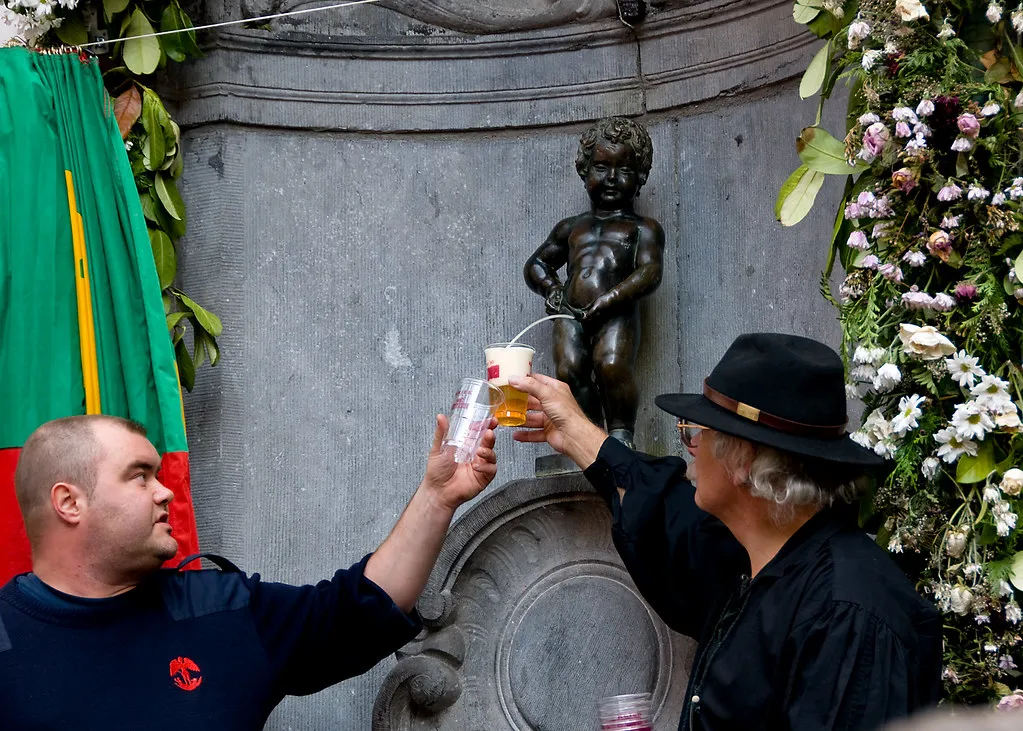
Poechenellekelder sits directly across from the Manneken Pis statue on Rue du Chêne 5, making it one of the rare tourist-area pubs where the beer list actually matches the location's fame. The walls are crammed with marionettes salvaged from the neighboring Toone theatre — a direct thread to Brussels' 18th-century puppet tradition that earns the pub a cultural weight most sidewalk cafes lack. Expect an intimate ground floor with a tight bar and a quieter, arched cellar downstairs.
The cellar list runs to roughly 200 beers, heavy on Trappist and abbey styles, with a signature pour of Westmalle Tripel in its engraved chalice. Charcuterie and cheese plates are the food focus; don't expect hot meals beyond daily soups and a small pasta. A 33 cL Trappist costs €6 to €10, and the doors stay open daily from 11:00 until roughly 01:00.
The terrace fills fast with Manneken Pis tourists between 13:00 and 16:00, so target a late-morning or post-dinner arrival for a seat indoors. Order the Kwak in its distinctive coachman's glass and wooden stand, but note that a €5 to €10 refundable deposit is added to your tab to prevent glass theft — you get it back when the glass returns intact.
Delirium Cafe: Navigating the 3,000-Beer Menu
Delirium Cafe holds the Guinness World Record for the largest commercially available beer variety, with a catalog that has exceeded 3,000 references since 2004. The complex sprawls across the entire Impasse de la Fidélité with a main pub, a tequila bar, an absinthe room, and a cocktail cellar, which is why solo visitors can feel swallowed by the scale. The pink elephant logo outside is your landmark.
Standard pours run €5 to €8, and the venue operates daily from 10:00 until 04:00, making it one of the few late-night options near the Grand Place. The "beer meter" sampler of ten 15 cL pours is the smartest order for first-timers who want breadth without committing €80 on full glasses. Kriek and Houblon Chouffe Dobbelen Tripel IPA are the staff-recommended starters.
Avoid the room between 21:00 and 01:00 on Friday and Saturday, when the alley itself becomes impassable and bar service stretches past 20 minutes. The sweet spot is weekday afternoons between 14:00 and 17:00, when the cellar room is nearly empty and the bartender has time to walk you through the menu binder. Sunday mornings from 11:00 are also refreshingly quiet if you're pacing a pub crawl.
Moeder Lambic Fontainas: The Ultimate Destination for Lambic Lovers
Moeder Lambic Fontainas, at Place Fontainas 8 just a short walk from Central Station, is the city's authoritative modern Lambic and craft beer bar. The space is polished rather than rustic — exposed brick, wooden ceiling panels, live music on select weeknights, and 46 taps that rotate constantly. This is where Brussels locals actually sit to drink, not the tourist crowd bouncing from Grand Place to Manneken Pis.
The beer program is curated around Lambic producers like Cantillon, 3 Fonteinen, and Tilquin, plus small-batch Belgian and European craft brewers who rarely reach the tourist-belt pubs. Staff are genuinely knowledgeable and will walk you through sour, hoppy, or fruity preferences without upselling. Draught pours sit at €6 to €9; rare bottles can climb to €25 and above.
Ask for a four-glass tasting flight at €12 to €15 to sample the Lambic-to-Trappist spectrum before committing to a full pour. Arrive before 19:00 on weekdays to secure indoor seating, as the post-work crowd fills the place quickly. The food menu is limited to cheese and charcuterie plates, which is intentional — this pub is for drinking, not dining.
Au Bon Vieux Temps: Brussels' Hidden 300-Year-Old Gem
Au Bon Vieux Temps dates to 1695 and is widely cited as the oldest bar in Brussels still in continuous operation. The entrance is an unmarked passage at Rue du Marché aux Herbes 12, which opens into a narrow impasse that looks like a dead-end private courtyard — this is not a mistake, just walk through. Inside, the room feels closer to a 17th-century chapel than a bar, with stained-glass windows salvaged from a deconsecrated church and carved-oak booths worn shiny by three centuries of elbows.
The menu is intentionally short and heavy on classics: Kasteel Tripel, Westmalle Dubbel, Orval, and a rotating abbey pour. Beers are priced €5 to €9, with the house generally open from 13:00 until midnight Monday through Saturday and closed Sundays. Expect a library-quiet noise level, which makes this the wrong choice for a group of six and the right choice for a first date or a reflective solo pint.
Bring cash as a backup because the card reader is known to fail on busy Friday evenings. The bartender does not hurry, and that is the point — the ritual here is slow and the staff will gently correct you if you attempt to order a gueuze in a pilsner glass. For a historical deep-dive on a similar vintage brasserie, read this historical context for A la Mort Subite.
A la Mort Subite: A Historic Belle Époque Experience
A la Mort Subite occupies a long, narrow Belle Époque hall at Rue Montagne aux Herbes Potagères 7, with high ceilings, cloudy mirrors, and marble-topped tables that have not been rearranged since 1928. The name — "Sudden Death" — comes from a dice game played here by bank clerks on their lunch break, who gambled on a single roll to decide who paid the round. The brasserie still runs under the same family that bought it in 1910.
The house gueuze and kriek, bottled under the Mort Subite label by the Alken-Maes brewery, are the obvious order and the entry-point for visitors who have not tried Lambic before. Meal-and-drink budgets run €8 to €15, with service from 11:00 until midnight daily. Simple food includes omelettes, croque-monsieur, and cheese plates — better than the tourist-belt average but not the reason you come.
The noise level is a lively hum rather than a shout, so conversation works without effort, and the grand hall easily absorbs groups of six to eight. Sit near the front windows on a sunny afternoon for the Belle Époque lighting effect the photographers chase. This is also one of the few historic brasseries with a genuinely accessible step-free entrance, which matters for visitors with mobility needs.
A la Bécasse: Traditional Beer and Ardennes Ham
A la Bécasse hides at the end of Impasse de la Bécasse 11, an alley so narrow that two visitors cannot walk down it shoulder-to-shoulder. The pub is one of the last places in Brussels where Lambic Doux — a lightly sweetened Lambic — is still poured from stoneware pitchers, a format that vanished from most city bars in the 1970s. The long communal wooden benches force you to share space, which is either charming or challenging depending on your mood.
A beer and a plate of Ardennes ham, butter, and rustic bread lands at roughly €12, with hours from 11:00 to midnight daily. The Timmermans Lambic Doux in a ceramic jug is the signature order and pairs perfectly with the smoky cured ham. Cheese plates and boulettes (Belgian meatballs) round out the food options.
Finding the impasse entrance is the main obstacle — look for a small wrought-iron sign on Rue de Tabora that simply reads "Bécasse" above a narrow gap between two shops. GPS will drop you on the wrong street if you rely on it, so eyeball the storefronts. The pub is standing-room only by 20:00 on Fridays, so aim for lunch or late afternoon to claim a bench seat.
Theatre Royal de Toone: A Unique Puppet Theatre Pub
Theatre Royal de Toone, tucked into Impasse Sainte-Pétronille 6, is a 200-year-old marionette theatre that happens to run a full working pub on the ground floor. The attic above hosts live puppet performances in Bruxellois dialect — think Faust or Les Trois Mousquetaires performed by hand-carved wooden figures — and the pub downstairs keeps the literary cafe atmosphere without the performance obligation. This is the spiritual home of the puppet tradition that Poechenellekelder borrows from.
The beer list is compact and curated, with most pours between €5 and €8 and service running from noon until the final puppet performance wraps around 23:00. The Gueuze Tilquin and the house Trappist rotation are both solid defaults. A small museum of antique marionettes sits on the upper floor and is free to browse for pub patrons.
Performance nights are Wednesday through Saturday at 20:30, with tickets at €10 to €15, and the pub fills 30 minutes before showtime with theatregoers. If you want a quiet pub experience, come on Monday or Tuesday between 16:00 and 19:00. The pub's cultural depth makes it the best answer for travelers who want more than a beer — they want a story to take home.
Goupil le Fol: A Jaunt Through Post-War Pop Culture
Goupil le Fol at Rue de la Violette 22 is a labyrinthine four-floor building crammed with sagging velvet sofas, stacks of vintage French novels, mismatched lamps, and a soundtrack of Jacques Brel and Édith Piaf chansons running on loop. It is not a beer pub in the traditional sense — the house focus is a catalog of 40-plus house-infused fruit wines made from cherry, raspberry, peach, and apricot macerated in house. Think of it as Brussels' answer to a Parisian literary cafe that never left the 1960s.
A glass of fruit wine or beer runs €6 to €9, and the doors open late — typically 20:00 — and stay open until 04:00 or later on weekends. Order the cherry wine first; it is the house specialty and a surprisingly close cousin to a traditional kriek. Food is limited to a small cheese and charcuterie board, if that.
The upper floors are where you want to be — the candlelit alcoves on the third and fourth floors are ideal for long conversations, and the acoustics muffle the chatter from below. Come in a pair or alone; this is the wrong venue for a group of six. The bar accepts cash only, a detail that catches many visitors off guard.
Quick Comparison: Crowd, Price, and Signature Beer
Use this snapshot to pick your next stop based on mood, budget, and what you want in the glass. Crowd ratings assume a Friday evening; weekday afternoons are consistently quieter across the board.
- Poechenellekelder — Crowd: high (tourist); Price: €6 to €10; Signature: Westmalle Tripel or Kwak in coachman's glass.
- Delirium Cafe — Crowd: very high (rowdy); Price: €5 to €8; Signature: Houblon Chouffe or the ten-glass beer meter.
- Moeder Lambic Fontainas — Crowd: medium (local); Price: €6 to €9; Signature: Cantillon Gueuze or a Lambic tasting flight.
- Au Bon Vieux Temps — Crowd: low (quiet); Price: €5 to €9; Signature: Kasteel Tripel or Orval.
- A la Mort Subite — Crowd: medium (lively hum); Price: €8 to €15; Signature: Mort Subite Gueuze or Kriek.
- A la Bécasse — Crowd: medium (communal); Price: ~€12 with food; Signature: Timmermans Lambic Doux in stoneware jug.
- Theatre Royal de Toone — Crowd: low (cultural); Price: €5 to €8; Signature: Gueuze Tilquin or rotating Trappist.
- Goupil le Fol — Crowd: low to medium (bohemian); Price: €6 to €9; Signature: house cherry wine (cash only).
Pour Sizes, Glass Deposits, and the Economics of Ordering
One overlooked detail that changes your total spend: Belgian pubs pour two standard sizes, and tourists almost always get upsold to the larger one. A 33 cL is the default pour you'll be handed if you simply ask for a beer, but the traditional size for Trappist and strong abbey ales is 25 cL — smaller on purpose because the alcohol content sits between 7% and 11%. Ordering "un demi" or specifying 25 cL can cut your per-round cost by €1.50 to €2 and paces you better over a long evening.
Several branded glasses carry a refundable deposit, which catches first-time visitors off guard when the bill arrives. The Kwak coachman's glass, the Pauwel Kwak wooden stand, and the large Leffe chalice typically carry €5 to €10 in glass consignment that gets refunded when the bartender retrieves the glass intact. If you see an unexpected line on the tab, don't panic — ask the server to clear the deposit once you're done.
Many historic pubs still use a paper tab system called the "witte blocnoot," where the server marks your order on a small notepad left at the table and totals it when you leave. Tipping is not expected because service is included, but locals round up to the nearest euro on cash payments. Card readers can be flaky in the oldest bars — Au Bon Vieux Temps, A la Bécasse, and Goupil le Fol in particular — so carry €40 to €60 in cash as a safety net for a full evening.
How to Find the Hidden Impasse Pubs
Finding the best pubs in Brussels often requires looking for the word "Impasse" on street signs throughout the city center. These narrow corridors were built in the 17th century to provide access to inner courtyards and now house some of the city's oldest bars. I once spent twenty minutes circling the block looking for Au Bon Vieux Temps before realizing the entrance was a plain wooden door with no signage above it.
GPS can be notoriously unreliable in these tight spaces because the tall stone buildings block the satellite signal for your phone. It is often more effective to look for small hanging wooden signs or to follow the faint sound of clinking glasses. Most impasses are perfectly safe and well-lit until midnight, but they get darker past 01:00 — stay aware if you're closing the bar.
For a compact pub-crawl route, start at Au Bon Vieux Temps at 14:00, walk five minutes to A la Bécasse, then loop through Poechenellekelder near Manneken Pis before ending at Delirium by 21:00. The whole circuit is under 1.5 km and hits four of the list's eight entries without needing public transport. You can find more modern alternatives in our guide to the best bars in Brussels if you want to mix in cocktail bars.
What to Skip: Avoiding Brussels' Tourist Traps
While the Grand Place is a stunning architectural marvel, avoid the cafes that sit directly on the square. These establishments often charge double the price for a beer you can find two blocks away in an impasse. Service is frequently rushed, and the quality of the pours rarely meets the standards found in local brown cafes.
Be wary of bars that prominently advertise "3,000 beers" signs but lack a knowledgeable staff to explain them. Quality is always better than quantity when it comes to the delicate flavors of Belgian Trappist and Lambic ales. Stick to the reputable names on this list to ensure you are getting a fresh product served in the correct glassware.
Generic international chains like the Hard Rock Cafe offer nothing unique to the brewing heritage of the Belgian capital. Your time is better spent in a place with creaky floorboards and a bartender who has worked there for thirty years. The authentic nightlife in Belgium is found in the shadows, not under the bright neon lights of global brands.
Is Brussels Beer Expensive?
Budgeting for a beer tour in Brussels is relatively easy, as prices are consistent across most high-quality traditional establishments. A standard glass of Stella Artois or Jupiler will cost you between €3.50 and €5.00 in most neighborhood pubs. Specialty Trappist beers like Orval or Westmalle usually range from €5.50 to €8.50 depending on the venue and the vintage.
Rare bottles of Cantillon or 3 Fonteinen Gueuze can be significantly more expensive, sometimes reaching €25 or more for a 75 cL bottle. Tipping is not mandatory in Belgium because service is included in the price, but rounding up to the nearest euro is appreciated on cash payments. If you are looking for a more intense party atmosphere, you might check the best clubs in Brussels for late-night pricing.
Drinking at the bar is sometimes slightly cheaper than sitting at a table with table service in the more formal brasseries. Always check for a "beer of the month" special, which can offer a premium experience at a discount. Brussels remains one of the more affordable European capitals for high-quality craft beer consumption in 2026, especially compared to Amsterdam or Copenhagen.
Frequently Asked Questions
What is the oldest pub in Brussels?
Au Bon Vieux Temps is widely considered the oldest pub in Brussels, dating back to 1695. It is tucked away in a narrow alley near the Grand Place and offers a quiet, historic atmosphere for enjoying traditional Belgian ales.
Which Brussels pubs are best for craft beer lovers?
Moeder Lambic is the premier destination for craft beer enthusiasts, focusing on small-batch producers and traditional Lambic styles. They offer a constantly rotating tap list and highly knowledgeable staff who can guide your tasting journey.
Is the Delirium Cafe too crowded for tourists?
Delirium Cafe can become extremely crowded on weekend nights, often making it difficult to move or find a seat. To enjoy the massive selection without the stress, visit on a weekday morning or early afternoon when the vibe is much calmer.
Brussels reveals its true character through its historic pubs and the people who frequent them every day. By stepping off the main tourist paths and into the hidden impasses, you will discover a world of flavor and tradition that no Grand Place terrace can match. Check out The Guardian's take on Brussels bars for additional historical perspectives on these legendary drinking spots.
Whether you are a casual fan or a dedicated beer geek, the Belgian capital offers an unparalleled experience for every palate. Raise a glass, respect the pour, and enjoy the timeless atmosphere of the best pubs in Brussels during your next visit in 2026.


