

Ultimate Guide to the Best Pub Crawl Dublin Experience
A Dublin pub crawl works best when you walk a tight loop of genuinely historic bars rather than chasing the neon on Temple Bar's main drag. The city centre holds more than 700 licensed pubs, but only a handful pour the slow-settled Guinness and keep the Victorian fittings that make the crawl worth doing. Most self-guided routes stay inside a 1.5 km radius south of the River Liffey, with walks of 3 to 10 minutes between stops.
This guide gives you a six-to-nine-pub walking order with exact addresses, opens with need-to-know etiquette (snugs, pace, the two-part pour), and compares self-guided versus organised tours like the long-running Dublin Literary Pub Crawl. If you prefer a curated evening, jump straight to the tour section; if you want to wander between Brazen Head, The Stag's Head, and Toner's on your own clock, follow the map order below.
Essential Tips for Your Dublin Pub Crawl
Plan a three-to-four-hour window and aim for one pint per stop, maximum. A properly pulled Guinness takes about 119.5 seconds to settle, so rushing it defeats the point of visiting historic pubs in the first place. Most bars stop serving food by 21:00 on weekdays and 21:30 on weekends, so eat before you start or build a food stop (Grogan's toastie, Davy Byrnes gastro plates) into the route.
Carry a physical passport or Irish-issued ID; door staff across Temple Bar and Camden Street no longer accept photos of IDs as of 2026. Card payment is universal, but keep €20 to €30 in cash for tips, trad-session donations, and late-night chippers. Wear flat shoes with grip — the cobblestones on Fleet Street and Crown Alley become slick after rain.
Pace and etiquette matter more than tour-pack discounts. Alternate pints with a glass of water, order at the bar rather than waving for table service in traditional pubs, and wait for the bartender to top your pint before carrying it to your seat. A quiet "cheers" or "sláinte" is plenty — loud clinking gets eye-rolls in older rooms like Neary's or McDaid's.
- Start between 18:30 and 19:30 to beat the 21:00 rush and still get a seat.
- Budget €8 to €8.50 per pint of Guinness in the city centre as of 2026.
- Keep your tour to six pubs maximum if you want to actually remember the night.
- Photograph the frontage and signage, not the interior — regulars dislike flash photography.
Best Neighborhoods for a Dublin Bar Crawl
The Temple Bar District, bounded by Dame Street and the Liffey, packs the most trad music and tourist energy into the smallest footprint. It's noisy, expensive, and unapologetically commercial, but pubs like the Palace Bar on Fleet Street and the Auld Dubliner anchor the area in real history. Use Temple Bar for the first stop or two, then move on before the 22:00 surge.
South of Temple Bar, the Grafton Street quadrant (Duke Street, Dame Court, South William Street, Harry Street) holds the strongest single-mile cluster of historic pubs — Kehoe's, Davy Byrnes, Grogan's, Bruxelles, and The Stag's Head sit within a seven-minute walking radius. This is the best-value area for a self-guided crawl because the pubs are genuinely old and the walks between them are short.
For a locals' alternative, cross Merrion Row to Baggot Street, where Toner's, Doheny & Nesbitt, and O'Donoghue's form a quieter, more conversational trio. Finally, Camden Street and Harcourt Street (south of St. Stephen's Green) is where the night gets loud again — cocktail bars, late-opening venues, and clubs like Copper Face Jacks keep serving past 02:00 on weekends. See our Dublin nightlife overview for the wider scene.
Brazen Head: Visiting Ireland's Oldest Pub
The Brazen Head at 20 Lower Bridge Street, Dublin 8, claims a licensing history dating to 1198, which makes it the oldest pub in Ireland on paper. James Joyce, Wolfe Tone, and Michael Collins all drank here, and the cobbled courtyard is still one of the best outdoor spots in the city for a winter pint under heat lamps.
Honest trade-off: the Brazen Head is a tourist magnet, and the crowds get thick after 20:00. Visit between 17:30 and 19:00 for a quieter room and an easier shot at the original back bar. It's a 12-minute walk south of the Liffey from Temple Bar — start here and work east, rather than saving it for last when you'll be fighting for space at the bar.
The Stag's Head: Victorian Elegance and Snugs
Tucked down Dame Court off Dame Lane, The Stag's Head (established 1780, rebuilt 1895) is the best-preserved Victorian pub in Dublin. Look for the mosaic-tiled floor at the entrance, the stained-glass skylight, and the carved mahogany bar back — the room was built for pre-electric lighting, which is why the stained glass still glows the way it does.
The real prize here is the snug: a small, wood-panelled booth with a serving hatch onto the bar, originally built so women could drink privately in Victorian Dublin. Snugs operate first-come, first-served and there's no reservation system. If one opens up, move fast, don't hog it for more than an hour, and order through the hatch rather than leaving to queue. A six-minute walk east takes you to the Palace Bar.
Palace Bar: A Temple Bar Institution
The Palace Bar at 21 Fleet Street sits on the edge of Temple Bar and is the oldest pub in the district to still hold its original 1823 interior. Editor Bertie Smyllie used the back room as the unofficial newsroom of The Irish Times in the 1940s, and the upstairs whiskey lounge now stocks more than 180 Irish whiskeys, including hard-to-find Midleton Very Rare pours.
Order a Guinness downstairs for the sawdust-and-mahogany experience, or climb upstairs for a flight of three whiskeys (roughly €22 to €30). The Palace is one of the rare Temple Bar addresses where locals still outnumber tourists on a weekday evening — arrive before 20:00 to keep it that way.
Mulligan's: The Purist's Pint of Guinness
Mulligan's at 8 Poolbeg Street, established 1854, is the pint many Dubliners quietly rank as the best pour in the city. The decor is deliberately unchanged — dark wood, uneven floors, no music, no televisions during the day — and the staff won't rush the 119.5-second settle even if you're standing at the bar. James Joyce referenced Mulligan's in Dubliners, and John F. Kennedy pulled a pint here in 1947 before he entered politics.
A small note that matters: the clock over the bar reportedly contains the ashes of an American tourist who asked to stay. The room fills after 19:00 on weekdays, so come earlier if you want a stool. A three-minute walk north-west leads you back to the Palace Bar or onward to Temple Bar proper.
O'Donoghue's: Traditional Music Roots
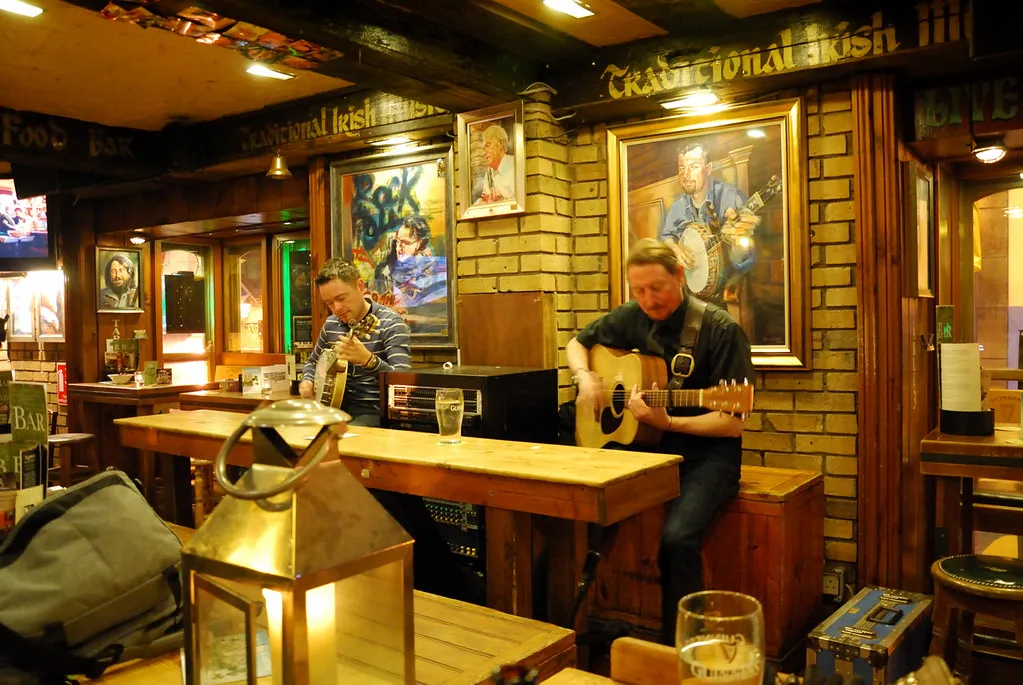
O'Donoghue's at 15 Merrion Row is where The Dubliners formed in 1962, and nightly trad sessions still run from roughly 21:30 to closing. Musicians sit in a corner near the front bar, passing out tunes on fiddle, bodhrán, tin whistle, and uilleann pipes — there's no stage, no amplification, and no cover charge. Tip the musicians by dropping coins into a pint glass they pass around, or buy a round for the table.
The pub doubles as a small inn with rooms upstairs, and it's a two-minute walk from St. Stephen's Green — convenient if you're staying on the south side. Weekends (especially Saturdays) get rammed; a Tuesday or Wednesday session has more breathing room and often better musicianship.
Toner's: Historic Baggot Street Atmosphere
Toner's at 139 Baggot Street Lower opened in 1818 and still holds a working snug — it won Ireland's Snug of the Year in 2010 and Dublin's Best Pub in 2015. W.B. Yeats reportedly visited once, decided he didn't like pubs, and never came back, which locals mention with genuine affection. The back-garden courtyard, covered and heated, is the best all-weather beer garden in central Dublin.
This is the quiet, local counterpart to Temple Bar. You'll hear Dublin accents rather than bachelor parties. A seven-minute walk west brings you back to St. Stephen's Green and the Grafton Street cluster. Order a pint at the bar, then settle in the snug or the garden depending on weather.
Grogan's Castle Lounge: Pints and Famous Toasties
Grogan's Castle Lounge at 15 South William Street is a decision-simplifier on any crawl: there's no music, no television, and the only food on offer is the famous cheese-and-ham toastie (around €4.50 as of 2026). That combination is the entire point. Writers like Flann O'Brien drank here; today the walls hang rotating work by local artists, and the clientele skews toward journalists, actors, and regulars who've been coming for decades.
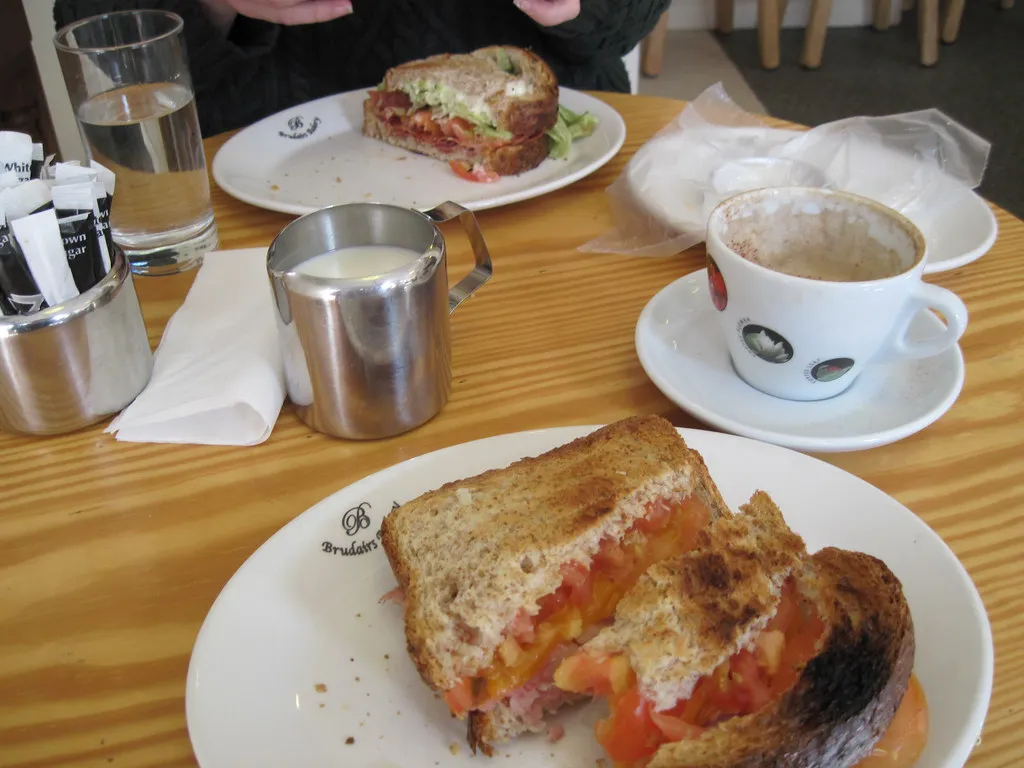
Come to Grogan's specifically for a conversation you want to hear the end of. The pint is good, not legendary, but the room is one of the last genuinely unplugged pubs in Dublin 2. The toastie is the best mid-crawl snack in the city — it won't fill you up, but it buys you another 90 minutes of stamina. Three minutes on foot gets you to Bruxelles or Davy Byrnes.
Davy Byrnes: The Ulysses Literary Connection
At 21 Duke Street, Davy Byrnes is the pub where Leopold Bloom ate a gorgonzola sandwich with a glass of burgundy in James Joyce's Ulysses — chapter 8, 16 June 1904. Every year on Bloomsday (16 June), the pub runs readings and serves the exact Bloom lunch from 12:00 onward. The 1941 art deco interior (murals by Cecil ffrench Salkeld) sets it apart from the Victorian pubs elsewhere on the list.
Davy Byrnes skews more gastropub than old-boozer. Come here for a glass of wine, a cocktail, or the fish and chips rather than the standard pint — it's the most "sophisticated" stop on a traditional crawl and works well as a reset midway through the night. A one-minute walk north drops you onto Grafton Street.
Bruxelles: Rock History and Great Vibes
Bruxelles at 7-8 Harry Street (just off Grafton Street) is the rock-and-roll counterpoint to the city's trad pubs. Phil Lynott's bronze statue stands outside the front door — Thin Lizzy drank here in the 1970s, and the basement "Zodiac" and "Flanders" bars still lean heavy on classic rock and metal nights. John Denver, James Belushi, and members of Iron Maiden have all shown up over the decades.
Use Bruxelles as your late-night pivot: last orders run to about 02:30 on Friday and Saturday, and there's no cover charge unless a named band is playing. It's a sharp tonal shift from Mulligan's or Toner's, but that contrast is what makes the crawl feel like a city rather than a museum.
Beyond Guinness: Cocktails and Irish Coffee
If you've drunk your way through four stouts and want to switch drinks without ruining the old-pub atmosphere, change neighbourhoods rather than fighting the barman at Mulligan's for a mojito. Head south to Camden Street and Harcourt Street, where cocktail-forward rooms like The Camden, Peruke & Periwig (Dawson Street), and Vintage Cocktail Club (Crown Alley, Temple Bar) mix properly, with drinks in the €14 to €16 range.
For Irish coffee, the benchmark is The Dawson Lounge on Dawson Street (technically Dublin's smallest pub) or The Shelbourne Hotel's Horseshoe Bar — both use freshly whipped cream floated over hot coffee, Jameson, and brown sugar. Avoid the spray-can-cream Temple Bar versions; they run €10+ and are aimed at photos rather than flavour. A proper Irish coffee costs roughly €9 to €11 as of 2026.
On whiskey: the Palace Bar's upstairs lounge and The Liquor Rooms (Wellington Quay) both stock 150+ bottlings. Ask for a Redbreast 12 or a Green Spot if you're new to Irish whiskey — both sit around €9 to €12 a measure and show the single-pot-still style Ireland invented.
Drink Trade-offs at a Glance
A short decision table for when you're standing outside a pub deciding what to order:
- Guinness pint: €8 to €8.50, two minutes to pour correctly, best at historic bars (Mulligan's, Toner's, Kehoe's, Grogan's).
- Irish coffee: €9 to €11, three to four minutes if done properly, best at hotel bars or small locals' pubs (Dawson Lounge, Horseshoe).
- Craft cocktail: €14 to €16, five to seven minutes, best at Camden Street or Dawson Street cocktail rooms (skip the historic pubs).
- Irish whiskey flight: €22 to €30 for three measures, best at the Palace Bar upstairs or the Liquor Rooms.
- Trad-session pint: €8 to €8.50, best where musicians actually play (O'Donoghue's, The Cobblestone in Smithfield).
Top Organized Dublin Pub Tours
The Dublin Literary Pub Crawl has been running since 1988 and remains the signature guided option. Two professional actors perform extracts from Joyce, Beckett, Behan, and Yeats between pubs, with a quiz at the end. Tours run daily from The Duke on Duke Street (19:30 departure, April to November; fewer nights in winter), last around two hours 15 minutes, and cost roughly €19 to €22 per adult in 2026.
The Dublin Traditional Irish Musical Pub Crawl takes a similar format but with two musicians instead of actors, meeting at the Gogarty on Fleet Street at 19:30. Expect €22 to €25 and a visit to two or three pubs with live demonstrations of fiddle, bodhrán, and uilleann pipes between stops. The Dublin Whiskey Tour (two hours, ~€38 to €45) blends three tasting flights with Dublin history and ends near the original Irish Whiskey Society rooms.
Private tours from operators like Original Dublin cost €180 to €250 for a group of up to six. They're worth it if you want insider access and local stories you won't get self-guided; they're not worth it if you're happy with a walking order and a map. A self-guided crawl from this article costs only the price of your drinks — typically €50 to €70 per person for six pints plus one snack.
The Unwritten Snug Rules
A snug is a small wood-panelled booth inside the main bar, usually seating four to six people, with a private door and a serving hatch that opens onto the bar. Historic Dublin pubs built them in the 19th century so women, priests, and members of the Royal Irish Constabulary could drink without being seen — each group had its own social reason not to be spotted in the open room. Today they're open to anyone, but the etiquette hasn't changed much.
First rule: snugs are first-come, first-served. You can't reserve them by phone at Toner's, The Stag's Head, or Doheny & Nesbitt — walk in before 18:30 on weekdays to have a real chance. Second rule: don't overstay. An hour or ninety minutes is fine; four hours while other groups hover is not. Third: order via the hatch rather than abandoning the snug to queue at the main bar — that's literally what the hatch is for. Fourth: keep your voice at conversation volume. The whole point of the snug is acoustic privacy in both directions.
If a stranger knocks and asks to share because every other seat is taken, the local answer is almost always yes. Saying no is technically allowed and socially remembered. This is the single most overlooked custom on the Dublin pub-crawl circuit and the one that most cleanly separates visitors who read a guide from visitors who read the right guide.
Planning Resources and Local Inspiration
For a full evening that starts before the crawl, pair this guide with the best pubs in Dublin roundup for a deeper list of venues, and the Dublin traditional pubs page if you want to skip anywhere remotely touristy. Readers choosing between trad pubs and cocktail rooms also look at our best bars in Dublin shortlist, which ranks the modern side of the scene.
To get home after the last pint, use the FreeNow app (Dublin's main taxi booking service) or Uber — both run until roughly 03:30 on weekend nights. Nitelink buses leave from College Green, Westmoreland Street, and D'Olier Street every 30 minutes on Friday and Saturday until 04:30, with a flat €6.60 fare paid in cash or by Leap card. For wider context on Irish nightlife outside Dublin, see the Ireland nightlife guide.
Frequently Asked Questions
What is the average cost of a pub crawl in Dublin?
A self-guided crawl of six pubs costs roughly €50 to €70 per person in 2026, assuming one €8 to €8.50 Guinness at each stop plus a small snack. Organised tours like the Dublin Literary Pub Crawl run €19 to €22, the Traditional Irish Musical Pub Crawl €22 to €25, and a Dublin Whiskey Tour €38 to €45 — none include the price of drinks at the stops.
Is there a dress code for Dublin pub crawls?
Historic pubs like Mulligan's, Toner's, and Grogan's have no dress code — jeans and a clean shirt are fine. Late-night venues on Camden and Harcourt Streets and the best clubs in Dublin do enforce smart-casual rules: no sports jerseys, no flip-flops, no distressed hoodies. Keep a jacket or blazer if you plan to end the night on a dance floor.
Do I need to book my pub crawl in advance?
Self-guided crawls require no booking. Organised tours do — the Dublin Literary Pub Crawl sells out most Friday and Saturday slots three to seven days ahead, especially between May and September and during St. Patrick's week. Book via the official site for the best price; Viator and GetYourGuide resell the same tickets at a small markup. Walk-ins are possible Monday to Wednesday.
Are pub crawls in Dublin safe for solo travelers?
Yes. Dublin's city centre is well-lit and policed, and the historic pubs in this guide sit within a 1.5 km walkable radius. Solo travellers often gravitate to organised tours for the social element, but walking into Mulligan's or Grogan's alone is normal — the bar is where strangers talk. Stick to main streets after 23:00, skip the quays north of the Liffey late at night, and use FreeNow or Uber rather than unmarked taxis.
What is the best time of day to start a pub crawl in Dublin?
Start between 18:30 and 19:30. That window lets you secure a snug or bar stool at the first pub before the 21:00 rush, gives you four good hours before the city centre peaks at 22:30, and still leaves room for a late-night stop in Temple Bar or on Camden Street. Starting after 21:00 on a Friday or Saturday means queues at every door on the historic route.
A great Dublin pub crawl is less about ticking off bars and more about matching the right pub to the right hour: Brazen Head before the crowds, Mulligan's for the purist pour, O'Donoghue's for the 21:30 trad session, Grogan's for the toastie, Bruxelles when you need guitars instead of fiddles. Walk the six-to-nine-pub loop above in order, and the city rewards you with a night that feels local rather than performed.
Treat pace, snug etiquette, and food timing as seriously as the drink choices themselves. Bring cash for tips, respect the two-minute Guinness settle, and leave the snug to the next group after ninety minutes. Do that, and your first Dublin crawl won't feel like a first Dublin crawl at all.