
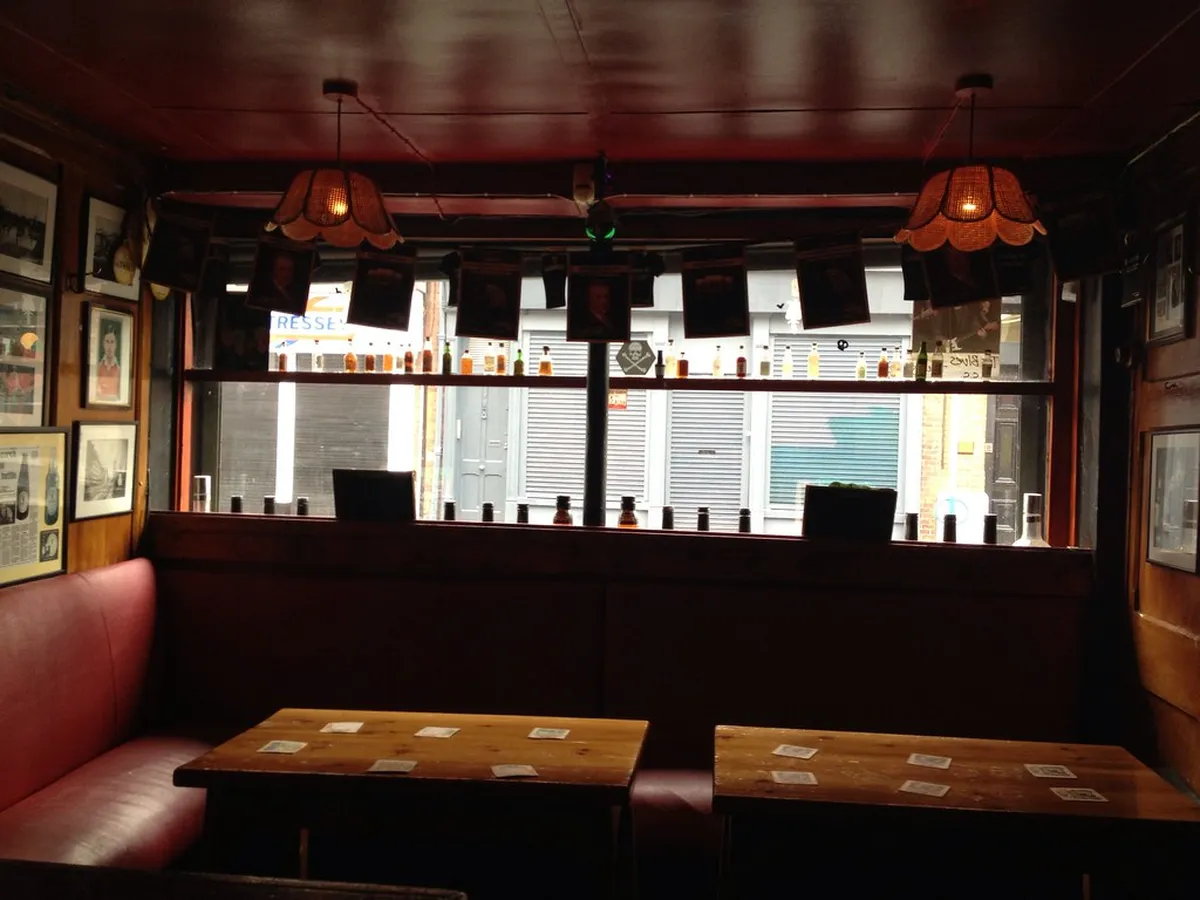
Discover the Best Pubs in Dublin for an Authentic Experience
Dublin is a city built on stories and world-famous stout, and the best pubs in Dublin are where both still live. This 2026 guide runs through ten historic spots chosen for their pour, their architecture, and their welcome rather than their Instagram value. Each entry tells you exactly where it sits, what it does best, and who should skip it.
We cover the headline landmarks that first-timers want to tick off plus the quieter heritage rooms locals actually drink in. Expect Victorian snugs, 800-year-old stone, traditional music sessions with strict listening rules, and at least one pub where the television was never turned on because it was never installed.
At the end you will find a short section on pub etiquette, a neighborhood cheat sheet, and the obscure Irish licensing rules that change how Sundays and Good Friday actually work. Pick three or four from the list below and you will have a proper Dublin pub day.
The Brazen Head
The Brazen Head on Lower Bridge Street claims 1198 as its founding date, which makes it the oldest pub in Ireland by most accountings. The building you walk into today is from 1754, a low-ceilinged warren of stone rooms and narrow corridors behind a cobbled courtyard on the south bank of the Liffey. It sits a ten-minute walk west of Temple Bar, just far enough to feel outside the tourist rush.
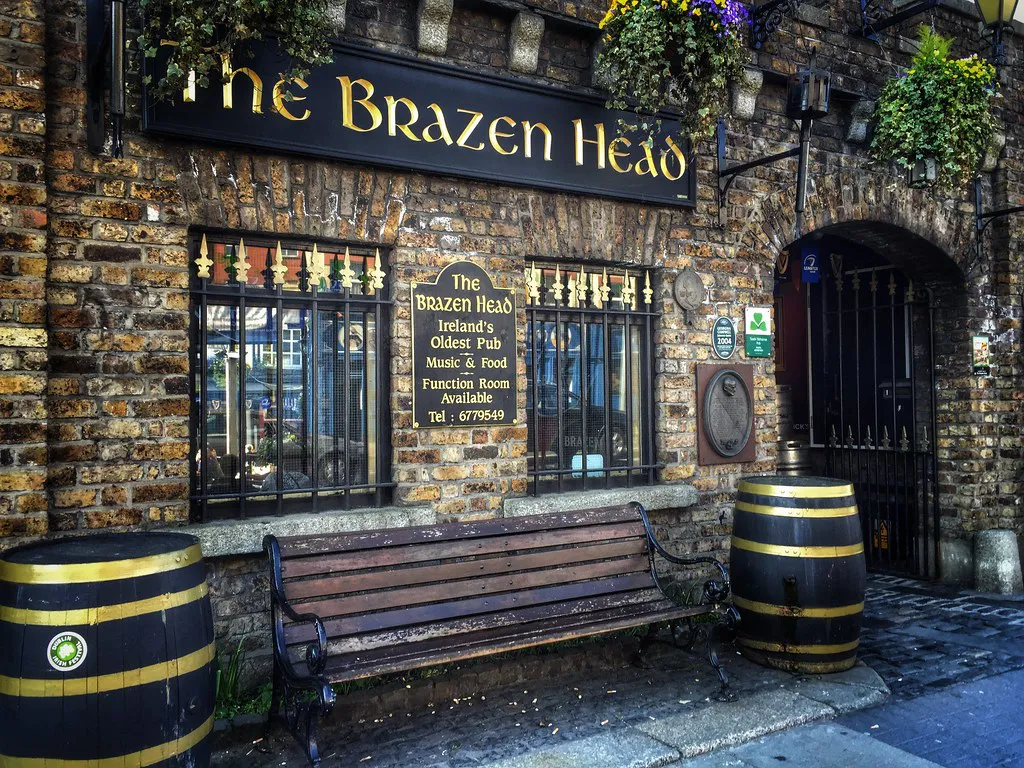
Go for the history, the beef and Guinness stew, and the nightly live music that runs from around 21:00 every evening of the week. A pint of Guinness is typically €7.50 to €8.00 here in 2026 and fish and chips lands around €18.00. Expect an international crowd, especially in summer, but the atmosphere and setting earn the visit.
Pair this one with lunch or early evening before Temple Bar gets loud. The courtyard is the best seat on a dry day. If you want to go deeper into Dublin's heritage drinking scene, our guide to the wider Dublin traditional pubs scene covers similar old-world rooms outside this top ten.
The Palace Bar
The Palace Bar has stood at 21 Fleet Street since 1823 and remains one of the finest preserved Victorian interiors in the city. The ground floor is a narrow mahogany bar, but the real prize is the back room: a jewel-box snug under a stained-glass skylight that has barely changed in a century. It sits technically inside Temple Bar's boundary but on a quieter eastern edge, away from the stag-party thoroughfare.
This is Dublin's great literary pub. Patrick Kavanagh, Flann O'Brien, and the editors of The Irish Times drank here through the mid-twentieth century, and the upstairs Whiskey Palace now stocks more than 200 bottles with knowledgeable staff to guide you. Ask for a Redbreast 12 or a Glendalough single grain if you want a starting point.
Go for a quiet mid-afternoon pint, a whiskey flight upstairs, and the best mix of locals and tourists you will find anywhere in the district. Pints sit around €7.00 to €7.50.
The Temple Bar Pub
The red-fronted Temple Bar Pub at 47-48 Temple Bar is Dublin's most photographed pub and by a wide margin its most touristed. Twinkle lights, flower baskets, and live music from mid-morning to midnight make it the obvious stop for a first-time visitor, and the novelty is real even if the prices sting.
Expect €10.00 to €11.00 for a pint of Guinness in 2026 — roughly double what you will pay three streets over. The crowd is almost entirely international, the music is loud, and the whiskey selection on the back wall is genuinely excellent if you want to use the visit to try something rare. Come for one pint, take the photo, and move on.
If you want the red-exterior aesthetic without the markup, Banker's Bar on Trinity Street has almost the same frontage, live music most nights, and pints around €7.50. Planning a wider route through the district is easier with our Dublin pub crawl guide.
The Stag's Head
The Stag's Head sits tucked down Dame Court, a short alley off Dame Street just outside Temple Bar's southern boundary. The current pub dates from 1895 and was the first in Dublin wired for electric light. The interior is close to a museum piece: carved red mahogany, a mounted stag above the bar, stained-glass windows depicting drinkers rather than saints, and a tiled mosaic entrance that points down the lane from Dame Street.
This was a regular of Michael Collins during the War of Independence because Dublin Castle sat a few hundred metres away. Today it pulls a reliably mixed crowd of locals, civil servants from the Castle, and travellers who found it on a recommendation. Try the Guinness and oysters pairing if you want a properly Dublin lunch.
A pint costs around €6.80 in 2026. Go mid-week and early evening to get a banquette seat; weekends after 20:00 the room fills fast.
Kehoes Heritage Pub
Kehoes at 9 South Anne Street is the textbook example of a heritage Victorian pub still used as a neighborhood local. The front bar is preserved as it was in the 1890s — mahogany counter, glass partitions, a working grocery nameplate above the door — and the back rooms stretch into a warren of snugs that were once private drinking booths for women, doctors, and anyone who did not want to be seen drinking in public.
The snug culture is what makes Kehoes special. These enclosed timber booths, screened from the main bar, were legally mandated in many 19th-century Dublin pubs so that respectable women could drink without being observed. To secure one today, arrive before 18:00 on a weekday, ask the bar staff directly, and expect a minimum spend rather than a booking fee. Groups of four to six fit comfortably.
Kehoes is steps from Grafton Street's shopping crowds, but the pub itself is almost entirely local. Pints sit around €7.00 and there is no food beyond crisps and toasties.
John Kavanagh 'The Gravediggers'
John Kavanagh, known to everyone as The Gravediggers, sits on Prospect Square in Glasnevin on the northside, about fifteen minutes by taxi or twenty on the 9 bus from the city centre. It has been run by the same family since 1833 and takes its nickname from the cemetery directly next door: gravediggers used to tap the back wall with a shovel handle to order a pint through a hatch during their shift.
This is widely rated the best pint of Guinness in Dublin, and the pub earns the reputation through a strict house policy: no music, no television, no radio, no advertising. Anthony Bourdain featured it in both his travel shows specifically for this reason. Conversation is the only entertainment, and on a busy Saturday the front bar hums with the sound of a hundred people actually talking to each other.
To walk from Glasnevin Cemetery, exit the main gate on Finglas Road, turn right onto Prospect Square, and the pub is the unmarked green frontage on the corner. A pint costs €5.80 — a full euro less than most city-centre pubs, because the Gravediggers has never adjusted its prices for tourism.
The Long Hall
The Long Hall at 51 South Great George's Street is the pub Anthony Bourdain once called his favourite in the world. The long narrow room runs back from the street under a chandelier and a line of antique clocks, with red leather banquettes along one wall and a polished mahogany bar along the other. The Victorian fit-out has been preserved essentially intact since the 1880s.
Ask for a pint of plain — the traditional Dublin name for Guinness — and watch the bar staff execute the two-part pour without rushing. The pub has no music, no food beyond packets of crisps, and no televisions. That is the point. Regulars are mostly local, a surprising share of them Irish-speaking.
A pint is around €6.50. George's Street itself is one of the best pub-crawling streets in the city and runs a kilometre south, linking several spots on this list within a short walk.
O'Donoghue's
O'Donoghue's at 15 Merrion Row is the acknowledged home of traditional Irish music in the city. The Dubliners formed here in 1962 and still-living members of the original lineup occasionally drink here; the walls are layered with black-and-white photographs of musicians who played the corner table decade after decade. It is a five-minute walk from St. Stephen's Green.
Sessions run most afternoons from around 17:00 and every evening from around 21:00, with fiddles, tin whistles, bodhráns, and uilleann pipes played in the round at a table along the back wall. There is no cover charge and no stage; the players sit amongst the drinkers. Arrive an hour early on weekends to find standing room near the music.
Pints are around €7.00. If you stay for a full evening session, tip the musicians when the hat comes around — €2 to €5 is standard and genuinely appreciated. For more on the wider evening scene, see our Dublin nightlife guide.
The Cobblestone
The Cobblestone sits on the north side of the Liffey at 77 King Street North in Smithfield, ten minutes' walk from the Jameson Distillery. It is family-owned, fiercely local, and bills itself as "a drinking pub with a music problem." This is where you come for the most authentic traditional session in Dublin — not the tourist version.
The etiquette matters here. The musicians play in a roped-off corner of the front bar and the pub enforces a listening culture: no talking over the music, no requests, no clapping during a tune (only at the end of a set). If a session is in full flow, take a seat quietly, order a pint, and do not stand between the musicians. Sessions run every night from around 19:00 with afternoon sessions most weekends.
The pub faced a demolition threat in 2021 that was defeated by a public campaign, so the room you drink in today was genuinely saved by Dubliners who care about it. Pints are around €6.50.
Grogan's Castle Lounge
Grogan's at 15 South William Street is the quiet answer to a noisy city centre. No television, no music, no food beyond the legendary toasted ham-and-cheese sandwich that costs €3.80 and has not changed its recipe in forty years. The walls are covered in original paintings by local artists that the pub will sell you on the spot — many famous Irish artists had their first shows here.
Regulars range from writers and academics to off-duty journalists and a reliable contingent of long-time locals. The pub holds a literary salon atmosphere without pretension; conversations spill between tables. It is two minutes from Grafton Street but feels several neighborhoods removed.
A pint is around €6.20 and the toastie is mandatory. Come mid-afternoon on a weekday to get a seat inside; the outside pavement benches fill whenever the sun appears.
The Two-Part Pour and Pub Etiquette
A proper pint of Guinness takes 119.5 seconds to serve, done in two stages. The bar staff will fill the glass roughly three-quarters full, set it down, and let the surge settle for about ninety seconds before topping it up to the harp on the glass. Do not reach for it during the rest period. Picking up a half-settled pint marks you instantly as a visitor and in some pubs will earn a genuine rebuke from the bar staff.
A few more rules that avoid trouble. Do not wave money at the bar — stand quietly with cash or card visible and the staff will get to you in order. Tipping is not expected at the bar counter; a €1 or €2 coin left for table service is plenty. If someone buys you a pint, you buy the next round; leaving mid-round without reciprocating is the clearest way to be remembered badly. And never call Guinness "a black and tan" — the phrase refers to a British paramilitary unit and lands poorly.
At music-focused pubs such as The Cobblestone and Hughes's, conversation stops when the musicians play. Clapping between tunes within a set is considered bad form; wait until the set ends. Nobody will explain these rules out loud; you are expected to watch and copy.
Sundays, Good Friday and Accessibility
Irish pub licensing still carries rules that catch visitors off-guard. Sunday trading now runs 10:30 to 00:30 but many older pubs still open later on Sundays — 12:30 is common. Good Friday licensing changed in 2018 and pubs can now legally trade, but several traditional pubs including Grogan's and The Long Hall keep the old rule voluntarily and close entirely on that day. If you are travelling during Holy Week, check individually.
Accessibility is a real issue in heritage pubs that most guides skip. Victorian buildings mean raised thresholds, narrow snug doors, and stepped entrances: The Brazen Head's courtyard is cobbled and uneven, Kehoes' snugs are reached via a three-inch door sill, and The Long Hall has a single step at the entrance. The most genuinely step-free historic pub on this list is The Stag's Head, which has a flat entrance from Dame Court and an accessible toilet on the ground floor. O'Donoghue's is also step-free at the front door.
One other licensing quirk worth knowing: Dublin has a handful of "early houses" — pubs licensed to open at 07:00 for late-shift workers coming off overnight jobs. Slattery's on Capel Street and The Chancery Inn near the Four Courts are the best known. They serve pints at breakfast without irony and are a genuine Dublin sub-culture rather than a tourist stunt.
Neighborhood Cheat Sheet
Dublin's pub neighborhoods each do something different, and choosing one to anchor your evening saves walking time. Temple Bar is for first-visit photographs and one expensive pint before you move on; do not eat or drink a full night there unless you enjoy bachelor parties. George's Street and Dame Lane, one block south of Temple Bar, is where locals actually drink — The Long Hall, The Stag's Head, and Grogan's are all within ten minutes' walk of each other.
Fleet Street gives you the literary pubs — The Palace Bar and Bowes — in a narrow quiet strip. Merrion Row and Baggot Street on the south-east side are the live-music quarter, anchored by O'Donoghue's and Toner's. Smithfield on the north side is the traditional-session zone built around The Cobblestone. Glasnevin, further north, is a single-destination trip for the Gravediggers and the cemetery.
If you want to string three pubs together, the best compact route is The Long Hall, then Grogan's, then Kehoes — all within a 600-metre triangle in the south city centre and each showing a different face of Dublin pub culture in one evening.
Frequently Asked Questions
What is the oldest pub in Dublin?
The Brazen Head is widely considered the oldest pub in Dublin, dating back to 1198. It offers a historic atmosphere with traditional music and classic Irish food. You can find more details in our guide to Ireland nightlife and heritage spots.
How much does a pint of Guinness cost in Dublin?
In 2026, a pint of Guinness usually costs between €6.50 and €8.50 in most city center pubs. However, prices in the Temple Bar area can exceed €10.00. Suburban pubs often offer lower prices than those in tourist-heavy districts.
Are children allowed in Dublin pubs?
Most Dublin pubs allow children until 9:00 PM if they are with an adult. Some pubs that serve food may have slightly different rules for families. It is always best to check with the staff at the door before entering with minors.
Do I need to book a table at a pub in Dublin?
Booking is generally not required for traditional pubs unless you are a large group. Popular gastropubs may require a reservation for dinner on Friday or Saturday nights. Most historic bars operate on a first-come, first-served basis for seating.
Dublin offers a pub for every type of traveler and every mood. From historic snugs to music sessions with strict listening rules, the variety is real once you step a few blocks beyond Temple Bar. Taking the time to explore different neighborhoods will reward you with much better pints.
If you want to keep the party going later, check out the best clubs in Dublin for late-night dancing. The city comes alive after dark with energy and friendly faces. Always remember to drink responsibly and enjoy the local hospitality.
Your journey through the best pubs in Dublin is just beginning. Each pint tells a story of the city's rich and colorful past. We hope this guide helps you find your perfect seat in the capital.