
12 Best Bars in Bologna
After five years of visiting Bologna for the annual wine festivals, I have found my favorite corners of this medieval maze. The city's nightlife is a symphony of clinking glasses and laughter echoing through ancient porticos. Whether you want a dusty wine cellar, a neon-lit cocktail lounge, or a jazz club tucked behind a palazzo, the options here are incredibly diverse. Our editors have walked every district from Quadrilatero to Bolognina to bring you this definitive list of drinking spots for 2026.
This guide was last refreshed in April 2026 to confirm pricing, closing days, and a handful of venue changes. Bologna is often called 'La Grassa' for its food, but its liquid offerings are equally impressive. You will find that the Italy nightlife guide often highlights this city for its authentic student-led energy. Exploring these bars offers a direct window into the social heart of the Emilia-Romagna region.
The Osteria Legacy in Bologna
Bologna's drinking culture is built on the osteria, a centuries-old institution where wine was sold by the glass and food was whatever patrons brought from the market next door. These were the meeting rooms of university students, professors, and labourers from at least the 15th century onward, and the surviving examples still feel more like community halls than bars. Understanding this legacy is the key to reading every other venue in the city.
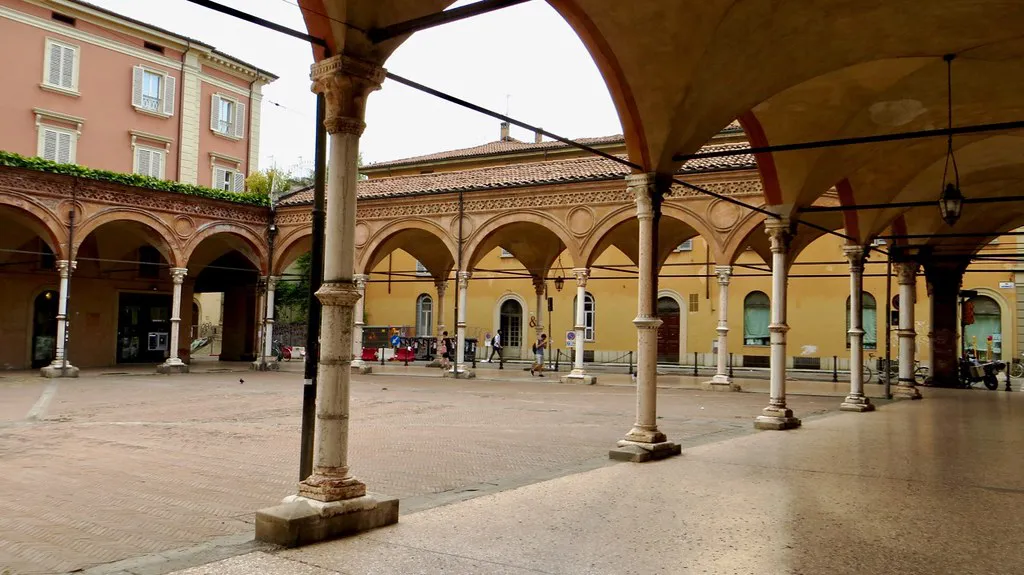
Osteria del Sole on Vicolo Ranocchi, opened in 1465, is the oldest and purest example. It sells only wine, no food, no coffee, no cocktails. Locals arrive clutching paper-wrapped packets from the Mercato delle Erbe two streets over: mortadella, squacquerone cheese, fresh tigelle, focaccia. You pay roughly 3 to 5 euros for a tumbler of Pignoletto or Sangiovese poured almost over the brim, then fight for a seat at one of the communal wooden tables. See the official Osteria del Sole site for the current 11:00 to 21:00 schedule and holiday closures.
The second osteria-style stop worth making is Osteria del Moretto near Via San Felice, which keeps the same democratic format with a slightly smaller crowd and an excellent list of Lambrusco producers from Sorbara and Castelvetro. A 175 ml glass costs 4 to 6 euros. Between these two, you get the full sweep of the tradition that every other bar in the city is consciously referencing, imitating, or rebelling against.
Top Bars in Bologna for Aperitivo and Wine
Aperitivo in Bologna runs from roughly 18:30 to 20:30 and operates on a simple transaction: you buy a drink, the bar brings small snacks. The quality of those snacks varies enormously, and the best spots compete to out-generous each other. Arrive by 18:15 if you want an outdoor table on a weekend.
Gran Bar on Via d'Azeglio is the reference point for unpretentious, high-value aperitivo. A 6 euro glass of local Pignoletto arrives with three mini mortadella panini and a bowl of crisps. The crowd is mostly local office workers. Their rotating menu is on the Gran Bar site, and the tabacchi counter doubles as a useful stop for bus tickets. Vineria Favalli in the Quadrilatero has the best outdoor seating in the old market district; wines run 6 to 15 euros a glass and focus on small producers from the Colli Bolognesi. If the staff forget the complimentary taralli, ask politely.
For a more curated wine experience, Enoteca Bar Des Arts near Mercato delle Erbe is hard to beat. Glasses range 5 to 14 euros and the by-the-glass rotation covers most of Emilia-Romagna plus Piedmont. Open Monday to Saturday from 17:00 to 02:00, closed Sundays. Enoteca Bar Des Arts reviews confirm the salami and parmigiano plates are worth the extra 8 euros.
Best Bar for Regional Wines by the Glass
Emilia-Romagna produces some of Italy's least-exported wines, so the bars that specialise in by-the-glass regional pours are where you actually taste what locals drink. The two grapes to hunt for are Pignoletto, the white that grows in the Colli Bolognesi and is usually served frizzante, and Lambrusco Grasparossa di Castelvetro, a dry sparkling red that pairs flawlessly with cured meats and tagliatelle al ragu. Expect to pay 5 to 10 euros for a serious glass of either.
At Enoteca Bar Des Arts, ask for the Pignoletto Classico from producers like Gaggioli or Tizzano, then follow with a Grasparossa from Cleto Chiarli. The staff routinely offer small comparative pours for regulars willing to sit at the counter. Medulla Vini, a small street-front enoteca, organises its list by region with a particularly deep Emilia section; most patrons drink standing on the cobbles outside, glass in hand, for 5 to 9 euros a pour.
For a third option, the wine cave at I Conoscenti (see below) carries a short but serious list of pet-nat Pignoletto, which is the style favoured by younger local sommeliers. A glass runs 9 to 14 euros, and the staff will talk you through producers if you ask. Avoid ordering generic Prosecco anywhere in Bologna: it is not regional, and the bartender will visibly lose interest.
Top Cocktail Bars in Bologna
I Conoscenti, housed in a restored palazzo a short walk from Piazza Maggiore, is the city's most polished cocktail address. Negronis and pet-nat flights dominate the menu; expect 12 to 20 euros per drink and service until 02:00 on weekends. The dimly lit bar counter is the best perch for a solo visitor, and the complimentary olives and vegetable chips are served without prompting. Ask for the off-menu bitter tasting if you want to see what the bartenders actually drink.
Il Mistico in the historic centre is the modern counterpoint: dark contemporary decor, classical Italian technique, and a bartender who will build a drink from scratch based on two adjectives you provide. Their bittersweet negroni with house-aged vermouth is the single best cocktail I've had in Bologna. Closed Mondays; open Tuesday to Thursday 18:00 to 01:00, later on weekends. Aurum near Piazza Maggiore is the daytime pick, opening at 08:00 and offering a pistachio sour that consistently sells out by 21:00. Nu Lounge Bar rounds out the scene with a full tiki list, a rarity in Italy, and rum flights priced 14 to 22 euros.
Bars in Bologna with Live Music
Black Cat, a wooden-clad Argentine bar a few minutes from Porta Saragozza, is the easiest live-music entry point. Nightly jazz, blues, and rock sets start around 22:00; a Moretti on draft is 6 euros and a cocktail 9 to 12. Tuesday through Sunday from 18:00, closed Monday. It is genuinely crowded on weekends, so arrive before 21:30 or be ready to stand.
Camera Jazz Club near Piazza Santo Stefano is the grown-up sibling: velvet banquettes, a proper stage, and nightly trio or quartet performances. Expect a 5 euro table charge on top of drinks, with cocktails at 10 to 14 euros. The room is small enough that even back-row tables feel close to the band. Closed Sundays; sets typically run 21:30 and 23:00. For a rawer alternative, L'Infedele near the university district spins underground tracks and hosts occasional DJ sets until 02:00, with drinks at 5 to 12 euros and zero pretence about dress code.
Unique and Quirky Bars Worth Visiting
Bar Volare is the tiny 1960s and 70s time capsule every Bologna regular eventually takes a visitor to. Vintage airline posters, Formica surfaces, a single narrow counter, and a proprietor who has run the place for decades. Drinks are simple and affordable, 4 to 10 euros, and the space holds maybe fifteen people standing. Photos and current opening times are on the Bar Volare listing. Go on a weeknight around 20:00 for the most authentic atmosphere.
Macondo on Via del Pratello captures the opposite end of the quirky spectrum: Italian craft beer, student-friendly pints at 5 to 7 euros, local art on the walls, and a back room that fills with creatives on weekends. Open until 03:00. Le Stanze, a former private chapel converted into a cocktail lounge, is the wild card: frescoed ceilings, a 14 to 18 euro cocktail list, and service that takes the theatrical setting seriously. Camera a Sud in the Jewish Ghetto is the cozy wildcard, part bookshop, part wine bar, priced 6 to 15 euros a glass and open noon to 01:00.
Best Bar in Bologna After Dark
Late-night Bologna runs on two speeds. The first is the student corridor around Via Zamboni and Via del Pratello, where cheap bars stay open until 03:00 and the crowds spill onto the cobbles. The second is a handful of centre-city spots that keep full service going past midnight for a mixed local and visitor crowd.
Black Cat is the most reliable late pick: live music ends around 01:00 on weekends, the bar stays open slightly longer, and the energy peaks well after midnight. Bebi, a tiny chipboard-walled bar tucked in the Quadrilatero market maze, is the cult favourite; a mirrored ceiling, two plastic stools on the cobbles outside, and 6 to 9 euro spritzes. Macondo on Pratello stays open until 03:00 with craft beer and a crowd that shifts from students early to locals late. For a view-plus-drink wind-down, residents walk up to the steps of San Michele in Bosco with a bottle from a nearby shop; the terrace is open 24/7 and the number 30 bus saves you the 20-minute uphill climb.
A Self-Guided Bar-Hopping Route You Can Actually Walk
Most guides stop at naming bars. The useful next step is a walkable order that respects opening hours, the aperitivo window, and distance. Bologna's historic centre is about 1.2 kilometres across, so a full five-stop crawl is genuinely on foot. The route below starts before aperitivo and ends after midnight, covers two neighbourhoods, and requires no taxis.
Start at Gran Bar on Via d'Azeglio at 18:15 for a Pignoletto and mortadella panini (6 euros, 20 minutes). Walk five minutes north-east to Osteria del Sole on Vicolo Ranocchi and grab a glass of Sangiovese before it shuts at 21:00; buy a paper-wrapped packet of mortadella from Mercato delle Erbe on the way (3 euros wine, 8 euros food, 30 minutes). Continue two blocks east into the Quadrilatero to Vineria Favalli for an outdoor table and a glass of Grasparossa (8 euros, 30 minutes). Then walk ten minutes west across Piazza Maggiore to I Conoscenti for a proper negroni (14 euros, 45 minutes). Finally, continue eight minutes west onto Via del Pratello for Macondo or Black Cat to close the night with live music or craft beer (9 euros, until you tap out).
Total walk: about 25 minutes end to end. Total spend: roughly 45 to 60 euros per person including food. If you only have 90 minutes, compress the route to Gran Bar, Osteria del Sole, and Vineria Favalli, all within a 400-metre radius. The reverse order does not work because Osteria del Sole shuts early and Pratello does not come alive until 22:00.
Is Bologna Good for Nightlife?
Bologna is widely considered one of the best mid-sized cities in Italy for a night out. The University of Bologna, founded in 1088 and the oldest in the Western world, pumps roughly 85,000 students into the centre during term time. That energy is the defining ingredient of the nightlife. Streets remain lively well into the early hours, especially from October through May. For the broader picture see our Bologna nightlife guide.
The city is also unusually safe for walkers. The famous 38 kilometres of porticos provide shelter, light, and a clear visual cue about where pedestrians belong. Most drinking hubs sit inside the old walls, making the entire scene navigable on foot in under 25 minutes. Residents are generally friendly and used to the vibrant social life that defines the city.
Unlike the more commercial scenes in Milan, Bologna's nightlife is authentic and deeply rooted in local culture. Bars still function as meeting points for political discussion, artistic collaboration, and academic debate. The variety of venues means you can tailor your night to be as quiet or loud as you wish.
Bologna's Drinking Etiquette: Essential Tips for Visitors
Understanding local customs lets you blend in and saves real money. The most distinctive tradition is the bring-your-own-food policy at Osteria del Sole and a handful of older osterias. Pick up salumi from Mercato delle Erbe or Pasta Fresca Naldi before you arrive; the bar is strict about serving only wine and does not provide cutlery, napkins, or plates.
Aperitivo typically starts at 18:30 and serves as the bridge between work and dinner. A drink purchase almost always grants you access to a small plate or buffet. Do not treat it as a full dinner; that is considered poor etiquette and in some spots the staff will politely cut you off. It is meant to stimulate the appetite, not replace the evening meal.
On wine, always try the local sparkling red Lambrusco; the versions in Bologna are dry, mineral, and nothing like the sweet mass-market exports. Pignoletto is the go-to white, usually served frizzante. When you toast say "salute" rather than "cin cin." Tipping is not expected, but rounding up to the nearest euro is appreciated. Sitting at a table instead of standing at the counter often adds a 1 to 3 euro service charge called "coperto."
Where to Go Bar Hopping: Top Bologna Neighborhoods
Bologna breaks into four distinct drinking neighbourhoods, each with its own tempo. The Quadrilatero, the grid of medieval market streets east of Piazza Maggiore, is the traditional heart: historic wine bars, outdoor tables on flagstones, and the biggest concentration of osterias. It is perfect for a classic start to the evening between 18:30 and 21:30. Density is the selling point; you can hit four bars without walking more than 300 metres.
Via del Pratello, about eight minutes west of Piazza Maggiore, is the alternative and student-led heart. Craft beer, live music, cheap drinks, and a rebellious spirit dominate; the street comes alive around 22:00 and runs past 02:00. The University District around Via Zamboni and Via Petroni hosts the youngest and rowdiest crowd, with bars that are often cheaper than the rest of the centre and stay open latest.
The two neighbourhoods most guides miss are Piazza Santo Stefano, a picturesque square ringed by upscale aperitivo spots and chic cocktail bars, and Bolognina, the formerly industrial district north of the train station now drawing independent wine bars, natural-wine spots, and Bologna's most interesting new openings. Bolognina is a 15-minute walk from the centre and rewards a separate evening rather than a detour.
What to Skip: Avoiding Tourist Traps in Bologna
Most of Bologna is authentic, but a few spots reliably disappoint. The bars with large generic terraces directly on Piazza Maggiore charge roughly double the standard price for a visibly weaker aperitivo spread. A spritz that costs 6 euros on Via d'Azeglio will cost 11 on the square. Walking two blocks into any side street restores full value.
Be wary of any establishment with staff standing outside trying to lure in customers. Genuine local favourites in Bologna rely on reputation and are typically already busy on their own. Avoid bars that do not post clear prices for wine and cocktails, and always check the bill for a "servizio" line item; it is legal, but should never exceed 2 euros per person.
Generic cocktail bars that could be in any European capital are also worth skipping. The charm of Bologna lies in its unique, historic, and slightly quirky drinking establishments. Prioritise venues that showcase regional products (Pignoletto, Lambrusco, mortadella, squacquerone) and maintain a distinct local character. Following this rule eliminates 90 percent of the risk.
Frequently Asked Questions
What is the oldest bar in Bologna?
Osteria del Sole is the oldest bar in Bologna, dating back to 1465. It maintains a historic tradition where patrons bring their own food to eat at communal wooden tables while purchasing local wine from the bar.
Can you bring your own food to bars in Bologna?
Yes, but this is specifically allowed only at traditional osterias like Osteria del Sole. Most modern bars and cocktail lounges do not permit outside food as they often provide their own aperitivo snacks.
What time does aperitivo start in Bologna?
Aperitivo typically begins around 6:30 PM and lasts until 8:30 PM. This pre-dinner ritual is the most popular time for locals to socialize over a spritz or a glass of Pignoletto wine.
Bologna offers a drinking culture as rich and layered as its famous lasagna. From the 1465 halls of Osteria del Sole to the tiki rums at Nu Lounge and the jazz sets at Camera Jazz Club, there is a spot for every traveller and every hour. By following local etiquette, walking the Quadrilatero-to-Pratello route in the right order, and ordering the regional grapes rather than generic Prosecco, you will discover the true social heart of Italy.
Pace yourself, enjoy the generous snacks that often arrive with your drinks, and remember that Bologna's bars are more than places to drink; they are community rooms that have hosted students, poets, and politicians for six centuries. I hope this guide helps you find your own favourite corner in the city.


