

The Ultimate Guide to Things to Do in Berlin at Night
Berlin transforms into a vibrant playground of lights and sound once the sun sets over the Spree. The city offers everything from world-class techno to lamp-lit river cruises for every type of traveler. Exploring the capital after dark provides a unique perspective on modern German culture and history.
Many visitors feel overwhelmed by the sheer number of options available in this sprawling metropolis. You might prefer a quiet hour at the illuminated Reichstag dome or a high-energy dance floor in a former power plant. This guide covers the most essential experiences to help you navigate the city like a local in 2026.
Finding the right neighborhood is the first step toward an unforgettable night out in Berlin. Each district carries its own distinct personality, ranging from gritty industrial vibes around Friedrichshain to polished elegance in Mitte. Prepare to discover why this destination remains the undisputed nightlife capital of Europe.
Take an Evening Spree River Cruise
An evening boat ride on the Spree is one of the most cinematic ways to see Berlin after dark. Cruises typically last one to three hours and glide past Museum Island, the Oberbaumbrücke, the East Side Gallery, and the illuminated government quarter. Tickets in 2026 run roughly 18 to 32 EUR depending on duration, and longer trips often include a beer or cocktail at an onboard bar.
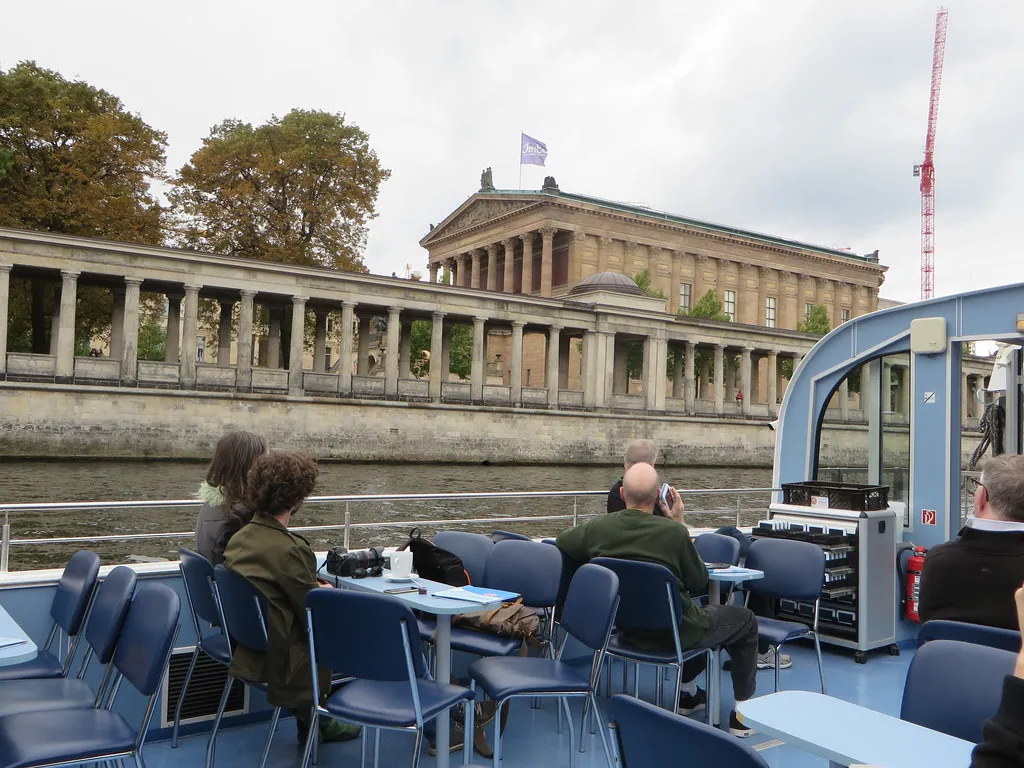
Boats depart from Friedrichstraße, Nikolaiviertel, and the Central Station pier between 18:00 and 21:00. Book at least a day ahead during summer weekends, when sunset sailings sell out quickly. In winter, most operators run heated, glass-domed boats right through December, so the cruise is not just a warm-weather activity.
Pick a route that covers the stretch you actually want to see. A short hop from the Central Station shows you parliament and the Reichstag lawn from the water. A longer 2.5 or 3-hour loop adds Charlottenburg Palace in the west or the East Side Gallery in Friedrichshain, which is where the murals glow under floodlights.
Visit the Reichstag Dome After Dark
The glass cupola above the German parliament is free to enter and stays open until 22:00, with last admission at 21:45. After sunset the interior spiral walkway glows, crowds thin dramatically, and the audio guide narrates the city's landmarks as they light up below. It is one of the few top-tier Berlin attractions that is free, uncrowded at night, and genuinely memorable.
The catch is the booking system. Tickets are released through visit.bundestag.de on a rolling window, typically 2 to 8 weeks before the date, and popular evening slots disappear within hours. You must enter each visitor's full name, date of birth, and passport or ID number at the time of booking. Bring the matching ID on the night or security will turn you away.
Arrive 15 minutes early for the airport-style screening at the visitor entrance on Scheidemannstraße. If you miss your slot, the standby queue at the Service Center is sometimes open until 18:00 for same-day slots, but it is a gamble. Pair the visit with a walk across the Tiergarten lawn for the classic floodlit exterior shot.
Experience the Dark Matter Light Exhibition
Dark Matter is a permanent immersive light installation housed in a former industrial hall in Lichtenberg, about 20 minutes from Alexanderplatz on the S-Bahn. Seven dark rooms use lasers, mirrors, and reactive sound to create rooms you walk through, lie inside, or physically interact with. It runs until around 22:00 most nights and makes a strong alternative to a museum or a bar.
Tickets are timed-entry and cost roughly 22 to 25 EUR in 2026, with discounts for students. Each room takes five to fifteen minutes to fully absorb, so budget at least 90 minutes for the full loop. Photography is allowed without flash, and the venue is largely step-free, which is rare for alternative Berlin art spaces.
Go on a weekday evening if you want the rooms to yourself; Friday and Saturday can get busy with date-night crowds. The on-site bar serves wine and Berliner Pilsner at fair prices, and the industrial courtyard is a nice spot to reset between rooms.
Dine at a Historic Berlin Market Hall
Berlin's surviving 19th-century market halls have reinvented themselves as casual evening food destinations. Markthalle Neun on Eisenbahnstraße in Kreuzberg runs its legendary Street Food Thursday every Thursday from 17:00 to 22:00, with dozens of stalls serving dumplings, Vietnamese bánh mì, Neapolitan pizza, and craft beer from Heidenpeters inside the hall itself.
Arminius Markthalle in Moabit skews quieter and more local, with Italian, Thai, and vegan stalls open most evenings until around 22:00. Marheineke Markthalle in Bergmannkiez has outdoor seating for warmer months and closes earlier, around 20:00 on weekdays. Manifesto Market at Potsdamer Platz is the upscale, late-running option with full table service until 23:00 or later.
Expect to spend 10 to 18 EUR for a main plate and a drink. Cards work at most stalls now, but bring a few euros in cash for the tip jar and for the drinks counter at Markthalle Neun. Sundays are quiet — most halls are closed or running reduced stalls, so plan accordingly.
Dance at World-Class Techno Clubs
Berlin holds a reputation as the world capital of electronic music for very good reasons. Most visitors want to experience the best clubs in Berlin during their stay. Venues like Berghain, Tresor, RSO, Sisyphos, and Kater Blau feature industrial architecture and sound systems that define the modern techno genre, with parties that stretch from Friday night into Monday morning.
Entry fees in 2026 run 18 to 30 EUR depending on the lineup, and door staff strongly prefer cash. Dress code is not optional: plain black, functional, subcultural, and understated beats anything flashy. Avoid sports gear, logos, big groups, and obvious bachelor-party energy. Going as a pair or solo, arriving between midnight and 04:00, and speaking in calm German or quiet English all help.
If Berghain's door feels too much, Kater Blau on the Spree has a warmer outdoor courtyard, Renate in Friedrichshain leans melodic and playful, and ://about blank often hosts more welcoming queer nights. All clubs enforce a strict no-photo policy inside — stickers go over your phone camera at the door. Awareness teams are visible in most reputable venues, and you can approach them if you feel unsafe or uncomfortable.
View the Skyline from the Berlin TV Tower
The 368-metre Fernsehturm on Alexanderplatz is the tallest structure in Germany and the defining silhouette of East Berlin's skyline. A 40-second lift carries you to the observation deck at 203 metres, and the Sphere restaurant one floor above rotates fully every hour. Last entry in 2026 is typically 22:45, with the restaurant taking reservations until around 22:00.
Skip-the-line online tickets cost around 25 EUR for the observation deck and save 45 minutes of queue at the base in peak months. A combined "Inner Circle" seat near the window is a few euros more but worth it for photos. If you want dinner with the view, budget 40 to 70 EUR per head at the Sphere restaurant, and book at least a week out for weekend slots.
For a similar skyline view at a lower price, the panoramic terrace at the Park Inn Hotel across Alexanderplatz costs around 7 EUR and has a cocktail bar. It offers the advantage of including the TV Tower itself in your photo, which the tower obviously cannot.
Walk the Illuminated Unter den Linden to Brandenburg Gate
Berlin's grand boulevard is best experienced on foot after 20:00, when tour buses have gone and the crowds thin. Start at the Berliner Dom on Museum Island, walk west past the Humboldt Forum, cross the Bebelplatz with its floodlit Staatsoper, and continue under the lime trees toward the Brandenburg Gate. The whole walk takes about 25 minutes at a relaxed pace.
The Brandenburg Gate itself is dramatically lit from sundown onward, and the Holocaust Memorial's 2,711 concrete stelae a block south take on a stark, sobering weight in the evening light. Keep walking into the Tiergarten and you reach the Reichstag lawn, where locals sit on the grass with beers from a nearby Späti well past midnight in summer.
Every October the city hosts the Festival of Lights, when dozens of landmarks along this route become canvases for projection-mapped art. The shows typically run from early evening until 23:00 or midnight and are entirely free. Check the festival's official schedule if your trip falls in mid-October, because crowds cluster at the Brandenburg Gate around 20:00 for the headline projection.
Relax at a Traditional Berlin Beer Garden
From April through September, Berlin's beer gardens become open-air living rooms. Prater Biergarten on Kastanienallee is the oldest in the city (1837), with long wooden benches under chestnut trees and half-litre Prater Pils for about 5 EUR. Café am Neuen See inside the Tiergarten feels almost alpine, with rowboats on the lake and bratwurst plates under 10 EUR.
Zollpackhof sits on the Spree within a ten-minute walk of the main station and stays pleasantly shaded even in August heatwaves. Order at the counter, grab a self-serve table, and return your glass deposit (typically 2 EUR) before leaving. Kids are welcome almost everywhere until dusk, and most gardens stop food service around 22:00 even if drinks continue past midnight.
In October and the first warm days of April, keep an eye on the weather. Gardens close or shift indoors in rain, and the official "weather-permitting" rule is enforced strictly. Bring a sweater for after 21:00 — temperatures drop fast once the sun is gone, even in July.
Discover Quirky Bars and Secret Speakeasies
Finding the best bars in Berlin means chasing character over polish. Madame Claude in Kreuzberg is the city's most famous oddball — the entire bar is furnished upside down, with tables bolted to the ceiling — and regularly hosts free live acoustic sets from 21:00. Drinks land around 5 to 9 EUR, and the atmosphere is defiantly un-trendy.
Becketts Kopf in Prenzlauer Berg is a tiny classic cocktail bar behind an unmarked door with a backlit portrait of Samuel Beckett. Reservations are essential. Buck and Breck near Rosenthaler Platz runs an 8-seat omakase-style cocktail experience. Bar Tausend on Schiffbauerdamm hides behind a steel door under a railway bridge with no sign at all — ring the bell and ask politely.
Simon-Dach-Straße in Friedrichshain is the opposite energy: dozens of pub-style bars stacked on one street with happy hours from 18:00 to 21:00 and cocktails from 5 EUR. It is loud, young, and perfect for starting the evening before moving toward clubland along Warschauer Straße.
Join the Long Night of Museums
The Lange Nacht der Museen is Berlin's best single-night cultural event. On one Saturday each August, more than 75 museums and collections stay open from 18:00 to 02:00 under a single 18 EUR ticket (12 EUR reduced) that also covers shuttle buses running between the main clusters on Museum Island, Kulturforum, and Dahlem.
Smaller and often overlooked museums like the Museum für Kommunikation, the Hanf Museum, or the Ramones Museum frequently host live music, talks, and guided tours just for the night. The official programme drops about six weeks ahead of the event on lange-nacht-der-museen.de, and the ticket is valid for the following day too so you can catch anything you missed.
If your trip does not coincide with Lange Nacht, several museums run their own late-open evenings year-round. The Neues Museum on Museum Island stays open until 20:00 on Thursdays, and the Jewish Museum keeps the same extended Thursday hours. A 3-day Museum Pass Berlin at roughly 32 EUR is the best value if you plan to visit more than two major museums.
Enjoy Panoramic Views from a Rooftop Bar
Visiting the best rooftop bars in Berlin provides a fresh perspective on the urban landscape. Klunkerkranich, perched on top of the Neukölln Arcaden shopping centre parking deck, is the cult local favourite. Entry is 4 to 6 EUR, drinks are reasonable, and the sunset view over south Berlin is unmatched. Arrive before 19:00 on weekends to get in.
Monkey Bar inside the 25hours Hotel Bikini Berlin overlooks the Berlin Zoo and the Tiergarten, with floor-to-ceiling glass on the indoor side and a terrace for summer. Cocktails run 14 to 17 EUR. House of Weekend near Alexanderplatz combines a rooftop terrace with a club on the lower floors, so you can transition from sunset drinks to dancing without moving venues.
Many rooftops close or reduce hours between November and March. Hotel de Rome's Rooftop Terrace at Bebelplatz offers a shorter winter window with patio heaters and a blanket service, but cocktails are north of 18 EUR. Always check each venue's Instagram the same afternoon — weather in Berlin changes fast and operators call the day based on wind and rain.
Grab a Late-Night Döner Kebab in Kreuzberg
Berlin's döner is a late-night institution, and Kreuzberg is its spiritual home. Mustafa's Gemüse Kebap on Mehringdamm draws famous queues during the day, but the smaller siblings and competitors around Kottbusser Tor stay open until 04:00 or later with barely any wait. Expect to pay 7 to 9 EUR for a full kebab in 2026.
For a less touristed pick, try Tadim at Kottbusser Damm 74 (open until 02:00), Rüyam Gemüse Kebap 2 near Hermannplatz (open around the clock on weekends), or Vöner on Boxhagener Straße for a vegan take. A Currywurst from Curry 36 on Mehringdamm, served with fries and mayo, is the other classic 3 AM stop — they close around 05:00.
Most döner shops accept cards now, but cash speeds things up at 03:00 when the queue is long and tired. Sit on the curb outside with a cold Späti beer (bring your own — most döner shops do not have a liquor licence) and you have the full Berlin late-night snack ritual.
Join the Späti Sidewalk Scene
The overall Berlin nightlife scene is famous for its Späti culture. Spätis are late-night corner shops, usually open until 02:00 or later, where you buy a cold bottled beer for around 2 EUR (including the 8-cent deposit) and drink it standing on the sidewalk outside. It is the most affordable and most authentically Berlin thing you can do after 22:00.
The ritual is simple. Pick a Späti with a small crowd outside — Lahmacun Ecke around Kottbusser Tor, the Spätis along Weserstraße in Neukölln, and anywhere near Boxhagener Platz in Friedrichshain are reliable. Ask the clerk to open your bottle on the counter opener. Stand with your group on a crate outside. Talk. The bottle deposit comes back when you return the empty glass.
Two rules matter. Keep voices low after 22:00 in residential streets — this is Germany, and a neighbour will lean out of a window. And do not sit on the curb of a restricted cycle path; Berlin's cyclists show no mercy. Spätis that close on Sundays by law do exist, but most owners ignore the rule, so you will rarely go thirsty.
Navigate the City with Nighttime Public Transport
Berlin's night transport setup confuses many first-time visitors. On Friday and Saturday nights the U-Bahn and S-Bahn run 24 hours on almost every line, typically every 15 minutes through the small hours. On weeknights (Sunday to Thursday) the trains stop around 00:30 to 01:30 and are replaced by a dense N-prefixed night bus network that follows roughly the same routes.
A single AB ticket costs 3.80 EUR in 2026 and is valid for two hours in one direction, including transfers but not return journeys. A day ticket (Tageskarte) at around 10.60 EUR pays off after three rides and is valid until 03:00 the next morning. Night buses and trams accept the same tickets — there are no separate "night fares."
Stamp your ticket at the yellow or red validator on the platform or in the tram before travelling, or you risk a 60 EUR fine from plainclothes inspectors. The BVG app sells digital tickets that auto-activate and removes the stamping problem entirely. For longer nights, the M10 tram runs every 10 minutes all night between Warschauer Straße, Friedrichshain, Prenzlauer Berg, and the Central Station and is the de facto "club shuttle."
Seasonal Tips and First-Timer Traps to Avoid
Berlin's night scene splits into two very different seasons. From May to September the city pushes outdoors: beer gardens, rooftops, river swimming at Badeschiff, open-air cinema at Freiluftkino Kreuzberg, and Spree-side bars like Holzmarkt 25 and YAAM. From October to April the city pulls inward, toward Russian samovar tea rooms like Tadshikische Teestube, candlelit winter bars, the Festival of Lights in October, and six weeks of Christmas markets from late November (Gendarmenmarkt and Charlottenburg Palace are the two to prioritise).
A few first-timer traps burn time and money. Do not plan Berghain as your only club — the door rejection rate is high, so always have a Plan B like Tresor, Kater Blau, or RSO. Do not book a Reichstag slot for less than 90 minutes after dinner; security lines and the walkway take time. Do not rely on cards at Spätis, small bars, or club doors. And do not expect most museums to open late on Mondays — it is the standard city-wide closing day.
Accessibility is better than Berlin's reputation suggests, but uneven. Most U-Bahn stations now have lifts, the Reichstag dome is fully step-free with a dedicated lift, and Markthalle Neun, Dark Matter, and the TV Tower are wheelchair-friendly. Most techno clubs in heritage warehouses are not. The BVG journey planner has a "barrier-free" filter that routes around stations without lifts, which is the single most useful setting for anyone with mobility needs.
Essential Safety Tips for Berlin After Dark
Berlin is one of Europe's safer capitals at night, but it is not a small town. Warschauer Straße late on weekends, Görlitzer Park after dark, and the Kottbusser Tor area around 03:00 attract the most pickpocketing and low-level drug offers. Keep your phone in a front pocket, especially on the crowded M10 tram and the U1 line. Violent crime against tourists is rare.
Use registered taxis (look for the roof sign and the meter) or the Bolt, FreeNow, and Uber apps if you miss the night transport window. Hailing an unmarked car on the street is unsafe and overpriced. Women travelling solo report that Berlin's clubs and late transport feel comfortable, helped by awareness teams inside most venues and well-lit stations.
Cash-only venues remain common, so pull out what you need during the day — the ATMs inside convenience stores in Friedrichshain and Neukölln often charge 5 to 8 EUR in fees. Stick to bank-branded ATMs (Sparkasse, Deutsche Bank, Commerzbank) and cover the keypad. The European emergency number is 112 for ambulance or fire, 110 for police, and both have English-speaking dispatchers.
Evening Activities in Berlin (Before the Clubs Open)
Berlin's night scene is famous for what happens after midnight, but the window between 18:00 and 23:00 is just as rewarding — and far less exhausting. Evening activities in Berlin in 2026 cater to every pace, from a lazy sunset cruise to a full progressive bar crawl before the techno floors warm up.
Sunset Cruise on the Spree (18:00–21:00)
The Spree river cruise described earlier in this guide doubles as a perfect early-evening anchor. Book the 18:30 departure from Friedrichstraße pier from May to September and you will hit the golden hour over Museum Island, arriving back at the dock just as the city's restaurant and bar scene reaches full swing. It is one of the most photogenic evening activities in the city and sets the mood for everything that follows.
Dinner Inside a Market Hall (17:00–22:00)
Markthalle Neun's Street Food Thursday in Kreuzberg is the city's best mid-evening food pit stop — dozens of global stalls, craft beer from Heidenpeters, and a lively crowd at long communal tables. Arriving around 18:30 means you beat the 20:00 peak, get your pick of stalls, and still have time to walk to your first bar by 21:00. Manifesto Market at Potsdamer Platz is the calmer, more polished alternative with full table service until 23:00.
Early Bar-Hopping (20:00 Onwards)
Berlin's bar scene hits its stride around 20:00 — far earlier than the clubs, which rarely fill before 01:00. The best bars in Berlin for an early-evening lap include Simon-Dach-Straße in Friedrichshain (happy hours until 21:00, cocktails from 5 EUR) and the Kreuzberg strip around Kottbusser Tor. If you want height with your drink, this is also the right window for a rooftop bar visit — Klunkerkranich and Monkey Bar are at their most atmospheric between 20:00 and 22:00, before the night-club crowd arrives. Save energy; clubs do not truly open until well past midnight.
Free Things to Do in Berlin at Night
Berlin punches far above its weight on genuinely free nocturnal experiences. Many of the city's most memorable evening activities cost nothing at all — which is one of the reasons it remains one of the most affordable major capitals in Western Europe for independent travellers in 2026.
- Reichstag dome after dark — The glass cupola above the German parliament is free to enter (pre-booking required via visit.bundestag.de; bring matching ID). It stays open until 22:00, and the illuminated view of the city below is as good as anything you will pay for at the TV Tower.
- Unter den Linden and the Brandenburg Gate walk — The grand boulevard is dramatically lit from sunset onward. A 25-minute stroll from Museum Island to the Brandenburg Gate costs nothing. Continue to the Holocaust Memorial and the Reichstag lawn, where locals sit with Späti beers well past midnight in summer.
- Späti sidewalk culture — A cold beer from a Späti costs around 2 EUR including the glass deposit, and standing on the pavement outside with a small crowd is the most authentic free thing you can do after 22:00 in this city. Return the glass, get your deposit back, and do it again.
- Festival of Lights (October) — Every mid-October, projection-mapped artworks illuminate the Brandenburg Gate, the TV Tower, and dozens of other landmarks along Unter den Linden from dusk until midnight. The entire event is free to watch from the street — check the official festival schedule for nightly show times.
- East Side Gallery by night — The 1.3 km stretch of original Berlin Wall murals along the Mühlenstraße is floodlit at night and always open. A slow walk from the Warschauer Straße S-Bahn station takes about 20 minutes and is completely free.
- Tiergarten night stroll — The park is large, well-lit along the main paths, and a genuinely pleasant place to walk after the Reichstag or a rooftop bar. The column at the Großer Stern is dramatically lit and makes a natural midpoint stop.
The single best free-night sequence: arrive at the Reichstag dome at 20:00 (pre-booked), walk Unter den Linden east to the Brandenburg Gate and Holocaust Memorial, grab a Späti beer at a corner shop near Friedrichstraße, then continue to Markthalle Neun or a bar in Kreuzberg. Total spend: under 10 EUR.
Open-Air Cinema and Ghost Walking Tours
Freiluftkino: Open-Air Cinema in Berlin
From late May through September, Berlin operates several Freiluftkinos (open-air cinemas) that are a genuine local summer ritual. Freiluftkino Kreuzberg in the Volkspark Hasenheide is the largest, with deckchairs and blankets under the sky, and screenings in both German and their original English language — check the programme at freiluftkino-kreuzberg.de. Freiluftkino Friedrichshain in the park of the same name runs from sunset, and Freiluftkino Pompadour in the courtyard of the Kulturbrauerei in Prenzlauer Berg leans toward classics and cult films. Tickets run 9 to 12 EUR in 2026 and can be bought at the gate, but popular English-language premieres sell out — book online. Bring a layer; temperatures drop after 22:00 even in July.
Ghost Tours and Dark-History Walking Tours
Berlin's layered 20th-century history makes it one of the best cities in Europe for an after-dark walking tour. Multiple operators run 2-hour ghost tours covering the Gendarmenmarkt crypts, the Spandauer Vorstadt, and the medieval Nikolaiviertel, with stories ranging from Cold War espionage to 19th-century murderers. Sandemans, Fat Tire Bike Tours, and Berlin Underworlds all run well-reviewed evening history tours that depart from Alexanderplatz or the Brandenburg Gate. Prices are typically 15 to 20 EUR in 2026. A darker variant is the "Bunker Berlin" tour — a guided walk into one of the city's genuine Second World War air-raid shelters, offered by Berliner Unterwelten several evenings a week (book at berliner-unterwelten.de, around 15 EUR). These tours start around 20:00 and finish comfortably before the clubs open, making them an ideal early-evening anchor on a first Berlin night.
Berlin Night Activity Planner: Quick Reference
Use this table to match activities to your timing, budget, and preferred neighbourhood in 2026.
| Activity | Best time | Cost (approx.) | Area / District |
|---|---|---|---|
| Evening Spree River Cruise | 18:30–21:00 | 18–32 EUR | Mitte / Friedrichshain |
| Reichstag Dome (free) | 20:00–22:00 | Free (pre-book) | Mitte (Tiergarten) |
| Dark Matter Light Exhibition | 19:00–22:00 | 22–25 EUR | Lichtenberg |
| Street Food Thursday, Markthalle Neun | 17:00–22:00 (Thu only) | 10–18 EUR | Kreuzberg |
| Rooftop bar (Klunkerkranich) | 19:00–23:00 | 4–6 EUR entry + drinks | Neukölln |
| Berlin TV Tower | 20:00–22:45 (last entry) | ~25 EUR | Mitte (Alexanderplatz) |
| Unter den Linden walk + Brandenburg Gate | 20:00 onwards | Free | Mitte |
| Beer garden (Prater, Café am Neuen See) | 17:00–22:00 (summer) | 5–10 EUR | Prenzlauer Berg / Tiergarten |
| Secret speakeasies & quirky bars | 20:00 onwards | 5–17 EUR/drink | Kreuzberg / Prenzlauer Berg / Mitte |
| Long Night of Museums (August) | 18:00–02:00 (one Saturday) | 18 EUR (all museums) | Museum Island / Kulturforum |
| Freiluftkino (open-air cinema) | Sunset–23:00 (May–Sep) | 9–12 EUR | Kreuzberg / Friedrichshain |
| Ghost / dark-history walking tour | 20:00–22:00 | 15–20 EUR | Mitte / Nikolaiviertel |
| Techno clubs (Berghain, Tresor, RSO) | 00:00–06:00+ | 18–30 EUR entry | Friedrichshain / Mitte |
| Late-night Döner in Kreuzberg | 01:00–04:00 | 7–9 EUR | Kreuzberg |
| Späti sidewalk scene (free) | 22:00 onwards | ~2 EUR (beer) | Neukölln / Friedrichshain / Kreuzberg |
| East Side Gallery walk (free) | Any time (always open) | Free | Friedrichshain |
For a deeper dive into the bar and pub side of the table, see the guides to the best bars in Berlin, best pubs in Berlin, and best rooftop bars in Berlin.
Frequently Asked Questions
Is Berlin safe to walk around at night?
Berlin is generally very safe for travelers to explore after dark. Public transport is reliable and well-lit, though you should stay aware of your surroundings in crowded areas. Most neighborhoods remain active until the early morning hours. For more safety tips, check out Europe Nightlife resources.
What should I wear to a Berlin club?
Most techno clubs prefer a casual, dark, or alternative look rather than formal attire. Avoid wearing suits, dress shoes, or very bright colors if you want to pass the door. Comfort is key because you will likely be dancing for several hours. Many locals opt for simple black t-shirts and jeans.
Do I need cash for nightlife in Berlin?
Yes, many bars, Spätis, and smaller clubs still operate on a cash-only basis. While larger venues might accept cards, carrying Euros will save you from searching for an ATM at 3:00 AM. Always keep small change for bottle deposits and public restroom fees. Most ATMs in the city center are safe to use.
Berlin offers a nighttime experience that is truly unlike any other city in the world. Whether you are watching the Spree glide past from a cruise deck, standing under the glass of the Reichstag dome, or dancing in a former power plant, the energy is infectious. The diversity of the scene ensures that every visitor finds a place where they feel welcome.
Remember to pace yourself and respect the local customs while you explore the city. The best nights often happen when you step away from the tourist traps and follow the locals toward a Späti, a market hall, or a sidewalk beer. Enjoy the magic of the German capital and make memories that will last a lifetime.


