Berlin Nightlife Areas: Where to Go and What to Expect
Last updated July 2026, this guide to berlin nightlife areas helps you choose the right Kiez before the night starts. Berlin does not have one central party strip, so your best night usually comes from picking one neighborhood, understanding its door culture, and keeping a nearby Plan B.
How Berlin Nightlife Areas Work
Berlin nightlife is decentralized: Friedrichshain is the techno heartland, Kreuzberg is alternative and gritty, Neukölln is bar-led and intimate, Schöneberg is the historic queer district, Mitte is chic and urban, and Prenzlauer Berg is relaxed and group-friendly. Instead of crossing the city every hour, choose 1 main Kiez for the night and build from there. Bars usually make sense from about 21:00 onward, while clubs tend to come alive after 01:00. For a broader city overview before choosing a district, use the Berlin nightlife guide as your starting point.
- Pick Friedrichshain when the night is about clubs, techno, and industrial spaces.
- Pick Kreuzberg when you want alternative bars, punk history, and a rougher street-level feel.
- Pick Neukölln when you want Weserstraße bars, candlelit rooms, and cocktail or natural wine stops.
- Pick Schöneberg when LGBTQ+ nightlife is the focus.
- Pick Mitte when you want smarter bars, gallery-adjacent drinks, and a more urban night.
- Pick Prenzlauer Berg when the group wants beer gardens, casual pubs, and an easier pace.
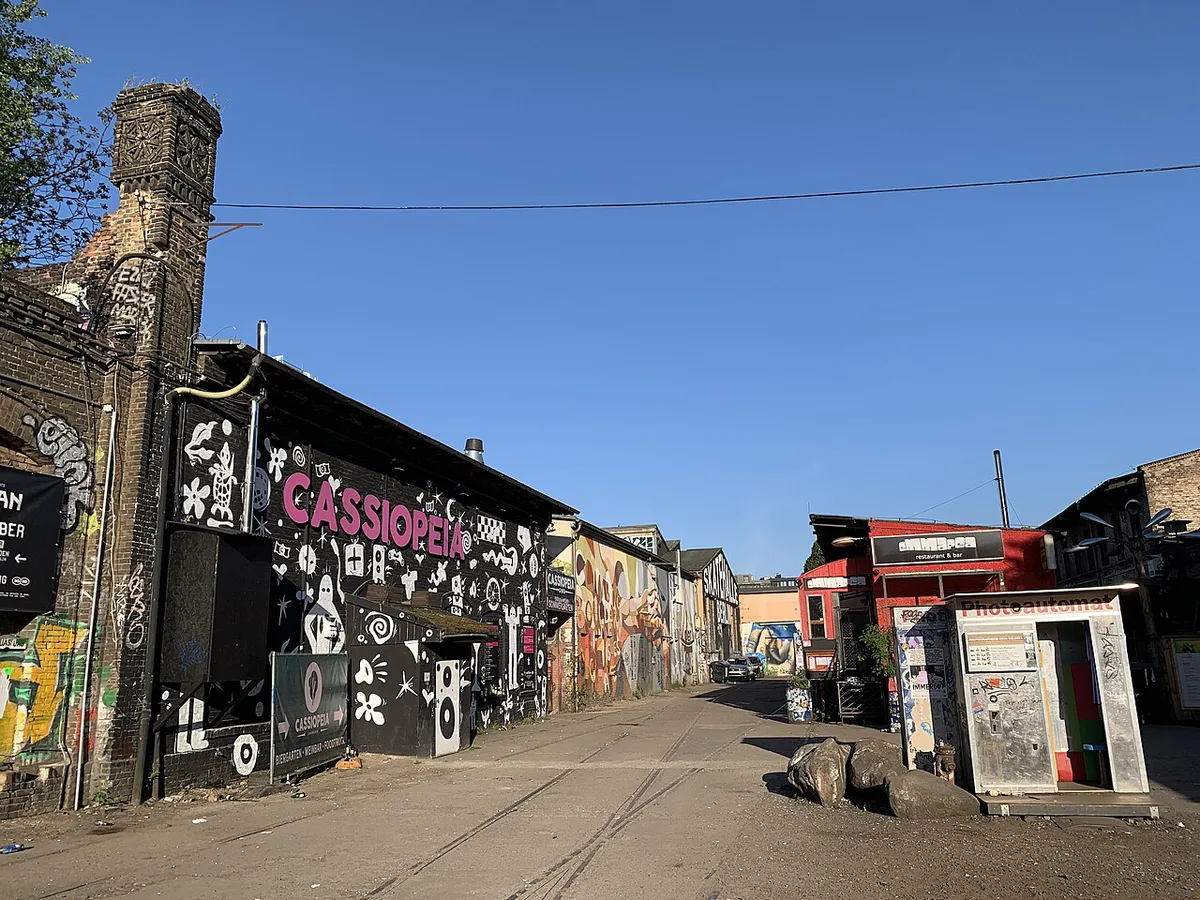
Friedrichshain: Techno, RAW-Gelände, and Simon-Dach-Straße
Friedrichshain is the classic answer when visitors ask where Berlin clubbing happens. The district’s nightlife reputation is built around industrial settings, high-density clubs, RAW-Gelände, Simon-Dach-Straße, and the wider east-side club circuit around Ostkreuz. Use it when the night’s main goal is techno, late dancing, and a Berlin atmosphere that feels rough-edged rather than polished. If Berghain or similar door-policy venues are part of the plan, assume rejection is possible and keep another club or bar nearby instead of treating 1 door as the whole night. For deeper club research, compare options in the Berlin techno clubs guide, then read Berghain door advice before making that your only target.
- Best for: techno, big-room clubs, industrial venues, late nights, and first-time clubbers who want the famous Berlin club feel.
- Main areas from the brief: RAW-Gelände, Simon-Dach-Straße, Ostkreuz, and the wider Friedrichshain club zone.
- Timing: treat 21:00 as bar time and 01:00 or later as club time.
- Plan B rule: choose at least 2 nearby options before queuing at a strict-door venue.
- Warschauer Straße caveat: the most commercial stretch can feel aggressive and tourist-heavy, so RAW-Gelände or deeper Friedrichshain usually gives a better version of the area.
Kreuzberg: SO36, Schlesisches Tor, Oranienstraße, and Wrangelstraße
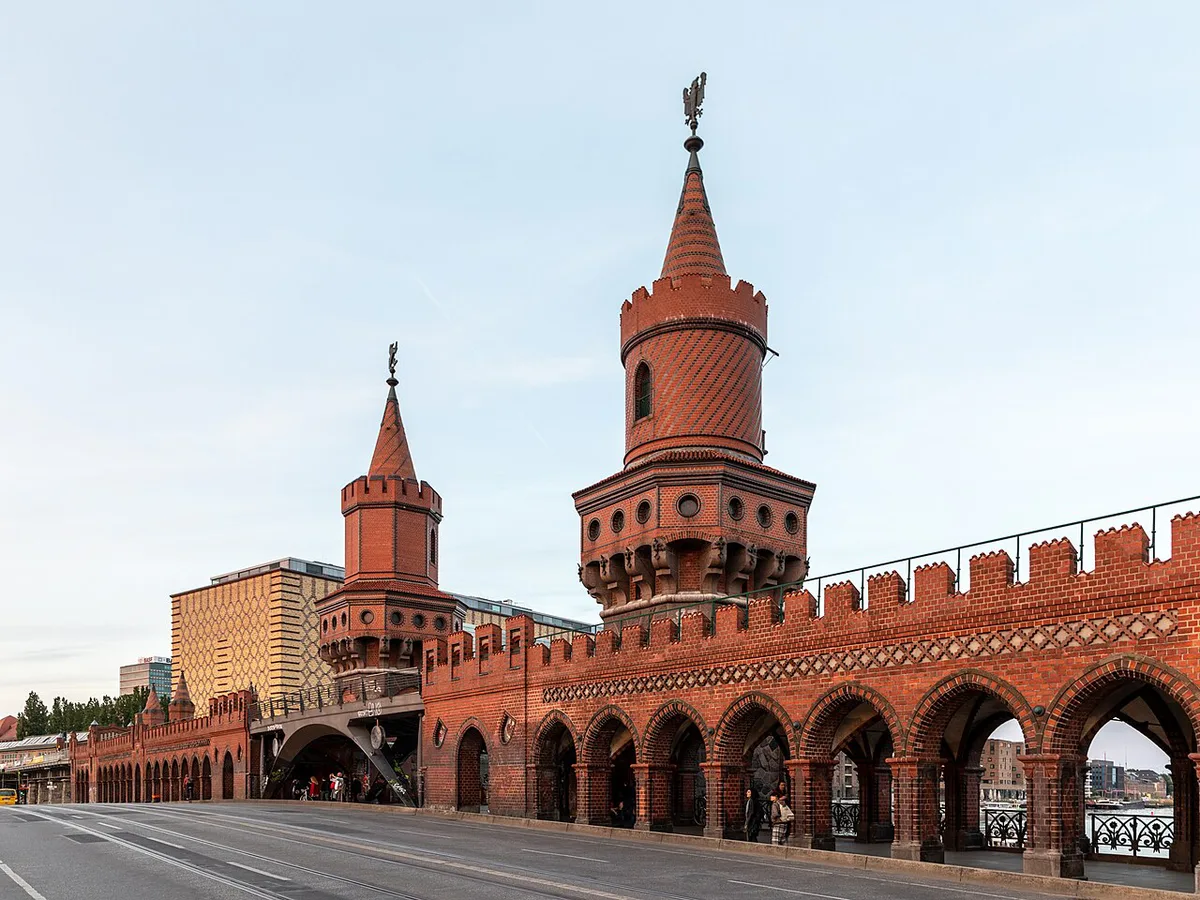
Kreuzberg works when you want Berlin nightlife with more street texture than polish. The SO36 and Schlesisches Tor side of the district gives you alternative bars, multicultural food and drink stops, punk history, and access to riverside clubbing. Oranienstraße is the obvious bar-hopping artery, while Wrangelstraße gives the area a looser, grittier feel. This is a strong first-night choice because you can start in bars, move toward louder venues, and still avoid committing the whole evening to one strict door. If the plan is social rather than club-obsessed, Kreuzberg also pairs well with a structured Berlin Pub Crawl Guide: Organized Tours, DIY Routes and Späti Stops or a self-guided route through several bars.
- Best for: alternative bars, mixed crowds, punk-influenced nightlife, and a more local-feeling night out.
- Main areas from the brief: SO36, Schlesisches Tor, Oranienstraße, Wrangelstraße, and riverside club zones.
- Timing: arrive around 21:00 for bars if conversation matters; move later if the night is heading toward clubs.
- Door policy: less singularly intimidating than Friedrichshain’s famous club doors, but popular venues can still be selective.
- Good fallback style: choose a second bar on the same street before walking across the city.
Neukölln: Weserstraße Bars, Cocktails, and Natural Wine
Neukölln is the right area when you want a slower, bar-first night. The brief’s key anchor is Weserstraße, a Bar-Kiez known for candlelit rooms, smoky-feeling interiors, cocktails, and natural wine rather than giant dance floors. You come here to talk, move between small venues, and let the night build gradually. It is especially useful when the group is split between people who want proper cocktails and people who just want a relaxed Berlin neighborhood. For a wider shortlist beyond this district, cross-check the best Berlin bars guide before choosing a route.
- Best for: cocktails, natural wine, intimate bars, late conversations, and a neighborhood feel.
- Main area from the brief: Weserstraße.
- Timing: start around 21:00 or later; there is less need to wait until 01:00 unless the night continues toward clubs.
- Door policy: generally more bar-led than club-led, so mood and crowding matter more than a famous bouncer reputation.
- Trade-off: better for atmosphere than for a single headline club moment.
Schöneberg: Historic Queer Nightlife Around Motzstraße and Winterfeldtplatz
Schöneberg is Berlin’s historic queer nightlife district, with the brief pointing you toward Motzstraße and Winterfeldtplatz. Choose it when LGBTQ+ bars, scene history, and a lively but established neighborhood atmosphere matter more than chasing the newest club. The area is especially useful for visitors who want queer nightlife with recognizable streets and a clearer district identity. For a deeper route through the scene, use the gay nightlife guide alongside this neighborhood overview.
- Best for: LGBTQ+ nightlife, historic scene streets, bar-hopping, and a lively but legible district.
- Main areas from the brief: Motzstraße and Winterfeldtplatz.
- Timing: begin with bars around 21:00, then adjust depending on the venue’s night.
- Door policy: expect normal nightlife judgment rather than one district-wide rule.
- Trade-off: less industrial than Friedrichshain and less alternative-gritty than Kreuzberg, but stronger for queer nightlife identity.
Mitte: Torstraße, Auguststraße, and Chic Urban Nights
Mitte suits nights built around smarter bars, gallery-adjacent energy, and a more polished city-center mood. The brief highlights Torstraße and Auguststraße, both useful when you want cocktails, stylish rooms, and a see-and-be-seen atmosphere without starting in a heavy club district. It is a better choice for dressed-up drinks than for trying to decode Berlin’s strictest techno doors. If the night needs a view, compare the city’s Berlin rooftop bars before committing to a Mitte route.
- Best for: chic bars, urban energy, gallery-adjacent nights, and visitors staying central.
- Main areas from the brief: Torstraße and Auguststraße.
- Timing: arrive from about 21:00 if the focus is drinks rather than clubs.
- Door policy: more style-conscious than Friedrichshain, but not the same as a major techno door.
- Trade-off: convenient and polished, but less raw than Kreuzberg or Friedrichshain.
Prenzlauer Berg: Eberswalder Straße, Kulturbrauerei, and Relaxed Groups
Prenzlauer Berg is the softer option in this guide. Around Eberswalder Straße and Kulturbrauerei, the mood is more relaxed and bohemian, with beer gardens, pubs, and group-friendly evenings taking priority over all-night club pressure. Choose it when the group wants an easy meet-up point, casual drinks, and a lower-friction night. It can be a better fit for mixed-age groups or travelers who want Berlin after dark without committing to a 01:00 club start. For pub-focused planning, compare it with the Berlin pubs guide.
- Best for: groups, beer gardens, casual pubs, and relaxed evenings.
- Main areas from the brief: Eberswalder Straße and Kulturbrauerei.
- Timing: this is one of the better areas for starting earlier than a club night, though bars still fill later in the evening.
- Door policy: generally easier than headline club areas, though individual venues set their own rules.
- Trade-off: less intense than Friedrichshain or Kreuzberg, but easier for a social night.
Decision Table: Which Berlin Nightlife District Fits Your Night?
Use this table when the group has different ideas about the night. The point is not to rank the districts; it is to match the area to the right energy before transport, queues, and door policy become the problem. Price levels vary by venue, and the supplied brief does not provide sourced €2026 amounts, so treat the price column as a qualitative planning cue rather than a quoted average.
| Neighborhood | Primary vibe | Music or drink focus | Price cue | Door strictness | Best fit |
|---|---|---|---|---|---|
| Friedrichshain | Techno, clubs, industrial nightlife | Techno and late clubbing | Club-cover dependent; confirm at the venue | Can be strict at famous clubs | Visitors who want the classic Berlin club experience |
| Kreuzberg | Alternative, gritty, multicultural | Bars, punk history, riverside clubs | Venue-dependent; bars often avoid fixed cover | Mixed, usually less single-door focused than famous techno clubs | First-timers who want bars plus possible clubbing |
| Neukölln | Hip, intimate, candlelit | Cocktails, smoky bars, natural wine | Menu-dependent; check each bar in 2026 | Usually bar-led rather than club-led | Small groups who want conversation and atmosphere |
| Schöneberg | Queer, lively, historic | LGBTQ+ bars and scene streets | Venue-dependent | Varies by venue | Travelers centering queer nightlife |
| Mitte | Chic, urban, polished | Cocktails, gallery-area bars, stylish rooms | Often more upscale by mood, but verify menus | Style-conscious at some venues | Central, dressed-up drinks |
| Prenzlauer Berg | Relaxed, bohemian, group-friendly | Beer gardens, pubs, casual bars | Venue-dependent | Generally lower-pressure than club areas | Groups, easier evenings, and casual pub nights |
How to Move Between Nightlife Districts at Night
Berlin’s nightlife works better when transport is part of the plan. The brief highlights 24-hour weekend U-Bahn and S-Bahn service, with the Ringbahn acting as a useful connector between areas. That makes late movement possible, but it does not mean constant district-hopping is efficient. A smarter route is to choose 1 main district, keep 2 or 3 nearby options, and use night transport only when the next area is genuinely worth the switch. This matters most after 01:00, when queues, fatigue, and door rejection can turn a cross-city move into wasted time.
Berlin’s weekend transport makes late switches possible, but the guide’s strongest advice is still to choose one main Kiez. That also protects the night from strict doors, long queues after 01:00, and the common mistake of crossing the city after every drink.
- Weekend transport: U-Bahn and S-Bahn service runs around the clock on weekends according to the brief.
- Connector to know: the Ringbahn is useful when moving around the city rather than only through the center.
- Best tactic: start in one Kiez, then move within that Kiez before crossing Berlin.
- Bar timing: 21:00 or later is a practical start for drinks.
- Club timing: 01:00 or later is the more realistic club window from the brief.
Door Policy, Dress, Cash, and Local Etiquette
Berlin door policy is part of the nightlife landscape, especially in Friedrichshain’s famous club scene. Rejection can happen even when you have queued, so build the night around options rather than entitlement. Dressing up too formally can work against the mood at some of the best-known clubs; understated, comfortable clothing usually reads better than trying to look VIP. The brief also flags Berlin’s cash culture in bars, so carry cash in 2026 instead of assuming every small venue will prefer cards. In residential streets, keep voices low during outdoor breaks and avoid turning the pavement into a second venue.
Door policy matters most around famous Friedrichshain club targets, while bar-led areas such as Neukölln and Prenzlauer Berg are lower-pressure. Across districts, the safer pattern is practical: carry cash, keep a nearby Plan B, and avoid treating one venue as the whole night.
- Have a Plan B: never let 1 strict door define the night.
- Dress cue: avoid over-polished clubwear when the venue’s identity is underground or alternative.
- Cash rule: carry cash for Berlin bars, because the brief flags cash as a practical expectation.
- Noise rule: keep residential streets quiet, especially during smoking or fresh-air breaks.
- Queue rule: if the mood at the door is wrong, leave politely and move to the next option.
Common Mistakes When Choosing Berlin Nightlife Areas
The biggest mistake is treating Berlin like a city with one nightlife center. The second is assuming that the busiest tourist-facing stretch near Warschauer Straße is the best version of Friedrichshain. The brief specifically calls out the Matrix/Warschauer area as a common complaint because it can feel commercial or aggressive, so use it carefully and look toward RAW-Gelände or deeper Friedrichshain for a better night. Another mistake is planning a bar night and a serious club night as if they follow the same schedule. Bars work from about 21:00; clubs make more sense from about 01:00. For a broader late-night checklist beyond drinking and clubs, use Berlin at night ideas to round out the plan.
- Do not cross the city after every drink; Berlin rewards staying local.
- Do not rely on a single famous club door without another option nearby.
- Do not judge Friedrichshain only by the most commercial Warschauer Straße stretch.
- Do not overdress for underground clubs if the venue culture is casual and music-led.
- Do not assume bars and clubs peak at the same time.
Späti Stops and Late-Night Food Between Bars
One practical Berlin nightlife habit missing from many route plans is the Späti stop. A Späti is a small late-opening convenience shop, and in nightlife areas it often acts as the pause between venues: somewhere to buy water, a soft drink, cigarettes, or a bottled beer before deciding whether to continue. Around Friedrichshain and Kreuzberg, Spätis near Warschauer Straße, Simon-Dach-Straße, Oranienstraße, and Schlesisches Tor can become informal meeting points, but they are not a substitute for a bar or club.
Use them respectfully: keep voices down outside residential buildings, do not block doorways, and move on if the pavement is getting crowded. For food, Kreuzberg and Neukölln are especially useful because late-night options around Kottbusser Tor, Hermannplatz, and Sonnenallee make it easier to reset before another bar. In Friedrichshain, the area around Warschauer Straße and Boxhagener Platz is better for quick bites than for a quiet sit-down meal after midnight.
For trip-planning details, see Kreuzberg - Wikipedia.
Frequently Asked Questions
What are the main Berlin nightlife areas for first-time visitors?
The most useful first-time areas are Friedrichshain for techno and clubs, Kreuzberg for alternative bars and gritty nightlife, Neukölln for Weserstraße cocktails and natural wine, Schöneberg for LGBTQ+ nightlife, Mitte for chic urban bars, and Prenzlauer Berg for relaxed pubs and groups.
Which Berlin neighborhood is best for techno clubs?
Friedrichshain is the strongest choice for techno because the brief places the city’s industrial club energy around RAW-Gelände, Ostkreuz, and major club zones. Keep a nearby Plan B because famous doors can be strict.
Where should a group go for bars instead of clubs?
Neukölln, Kreuzberg, and Prenzlauer Berg are the easiest bar-first choices. Neukölln works for cocktails and intimate rooms, Kreuzberg works for alternative bar-hopping, and Prenzlauer Berg works for casual pubs, beer gardens, and groups.
Is Warschauer Straße the best place to go out in Berlin?
Warschauer Straße is well known, but the brief flags the most commercial Matrix/Warschauer stretch as a common disappointment. For a better Friedrichshain night, look toward RAW-Gelände or deeper neighborhood options rather than treating the busiest strip as the destination.
What time should the night start in Berlin?
Use 21:00 or later for bars and 01:00 or later for clubs. That timing keeps the night aligned with Berlin’s bar and club rhythm instead of arriving too early at a venue that is not active yet.
Does Berlin public transport run late enough for nightlife?
Yes on weekends, the brief notes 24-hour U-Bahn and S-Bahn service, with the Ringbahn useful as a connector. Even so, staying within 1 main Kiez is usually easier than crossing Berlin repeatedly during the night.