10 Stops: Bairro Alto Street Art and Bars Walking Guide
Bairro Alto stays quiet until sunset, then flips into Lisbon's busiest walking route for art and drinks. This Bairro Alto street art and bars walking guide strings together political murals, a funicular ride, and ten stops locals actually use. Editors mapped it as one continuous route, from afternoon photo light to post-9pm bar hopping. Last updated July 2026, with current opening hours and euro prices for every stop.
Locals still call it Bairro Alto, or Upper District, for its perch above Chiado and the Tagus. Its narrow 16th-century streets hold Carnation Revolution murals, Vhils carvings, and a Shepard Fairey collaboration, all within a short walk. By day the area feels almost residential; after dark, hundreds of small bars spill drinkers onto the cobblestones. That contrast is the whole point of this route, and it works whether you have two hours or a full evening.
Expect to pace the walk in two halves: art-hunting in daylight, then bar-hopping once the sun drops. The route connects naturally from Chiado, so pair it with an afternoon there before dark sets in. Every stop below lists typical hours, a price range, and one practical tip for narrow-street etiquette.
Bairro Alto's History and the Carnation Revolution
Bairro Alto took shape in the 16th century as a residential quarter for Lisbon's working class. Jesuits and aristocratic families later moved in, which is why plain houses still stand shoulder to shoulder with small palaces and churches today. Newspapers followed in the 20th century, and two streets, Rua do Diário de Notícias and Rua do Século, still carry their names. That mix of print culture and working-class roots gave the neighborhood its bohemian, artistic streak early on.
Everything shifted on April 25, 1974, when the Carnation Revolution ended a 48-year dictatorship in a single day. Soldiers and citizens placed carnations in rifle barrels instead of firing them, and the image became a national symbol overnight. Political murals began appearing across Lisbon almost immediately afterward, and Bairro Alto absorbed that visual language faster than most districts. The revolution still anchors the neighborhood's street art scene more than fifty years later.
Lisbon City Council now formally commissions street art in Bairro Alto, treating murals as heritage rather than vandalism. That official backing is part of why so many pieces survive years instead of getting painted over within months. Local authorities have also added noise limits and stricter licensing on new bars in recent years. The goal is keeping Bairro Alto livable for residents while the nightlife economy keeps growing around them.
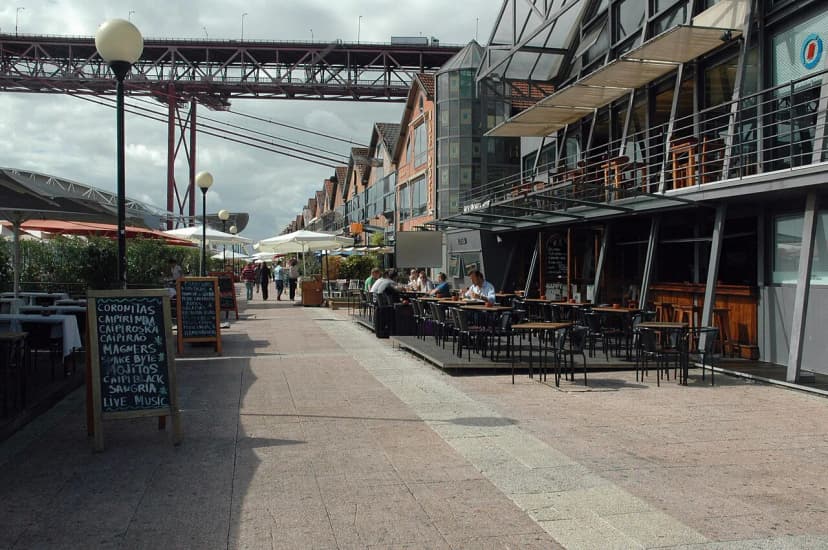
This Jorge Franganillo - Bairro Alto Image on Wikimedia Commons shows that same mix of plain houses and small palaces. The photo captures the neighborhood's quiet daytime character, well before the evening crowds arrive.
The 10-Stop Bairro Alto Street Art and Bars Walking Guide
This walking guide compiles ten stops into one route, best covered in under three hours end to end. Distances between stops rarely exceed a five-minute walk, since Bairro Alto itself spans just a few square blocks. The order below follows a natural downhill-to-uphill flow from the Elevador da Glória to the neighborhood's bar-heavy core. Treat it as a flexible spine: skip a stop or two and the route still holds together.
Photograph street art between 3–7pm for clear daylight. Most bars stay closed until 6pm, and bar-hopping energy peaks after 9pm. This gap is your window to shoot murals before crowds fill the narrow streets.
| Stop | Type | Hours | Price |
|---|---|---|---|
| Elevador da Glória Funicular Ride | Transportation | Early morning to past 11pm (every 8–15 min) | €4 one-way |
| Miradouro de São Pedro de Alcântara Viewpoint | Viewpoint | Around the clock | Free |
| Carnation Revolution Mural by Alvel and RIGO | Street Art | Always accessible | Free |
| Vhils Carved Mural Near Calçada da Glória | Street Art | Day and night | Free |
| Shepard Fairey and Vhils Collaboration Mural | Street Art | Always accessible | Free |
| Rua da Atalaia Street Art and Vintage Strip | Street Art/Shopping | Galleries 11am–7pm; bars after 6pm | Free browsing; shop prices vary |
| Pávilhão Chinês Curiosity Cabinet Bar | Bar | Nightly around 6pm | Cocktails €6–12 |
| Park Rooftop Bar | Rooftop Bar | Late afternoon into evening | Drinks €8–14 |
| A Tasca do Chico Fado Bar | Fado Bar | Live music around 9–10pm | Wine and petiscos €3–12; no cover charge |
| Portas Largas Mixed Crowd Bar | Bar | Early evening to past midnight | Beers and cocktails €3–8 |
Photograph the street art stops between 3pm and 7pm, while daylight still hits the walls directly. Most bars do not open until 6pm, and the crowd-heavy bar-hopping energy does not build until after 9pm. That gap is your window to shoot murals without dodging the bar-hopping crowds that fill these same streets later. Arrive later than 10pm on a Friday or Saturday and street art at eye level gets hard to see behind the crowds.
The list below mixes political murals, a funicular ride, a hilltop viewpoint, and five bars locals actually return to. A few widely-listed Bairro Alto bars trade on foot traffic more than character or quality. This guide skips the promoter-touted drink deals hawked at the top of the funicular. For a guided version of these same murals, Lisbon Street Art Tours runs small-group walks through the neighborhood.
- Elevador da Glória Funicular Ride
- This bright yellow funicular has linked Restauradores to Bairro Alto since 1885.
- Its cars now wear layers of street art tags and stickers.
- A one-way ticket costs about four euros, though it's free with a Lisboa Viva pass.
- Cars run roughly every eight to fifteen minutes from early morning past 11pm.
- Ride up to save your legs, then walk back down past murals you missed.
- Miradouro de São Pedro de Alcântara Viewpoint
- This terraced garden viewpoint sits right at the top of the funicular line.
- It looks out over the Castle of São Jorge and the Baixa rooftops below.
- Entry is free and it stays open around the clock, though benches fill up at sunset.
- Come by 7pm in summer for golden light before the street art walk gets busy.
- A small kiosk nearby sells coffee and pastries if you need a break before starting.
- Carnation Revolution Mural by Alvel and RIGO
- Street artists Antonio Alvel and RIGO painted this piece in 2009 as a tribute to 1974.
- It reimagines the Carnation Revolution, when soldiers placed flowers in rifle barrels instead of firing.
- Viewing is free and the wall sits along the everyday walking route through the neighborhood.
- Colors read best in direct afternoon light, so aim for a visit before 6pm.
- Look closely for the flower detail worked into the uniform, easy to miss at a glance.
- Vhils Carved Mural Near Calçada da Glória
- Vhils builds his portraits by chiselling and drilling straight into old plaster and brick.
- He grew up during the years after the revolution, and that history shapes his carved layers.
- Viewing this piece costs nothing, and it stays visible day and night along the street.
- Midday sun creates the sharpest shadow lines across the carved texture.
- Vhils pieces appear across several Lisbon neighborhoods, so this is only one stop among many.
- Shepard Fairey and Vhils Collaboration Mural
- American street artist Shepard Fairey, known as OBEY, painted this piece with Vhils carving the other half.
- The mural merges two women from different backgrounds into a single shared face.
- This stop is free to view and always accessible, just a short walk from the revolution mural.
- Fairey's half draws on his Vietnam-era peace imagery, adapted here for the 1974 revolution.
- Bring a wide-angle phone lens; the wall is taller than it looks from across the street.
- Rua da Atalaia Street Art and Vintage Strip
- This narrow street strings together small murals, stencil work, and secondhand record shops.
- Daytime here feels sleepy, with a few galleries and vintage stores open from around 11am to 7pm.
- By night the same street becomes one of the busiest bar-hopping corridors in Bairro Alto.
- Browsing costs nothing, though vintage shop prices for clothing and vinyl vary by store.
- Walk it twice: once for photos before 6pm, again after 9pm for the nightlife energy.
- Pávilhão Chinês Curiosity Cabinet Bar
- This bar packs floor-to-ceiling glass cabinets of toy soldiers, model planes, and antique curiosities.
- It opens nightly around 6pm and serves cocktails from roughly 6 to 12 euros each.
- The back rooms include a pool table, so groups often split into separate corners.
- Go before 9pm on weekends if you want a table instead of standing room only.
- Prices and hours shift seasonally, so check current listings before a special trip.
- Park Rooftop Bar Above a Parking Garage
- Park hides on the top floor of a parking garage, reached by an unmarked elevator.
- The rooftop looks toward the river and the 25 de Abril Bridge at sunset.
- Drinks typically run 8 to 14 euros, and the bar usually opens by late afternoon into the evening.
- Arrive close to opening for a seat, since the terrace fills fast once word gets around.
- Weather can close the rooftop with little notice, so have a backup bar in mind.
- A Tasca do Chico Fado Bar
- Photos of past performers cover every wall inside this small, packed fado tavern.
- Live fado usually starts around 9 or 10pm, often with no cover charge at the door.
- House wine and petiscos plates typically run 3 to 12 euros, cash appreciated by servers.
- Arrive by 8:30pm to claim a table before the room fills for the first set.
- Servers ask for quiet during songs, so save loud conversation for between sets.
- Portas Largas Mixed Crowd Bar
- This bar sits right at the corner where Rua da Atalaia meets Travessa da Queimada.
- Fado and Brazilian music alternate some nights, drawing a mixed local and visitor crowd.
- Beers and simple cocktails generally cost 3 to 8 euros at the counter.
- Doors typically open by early evening and stay busy well past midnight on weekends.
- Standing room spills onto the street corner, which is where most of the socializing happens.
Getting to Bairro Alto: Elevador da Glória Guide
Most visitors reach Bairro Alto from the Baixa-Chiado metro station on the Blue and Green lines. From the exit, it is a five to eight minute uphill walk through Chiado to reach the neighborhood's edge. Trams 24 and 28 also stop within a short walk, useful if the hill feels steep. A single metro ride costs about 1.65 euros, or use a Lisboa Viva zapping balance for multiple rides.
The Elevador da Glória offers a flatter alternative, climbing from Praça dos Restauradores straight into Bairro Alto. For a deeper breakdown of routes, timings and step counts, see our getting to Bairro Alto from Baixa guide. Either approach lands you at roughly the same spot, just a couple of streets apart. Walking shoes matter more than route choice, since every street here runs on original cobblestones.
Pairing Chiado with Bairro Alto works well, since the two neighborhoods share a single hillside. Spend an afternoon in Chiado's shops and cafes, then cross into Bairro Alto as daylight starts fading. That sequencing lines up naturally with this guide's daylight-photos, dark-hours-bars structure. Total walking distance between the two centers rarely exceeds ten minutes at a relaxed pace.
Driving into Bairro Alto is not worth attempting, since streets narrow to one lane and parking is scarce. Rideshares can drop off at the neighborhood's edges but rarely enter the core on weekend nights. Plan on walking the last few minutes regardless of how you arrive.
This Sonse - Elevador da Glória Image on Wikimedia Commons shows the funicular's classic yellow cars in daylight. That daylight version is worth comparing to the mural-covered cars you will see in person.
Evening Bairro Alto: Fado, Bars, and Street Etiquette
Bairro Alto flips almost on a switch once the sun sets behind the Tagus. Shutters that stayed down all afternoon roll up, and bar owners start setting out folding tables. By 9pm the narrow streets fill with people holding plastic cups, moving between bars in loose groups. This nightly reset is the whole reason the neighborhood earns its nightlife reputation.
Keep drinks off windowsills and walk single file on crowded nights, since residents live above every bar. Step aside at doorways so neighbors can access their buildings, and dispose of bottles in bins rather than on the street.
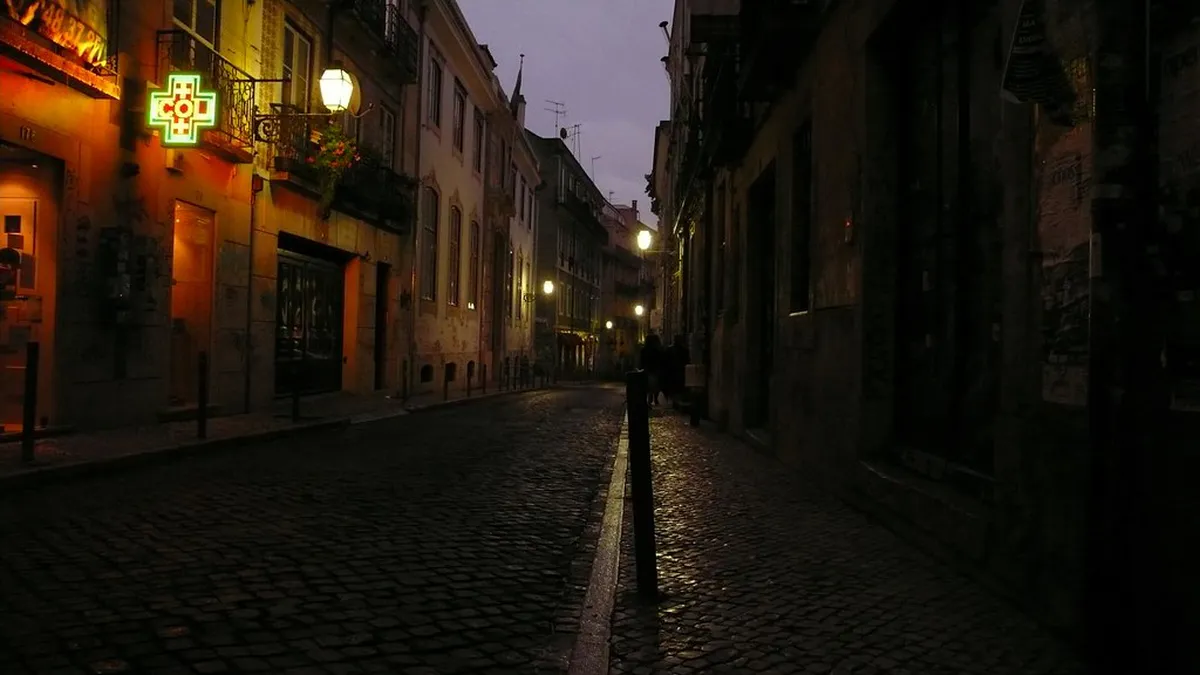
Locals call this street-drinking custom copos na rua, or drinks in the street. Bars sell drinks to go in plastic cups, and most patrons drink outside rather than inside cramped rooms. That is different from cities where open containers draw fines, so first-time visitors are sometimes surprised. Keep cups off windowsills and parked cars, and carry empty bottles to a bin rather than leaving them on the ground.
Fado runs alongside the bar-hopping scene rather than replacing it for the night. Several small houses, including picks from our 9 Best Fado Bars in Bairro Alto (2026) guide, start sets around 9 or 10pm. Expect a cover charge or minimum consumption at dedicated fado houses, though casual bars rarely charge one. Traditional houses ask for quiet during songs, a contrast with the louder street-side bar crowd outside.
Recent noise restrictions mean some streets now quiet down earlier than they did a decade ago. Bairro Alto stays social rather than club-like, unlike the louder, later scene down the hill. For a direct comparison of the two nightlife styles, see our Bairro Alto versus Cais do Sodré nightlife breakdown. Both areas work well together if the night is still young after midnight.
Is Bairro Alto Worth a Night Out? Practical Tips
Bairro Alto is worth a night out if you enjoy small bars, street energy, and casual mingling over clubs. It suits travelers who want an authentic, unpolished scene rather than a curated tourist strip. Solo travelers and small groups tend to have the easiest time, since striking up conversation on the street is normal here. Families with young kids are better served visiting during the day for the street art alone.
Bairro Alto is generally safe, though pickpocketing risk rises in the most crowded stretches after midnight. Keep valuables zipped and avoid flashing phones in the densest bar clusters. For a fuller safety breakdown by street and time of night, see our Bairro Alto safety at night guide. Sticking to well-lit, busier streets is the simplest precaution on any visit.
Dress is casual across almost every bar in the neighborhood, with no door policy to worry about. Budget roughly 15 to 30 euros for a few drinks across two or three stops in one evening. Our cheap drinks in Bairro Alto guide breaks down where prices run lowest if budget is the priority. Cash still helps at smaller bars, even though most now accept cards.
Thursday through Saturday nights carry the fullest energy, while weeknights feel closer to a quiet neighborhood. Summer evenings stay warm enough for outdoor drinking well past midnight, extending the street scene. For a season-by-season breakdown, our Best Time to Visit Bairro Alto Nightlife (2026 Guide) guide covers crowd patterns month by month. Winter visits work fine too, just plan on more time inside smaller bars.
Bar-Hopping Etiquette for Bairro Alto's Narrow Streets
Bairro Alto's streets rarely exceed two meters across, so bar-hopping here follows unwritten rules that keep the narrow lanes passable. Residents still live in the apartments above nearly every bar, so noise carries straight up through open windows — treat window ledges and doorways as private space, not extra seating or shelving for drinks. When a street fills after 9pm, walk single file rather than in a spread-out group, and step aside near doorways so residents can actually get into their buildings. Streets like Rua da Atalaia and Travessa da Queimada narrow further where crowds gather outside popular bars, so move on once you've finished a drink instead of lingering in the same spot. Split larger groups into pairs or threes on the busiest nights; a group of eight blocking a one-lane street is the fastest way to draw complaints from both neighbors and police. Recent noise ordinances mean some streets quiet down earlier than they used to, so keep conversation lower after any posted curfew signage.
Frequently Asked Questions
How long does the Bairro Alto street art and bars walking guide take?
Plan on two to three hours for all ten stops at a relaxed pace. Our Bairro Alto Bar Crawl Itinerary: A 1-Night Lisbon Plan breaks the same route into timed stops if more structure helps. Add extra time if you linger over drinks at any bar.
What time should you start walking around Bairro Alto?
Start the street art portion by mid-afternoon, ideally before 5pm, for clear photo light. Save the bar-hopping half for after 9pm, once bars fill and the street energy picks up. Weeknights feel noticeably calmer than the buzz of Friday and Saturday nights in the same streets.
Is Bairro Alto safe to walk around at night?
Bairro Alto is generally safe for walking at night, especially on the busier main streets. Pickpocketing risk rises in dense crowds after midnight, so keep bags zipped and valuables out of sight. Sticking to well-lit, populated streets is the simplest precaution for any visit.
Where does Fado music fit into a night in Bairro Alto?
Fado houses typically start live sets around 9 or 10pm, running alongside the bar-hopping scene rather than replacing it. Some houses charge a cover or require a minimum spend, while casual bars usually do not. Expect quiet, attentive audiences during songs, then normal chatter once each set ends.
Do Bairro Alto bars require reservations?
Most Bairro Alto bars run on a walk-in basis, with no reservations needed or accepted. Fado houses are the exception, since popular ones fill up by 8:30 or 9pm on weekends. Arriving slightly early guarantees a table during the busiest summer months.
Bairro Alto rewards a slow afternoon walk followed by a slower bar crawl, in that order. Ten stops, a few euros in funicular fare, and a handful of drinks are all this route really costs. Murals stay free and open all day, so even a tight budget covers the whole art half. The bar half is where the neighborhood's real personality shows up, cup in hand, on the street.
Pair this walk with a Chiado afternoon or an early fado house booking for a fuller evening. Whichever order you choose, the route holds together as one continuous Lisbon evening.