
Traditional Kafanas in Belgrade: Rakija, Folk Music & Skadarlija (2026)
Not every good night in Belgrade ends on a splav or in a warehouse club. Long before the Sava filled with floating dance floors, the kafana was already the city's social center — a tavern built around rakija, grilled meat, and a live band playing Starogradska ("old-town") folk songs that the whole room eventually sings along to. If the rest of our Belgrade nightlife guide covers the modern scene, this one is about the tradition that scene grew out of.
A kafana is not a club and it is not trying to be one. There is no cover charge, no DJ, no dress code beyond common sense, and the music is played by musicians standing at your table rather than pumped through a sound system. This guide covers where the real kafana experience still lives in Belgrade in 2026, what to order, how much to budget, and how the night actually unfolds if you sit down and let it happen.
If you want the shorter, lighter version of this tradition — a flight of rakija without the full multi-course dinner — we cover that option too. And if you are building a full night out that mixes old and new Belgrade, pair this with our guides to the city's best bars in Belgrade, the Cetinjska nightlife district, and the Dorćol bars and nightlife scene for contrast.
What Is a Kafana, Exactly?
A kafana is a traditional Serbian tavern built around three things: rakija (fruit brandy), heavy grilled or slow-cooked food, and live "Starogradska" folk music performed at the table, often by an accordion-and-violin trio that circulates the room through the evening. It is the direct opposite of a splav or a nightclub — there is no electronic music, no bottle service culture, and the energy builds from conversation and singing rather than a DJ set.
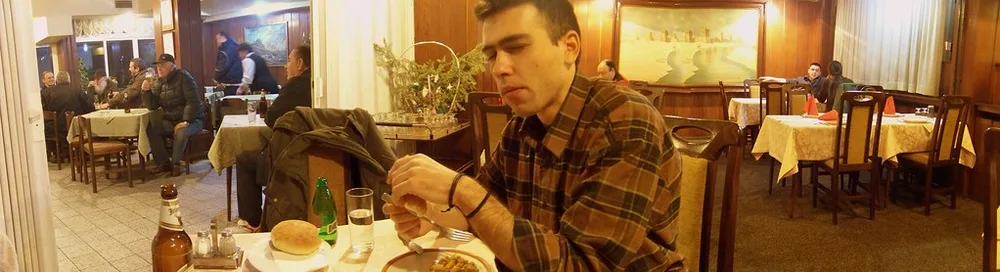
The word itself comes from the Ottoman-era "kahvehane" (coffeehouse), and the format has barely changed in over a century: long wooden tables, checkered tablecloths, low lighting, and interiors that lean into Ottoman and Austro-Hungarian-era décor depending on the neighborhood. Where a splav peaks at 2 AM and a cocktail bar in Dorćol runs quiet and controlled, a kafana peaks somewhere around 23:00, when the band picks up the tempo and strangers at neighboring tables start singing the same chorus.
Locals treat a kafana night differently from a bar night — it is closer to a long, loud family dinner than to "going out." Reservations matter less than showing up hungry and ready to stay for a few hours; nobody orders one drink and leaves.
Skadarlija: Belgrade's Bohemian Kafana Quarter
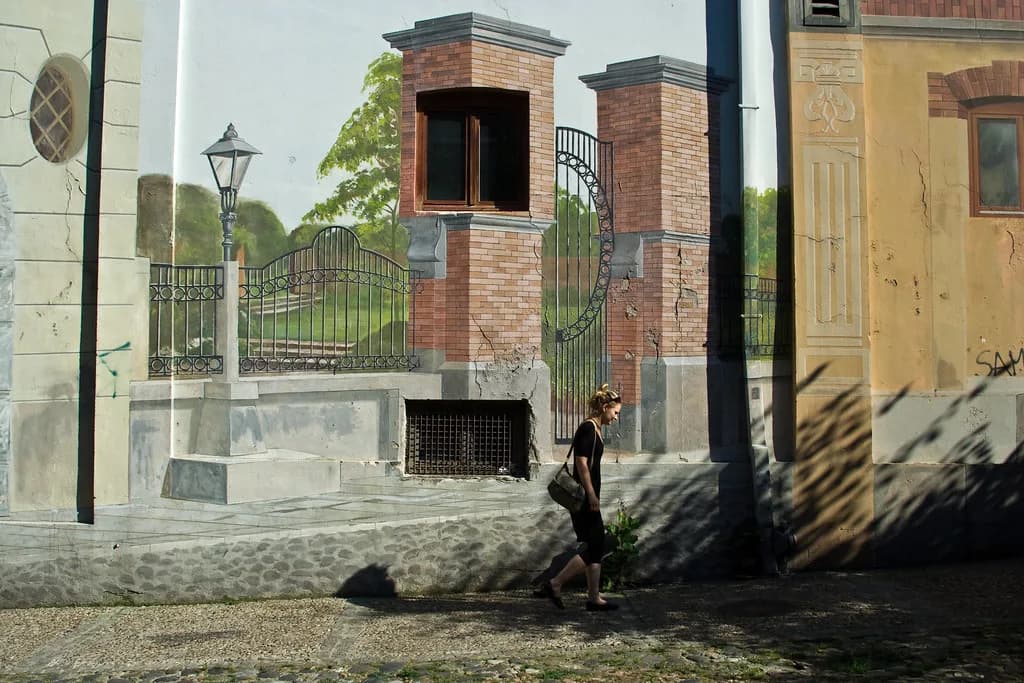
Skadarska Street — the cobblestone pedestrian heart of the Skadarlija quarter — is where the kafana tradition is best preserved. The two most famous addresses in the city sit here: Tri Šešira (Three Hats) and Dva Jelena (Two Deer), both operating continuously since the 19th century and both considered the benchmark for what a real Belgrade kafana should feel like.
Expect the same core experience at either one: heavy grilled meat platters, a live band working the floor table by table, and Ottoman-era interior details that have survived more than a hundred years of the city's history. Budget roughly 2,500–4,000 RSD per person for a full dinner with rakija and a few rounds of drinks. Go on the later side — by 23:00 the room is loud, the band is at full volume, and it is common for tables of strangers to end up singing the same folk song together.
Skadarlija is charming but it is also the most tourist-facing kafana district in the city, so treat it as the essential, reliable starting point rather than the only stop. Cobblestones are uneven and genuinely hard on heels, so plan footwear accordingly if you are walking the street after dark.
What to Order: Rakija, Grilled Meat, and Starogradska Music
Start with rakija. It is the anchor of any kafana table, usually a plum, quince, or grape brandy served in a small stemmed glass and meant to be sipped slowly rather than shot. A round typically opens the meal and reappears between courses — pace yourself, since a full kafana dinner runs several hours.
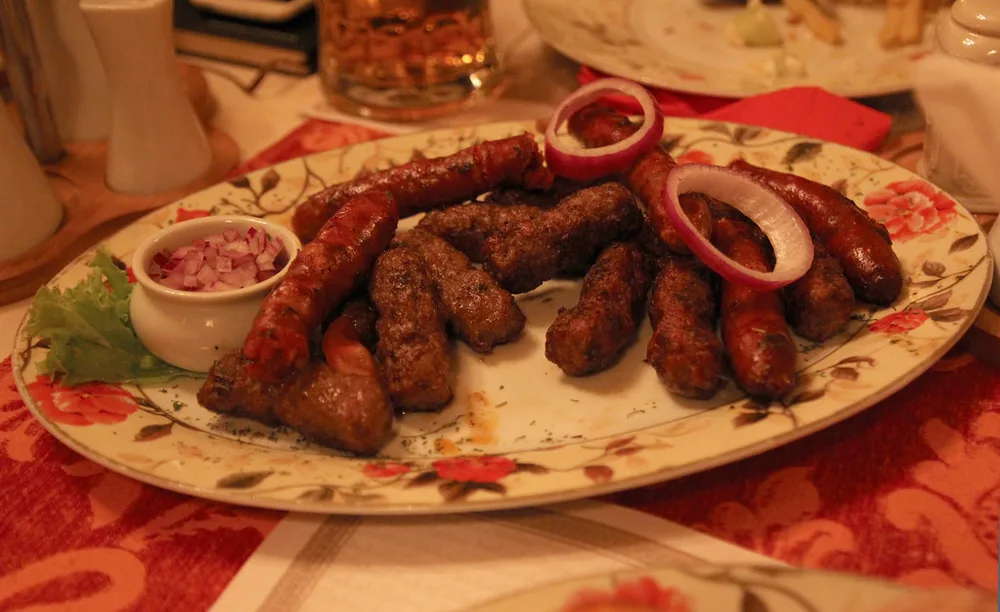
Food follows a predictable, satisfying pattern: grilled meat platters (mixed ćevapi, pljeskavica, and skewers), heavy sides like ajvar and kajmak, and bread meant for sharing rather than individual plates. Portions are large and the pacing is slow by design — a kafana dinner is not meant to be rushed through in 45 minutes.
The live music is the part visitors underestimate. A Starogradska trio — typically accordion, violin, and vocals — moves from table to table through the night, and by the time they hit the room's favorite songs, singing along is the norm rather than the exception. It is genuinely normal for neighboring tables to raise a glass together during a chorus everyone happens to know. This communal, unplanned quality is what separates a kafana from every other type of night out covered in our wider Belgrade nightlife guide.
A Lighter Alternative: Rakija Without the Full Dinner
If a multi-hour, multi-course kafana dinner is more commitment than your evening allows, Rakia Bar near the Cathedral is the sensible middle ground. It specializes in rakija flights — plum, quince, apricot, and honey among the standard pours — so you can taste the same spirit that anchors the kafana tradition without booking a full sit-down meal.
This works especially well as a first stop before a longer night elsewhere. Pair a rakija flight at Rakia Bar with an early dinner, then move on to a proper kafana in Skadarlija for the live music portion of the evening, or pivot toward the modern bar scene in Dorćol if the folk-music format isn't what you're after that night.
It is also a reasonable way to sample rakija before committing to a full kafana table — if you already know you prefer quince over plum, you'll order with more confidence once the band starts playing and the rounds start moving faster.
Practical Tips: Cost, Cash, Timing, and Dress
Budget 2,500–4,000 RSD per person for a proper kafana dinner with rakija, and carry cash — 3,000–5,000 RSD is a sensible amount to have on hand, since the roaming musicians work on tips and cards don't cover that part of the night. Most kafanas do accept card for the bill itself, but the tip jar for the band is a cash-only tradition worth respecting.
There is no dress code in the way a club enforces one, but Skadarska Street's cobblestones are unforgiving on heels, so flat, sturdy shoes are the practical choice. Arrive for dinner around 20:00–21:00 if you want a table before the room fills, but stay until at least 23:00 if you want to catch the room at its loudest and most communal — that's when the band picks up the pace and the singing genuinely takes over.
A kafana night pairs naturally with the rest of a longer evening out. Many visitors treat Skadarlija as the first stop before heading toward the modern bars of Dorćol and Savamala, or before catching a summer night on one of the city's floating river splavs. If you'd rather stay in a more alternative, less tourist-facing setting for the rest of the night, the Cetinjska courtyard bars are a short walk away and close earlier, making them a natural next stop after a long kafana dinner.
Frequently Asked Questions
What is a kafana in Belgrade?
A kafana is a traditional Serbian tavern serving rakija, heavy grilled food, and live Starogradska folk music. It is not a club or bar in the modern sense — there is no DJ or electronic music, and the atmosphere is built around a live band playing table to table through the evening.
Where is the best place to experience a traditional kafana in Belgrade?
Skadarska Street in the Skadarlija quarter is the best-known kafana district, home to the two most famous addresses in the city: Tri Šešira (Three Hats) and Dva Jelena (Two Deer). Both have operated continuously since the 19th century and preserve the full traditional experience.
How much does a kafana dinner cost in Belgrade?
Budget roughly 2,500 to 4,000 RSD per person for a full dinner with rakija and a few rounds of drinks. It is worth carrying extra cash beyond that for the tip jar, since the roaming musicians work primarily on tips.
Is there a lighter way to try rakija without a full kafana dinner?
Yes. Rakia Bar near the Cathedral serves rakija flights, including plum, quince, apricot, and honey varieties, so you can taste the spirit that anchors the kafana tradition without booking a full sit-down meal.
A kafana night is the counterpoint to everything else this city is known for after dark. Where a splav runs on bass and bottle service, a kafana runs on rakija, grilled meat, and a room full of strangers who somehow all know the same folk song by 23:00. Book nothing, arrive hungry, carry cash for the band, and let the evening move at its own pace — that's the whole tradition.